The Intouchables
A heartfelt comedic drama that soars with an uplifting spirit, painting a vibrant portrait of an unlikely friendship that blossoms against the stark contrast of Parisian society.
The Intouchables
The Intouchables

Intouchables

"Sometimes you have to reach into someone else's world to find out what's missing in your own."

02 November 2011 France 113 min ⭐ 8.3 (17,877)
Director: Éric Toledano Olivier Nakache
Cast: François Cluzet, Omar Sy, Anne Le Ny, Audrey Fleurot, Joséphine de Meaux
Drama Comedy
Friendship Across Social Divides Redefining Disability and Normalcy Personal Growth and Transformation Social Class and Inequality
Budget: $13,000,000
Box Office: $426,590,315

The Intouchables - Ending Explained

⚠️ Spoiler Analysis

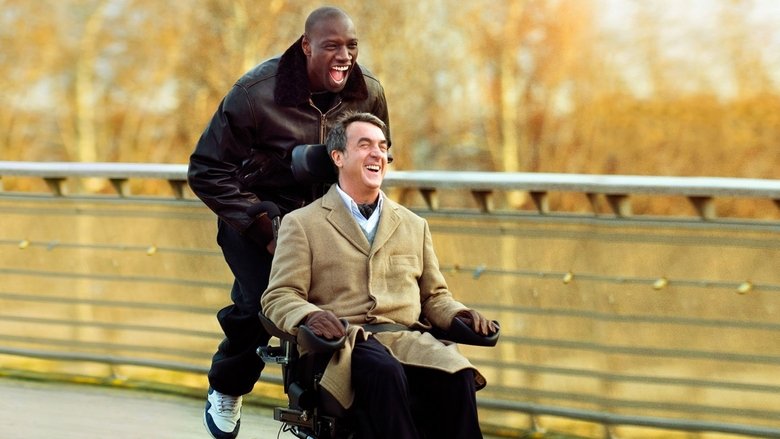
The narrative of "The Intouchables" is framed by a flash-forward, opening with Driss recklessly driving Philippe's Maserati through Paris, leading to a police chase. The film then unfolds as a flashback, detailing how their friendship began and developed. The central plot revolves around their growing bond, with Driss encouraging Philippe to be more assertive and to pursue a romantic relationship with his epistolary pen pal, Eléonore. A key plot point is Philippe's fear of meeting Eléonore, as she is unaware of his disability. He even sends her a picture of himself from before his accident. He eventually gets cold feet and stands her up on their planned date.

A significant turning point occurs when Driss realizes he must take responsibility for his own family, whose problems have been escalating in his absence. Feeling that Driss should not have to spend his life pushing a wheelchair, Philippe releases him from his job. After Driss leaves, Philippe sinks into a deep depression, refusing to take care of himself and rejecting a series of new caregivers. In a moment of concern, Philippe's aide, Yvonne, calls Driss for help. Driss returns, and this is where the film catches up to the opening scene. Driss takes Philippe on a joyride to the coast. The ending reveals Driss's ultimate act of friendship: he has arranged a lunch date for Philippe. When they arrive at the restaurant, Driss reveals that Philippe will not be dining with him, but with Eléonore. Driss wishes him luck and leaves. From the window, Philippe watches Driss smile at him before walking away. Eléonore arrives, and she and Philippe smile at each other, suggesting the start of a new chapter for him. The film concludes with footage of the real Philippe Pozzo di Borgo and Abdel Sellou, revealing their enduring friendship.

Alternative Interpretations

While overwhelmingly received as a feel-good story, "The Intouchables" has been subject to critical analysis that offers alternative interpretations. One significant critique, primarily from American critics, views the film through the lens of racial stereotypes. In this interpretation, Driss's character is seen as a version of the "magical negro" trope, a Black character whose primary narrative function is to help a white protagonist overcome their struggles and find happiness. Critics argue that Driss, with his street smarts, vitality, and connection to popular culture, is a collection of clichés about Black masculinity and exists to rejuvenate the life of the wealthy, cultured white man. This perspective suggests the film, despite its positive message of friendship, reinforces condescending and stereotypical racial dynamics.

Another interpretation focuses on the film's title, "Intouchables," which can mean "untouchables" in both the sense of being above the law and in the sense of a social outcast. From this viewpoint, both characters are "untouchable" in different ways: Philippe due to his extreme wealth and high social status, which isolates him, and also because his disability makes others afraid to connect with him on a human level. Driss is an untouchable due to his race, poverty, and criminal record, placing him on the margins of society. Their friendship, therefore, is not just about bridging a social gap but about two outcasts finding solace and understanding in each other, forming their own society of two where they are no longer untouchable.