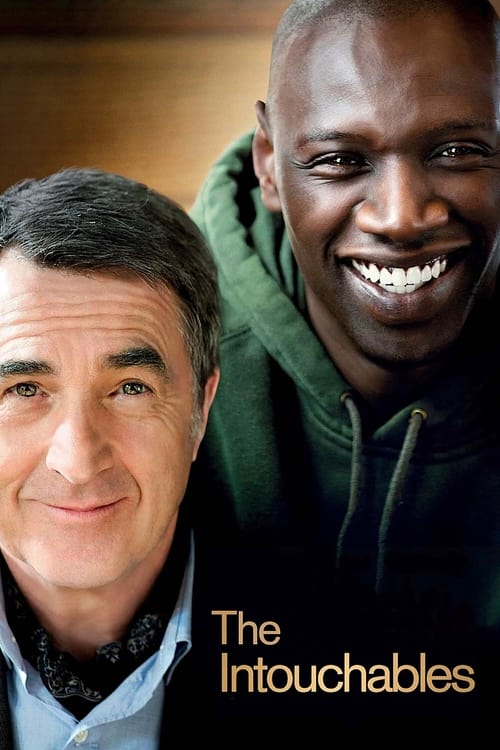
The Intouchables
A heartfelt comedic drama that soars with an uplifting spirit, painting a vibrant portrait of an unlikely friendship that blossoms against the stark contrast of Parisian society.
The Intouchables

The Intouchables

Intouchables

"Sometimes you have to reach into someone else's world to find out what's missing in your own."

02 November 2011 France 113 min ⭐ 8.3 (17,877)
Director: Éric Toledano Olivier Nakache
Cast: François Cluzet, Omar Sy, Anne Le Ny, Audrey Fleurot, Joséphine de Meaux
Drama Comedy
Friendship Across Social Divides Redefining Disability and Normalcy Personal Growth and Transformation Social Class and Inequality
Budget: $13,000,000
Box Office: $426,590,315

Overview

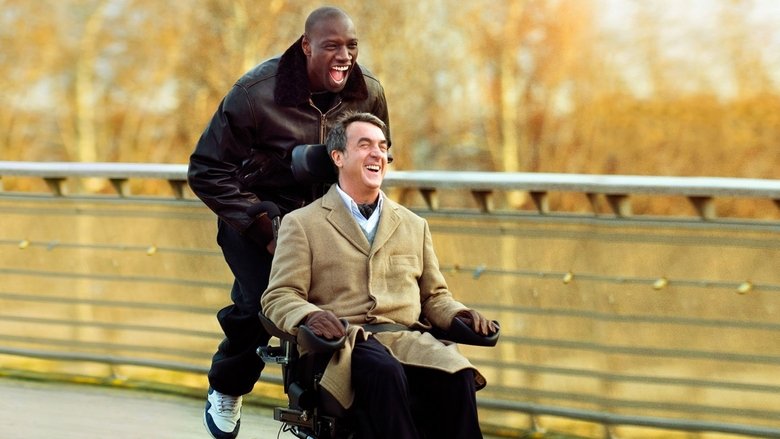
"The Intouchables" (original title: "Intouchables"), a 2011 French film directed by Éric Toledano and Olivier Nakache, is a poignant and uplifting comedy-drama based on a true story. The film chronicles the improbable friendship between two men from vastly different worlds in Paris. Philippe (François Cluzet) is a wealthy aristocrat who is a quadriplegic following a paragliding accident. In need of a live-in caregiver, he and his assistant interview a series of candidates.

Into their lives walks Driss (Omar Sy), a young man from the projects with a recent prison record, who only attends the interview to get a signature for his unemployment benefits. Intrigued by Driss's lack of pity and his unfiltered, irreverent demeanor, Philippe hires him on a trial basis. What follows is a journey of mutual discovery and transformation. Driss introduces Philippe to his world of Earth, Wind & Fire and a more spontaneous, joyful approach to life, while Philippe exposes Driss to classical music, art, and a life of privilege he never imagined.

Their bond transcends social class, race, and physical disability, as they challenge and support each other. Driss's unconventional methods help Philippe to experience life more fully, while Philippe provides Driss with a sense of purpose and stability. Their friendship is tested by personal challenges, including Driss's family issues and Philippe's anxieties about a romantic relationship with a woman he corresponds with but has never met. The film beautifully balances humor and heartfelt emotion, exploring themes of friendship, trust, and the human capacity for connection in the face of adversity.
Core Meaning

The core meaning of "The Intouchables" is a powerful testament to the transformative power of human connection that transcends social barriers. The directors wanted to convey that true friendship is not bound by class, race, or physical ability. The film's central message is about finding joy, meaning, and a renewed zest for life through an unlikely bond built on mutual respect, honesty, and a shared humanity. It suggests that happiness is not determined by material wealth or physical wholeness but by the quality of one's relationships. The film also challenges societal perceptions of disability, portraying Philippe not as a victim to be pitied but as a complete individual with desires, humor, and flaws. Ultimately, "The Intouchables" is a celebration of life, emphasizing that empathy and genuine connection can bridge any divide and lead to profound personal growth for everyone involved.

Thematic DNA

Friendship Across Social Divides 35%
Redefining Disability and Normalcy 30%
Personal Growth and Transformation 25%
Social Class and Inequality 10%

Friendship Across Social Divides

The central theme of the film is the improbable and profound friendship between Philippe, a white, wealthy aristocrat, and Driss, a Black man from an impoverished immigrant background. Their relationship challenges and ultimately dismantles the social, racial, and class barriers that separate them. The film posits that genuine human connection, based on mutual respect and understanding, can flourish in the most unlikely of circumstances. Their bond is not based on societal norms but on a shared sense of humor, honesty, and the fulfillment of each other's unspoken needs.

Redefining Disability and Normalcy

"The Intouchables" presents a refreshing and humanizing portrayal of disability. Philippe, a quadriplegic, is tired of being treated with pity. He is drawn to Driss precisely because Driss does not see him as a disabled man, but simply as a man. Driss's irreverent and sometimes shockingly direct approach to Philippe's condition allows Philippe to feel 'normal' again. The film critiques a society that often defines individuals by their physical limitations and argues that a full life is not contingent on physical ability but on experiences, relationships, and a sense of purpose.

Personal Growth and Transformation

Both Philippe and Driss undergo significant personal transformations throughout the film. Philippe, who had become withdrawn and despondent after his accident and the death of his wife, rediscovers his joie de vivre through his friendship with Driss. Driss, who starts as an irresponsible ex-convict, develops a sense of responsibility, empathy, and an appreciation for art and culture. Their relationship is a catalyst for mutual growth, demonstrating that people can positively influence and change each other's lives for the better.

Social Class and Inequality

The film starkly contrasts the opulent world of Philippe's Parisian mansion with the gritty reality of the banlieues where Driss's family lives. This juxtaposition highlights the vast social and economic inequalities in contemporary French society. However, the film subverts the typical narrative by suggesting that wealth does not equate to happiness and that authentic human connection is more valuable than any material possession. The friendship between Philippe and Driss serves as a microcosm of a more integrated and empathetic society.

Character Analysis

Philippe

François Cluzet

Archetype: The Wounded King
Key Trait: Witty and Cultured

Motivation

Philippe's primary motivation is to find a caregiver who will not treat him with pity and to feel alive again despite his physical limitations. He craves a genuine human connection that transcends his disability.

Character Arc

Initially, Philippe is a man trapped not only in his body but also in a state of depression and cynicism following his accident and the death of his wife. He is weary of the pity he receives. Through his relationship with Driss, he gradually rediscovers his sense of humor, his love for adventure, and his capacity for joy. He learns to let go of his fears, particularly regarding his romantic life, and to embrace life with a renewed spirit, ultimately finding the courage to meet his pen pal, Eléonore.

Driss

Omar Sy

Archetype: The Outlaw/Jester
Key Trait: Charismatic and Unconventional

Motivation

Initially, Driss is motivated by the need to get his social security papers signed. This evolves into a genuine desire to help Philippe live a fuller life, and later, to support his own family and build a better future for himself.

Character Arc

Driss begins the film as a charismatic but aimless and somewhat irresponsible young man from the projects, just out of prison. Taking the job as Philippe's caregiver out of necessity, he initially struggles with the responsibilities. However, his genuine empathy and connection with Philippe lead him to discover a sense of purpose and maturity. He learns about art, responsibility, and the value of caring for another person, which in turn helps him to address the issues in his own family and find a more positive direction in life.

Yvonne

Anne Le Ny

Archetype: The Loyal Retainer
Key Trait: Loyal and Caring

Motivation

Yvonne is motivated by her deep loyalty and affection for Philippe. Her primary concern is his happiness and well-being, and she acts as his protector and confidante.

Character Arc

Yvonne is Philippe's loyal and devoted aide. Initially, she is skeptical and wary of Driss, concerned for Philippe's well-being due to Driss's background and unconventional methods. Over time, she witnesses the positive impact Driss has on Philippe's life and comes to appreciate and respect him. She acts as a concerned and stabilizing presence in the household, and it is she who calls Driss back when Philippe falls into a depression after he leaves.

Magalie

Audrey Fleurot

Archetype: The Unattainable Love Interest
Key Trait: Professional and Composed

Motivation

Magalie is motivated by her professional responsibilities to Philippe. She maintains a clear line between her work and her personal life, despite Driss's attempts to cross it.

Character Arc

Magalie is Philippe's red-headed assistant and an early object of Driss's flirtatious advances. She consistently rebuffs him, establishing a playful but firm boundary. Her character serves to highlight Driss's initial roguish personality and his gradual understanding of respectful relationships. She remains a professional and composed figure in the household throughout the film.

Symbols & Motifs

The Maserati

Meaning:

The Maserati symbolizes freedom, rebellion, and the fusion of Philippe's and Driss's worlds. It represents a life of luxury and speed that Philippe can no longer physically experience on his own, but that Driss reintroduces to him.

Context:

The film opens and closes with a high-speed chase in the Maserati, framing the narrative. Driss's reckless driving, with Philippe's encouragement, is a direct challenge to the constraints of Philippe's physical condition and the staid conventions of his life. It's a shared experience of exhilarating freedom that solidifies their bond.

Paragliding

Meaning:

Paragliding is a powerful symbol of both freedom and the fragility of life. It represents Philippe's past life of adventure and physical prowess, but also the accident that led to his paralysis.

Context:

The film depicts Philippe's paragliding accident in a flashback, establishing the source of his trauma. However, by the end of the film, Driss encourages Philippe to go paragliding again, this time in a specially designed tandem chair. This act symbolizes Philippe reclaiming a part of his former self and overcoming his fears, demonstrating the therapeutic and liberating power of his friendship with Driss.

The Fabergé Egg

Meaning:

The Fabergé egg is a symbol of trust, value, and the different ways in which Philippe and Driss perceive the world. Initially, it represents the cultural and economic gap between them.

Context:

Driss initially steals a Fabergé egg from Philippe's house, seeing it as a valuable object to be pawned. Later, when Driss leaves Philippe's service, Philippe gives him the egg as a gift, a gesture of trust and a memento of their time together. Driss returns the egg at the very end, placing it on the table before Philippe meets Eléonore, symbolizing that their friendship is the true treasure, not the object itself.

Art and Music

Meaning:

The juxtaposition of high art and popular culture, specifically classical music versus Earth, Wind & Fire, symbolizes the merging of Philippe and Driss's disparate worlds and the breaking down of cultural hierarchies.

Context:

At Philippe's birthday party, a classical music ensemble performs, leaving the guests sedate. Driss, feeling the party is too boring, puts on Earth, Wind & Fire's "Boogie Wonderland," which livens up the atmosphere and gets everyone dancing. This scene vividly illustrates Driss's influence on Philippe's rigid world, showing that joy and art can be found in many forms and that different cultural expressions can coexist and even enrich one another.

Memorable Quotes

My true disability is not having to be in a wheel chair. It's having to be without her.

— Philippe

Context:

Philippe says this to Driss in a moment of vulnerability, explaining the true source of his suffering. It is a key moment in the development of their friendship, as it allows Driss to see beyond the physical disability to the man's heart.

Meaning:

This poignant line reveals the depth of Philippe's emotional pain, which he considers a greater burden than his physical paralysis. It underscores the theme that emotional and spiritual well-being are as crucial as physical health and highlights his profound love for his late wife.

Tell me Driss, why do you think people are interested in art? [...] That's because it's the only thing one leaves behind.

— Philippe

Context:

Philippe poses this question to Driss while they are in a gallery, and Driss initially suggests it's just a business. Philippe's answer reveals a more philosophical outlook, which he is trying to impart to Driss.

Meaning:

This quote encapsulates Philippe's perspective on life, legacy, and the enduring power of human creation. It reflects his cultured background and his contemplation of what truly lasts beyond a person's lifetime.

100 euros says I can lose them.

— Driss

Context:

This is said by Driss to Philippe at the beginning of the film during the police chase. It sets the tone for their dynamic – a relationship built on shared adventure and a playful disregard for convention.

Meaning:

This quote perfectly captures Driss's impulsive, thrill-seeking nature and his ability to pull Philippe out of his staid existence into a world of excitement and risk-taking.

Where do you find a paraplegic? Where you leave him.

— Driss

Context:

Driss tells this joke to Philippe, who, after a moment of surprise, bursts into laughter. It's a pivotal scene that demonstrates Philippe's appreciation for Driss's irreverence and their shared, unconventional sense of humor.

Meaning:

This is a prime example of the film's use of humor to deal with the sensitive subject of disability. Driss's joke, while seemingly offensive, is exactly the kind of treatment Philippe craves – to be addressed without pity and with a sense of normalcy.

Philosophical Questions

What is the true nature of disability?

The film explores whether disability is purely a physical limitation or if it is also a social construct defined by the pity and discomfort of others. Philippe's statement that his true disability is living without his wife suggests that emotional and psychological suffering can be more profound than physical impairment. The film challenges the audience to question what it truly means to be limited and whether a fulfilling life is dependent on physical ability.

Can empathy and friendship overcome deep-seated social divisions?

"The Intouchables" directly engages with the question of whether personal connection can bridge the vast chasms of class, race, and culture that structure society. The central relationship between Philippe and Driss serves as a powerful argument in the affirmative. Their bond is presented as a force capable of dismantling prejudice and stereotypes, suggesting that on an individual level, humanity and compassion can triumph over societal constructs.

What is the relationship between happiness and wealth?

The film juxtaposes Philippe's immense wealth with his profound unhappiness, and Driss's poverty with his vibrant love of life. This raises the philosophical question of whether material possessions can bring true fulfillment. The narrative suggests that while wealth can provide comfort, it cannot buy happiness, which is found instead in genuine human relationships, shared experiences, and a sense of purpose.

Is it more compassionate to offer pity or to disregard a disability?

The film presents a compelling ethical dilemma regarding care and compassion. Philippe is surrounded by people who offer him professional care and pity, which he despises. He is drawn to Driss, who is initially ignorant of and later indifferent to the conventional etiquette surrounding disability. This raises the question of whether true compassion lies in acknowledging and respecting a person's vulnerability or in treating them with a sense of normalcy that allows them to forget their limitations.

Alternative Interpretations

While overwhelmingly received as a feel-good story, "The Intouchables" has been subject to critical analysis that offers alternative interpretations. One significant critique, primarily from American critics, views the film through the lens of racial stereotypes. In this interpretation, Driss's character is seen as a version of the "magical negro" trope, a Black character whose primary narrative function is to help a white protagonist overcome their struggles and find happiness. Critics argue that Driss, with his street smarts, vitality, and connection to popular culture, is a collection of clichés about Black masculinity and exists to rejuvenate the life of the wealthy, cultured white man. This perspective suggests the film, despite its positive message of friendship, reinforces condescending and stereotypical racial dynamics.

Another interpretation focuses on the film's title, "Intouchables," which can mean "untouchables" in both the sense of being above the law and in the sense of a social outcast. From this viewpoint, both characters are "untouchable" in different ways: Philippe due to his extreme wealth and high social status, which isolates him, and also because his disability makes others afraid to connect with him on a human level. Driss is an untouchable due to his race, poverty, and criminal record, placing him on the margins of society. Their friendship, therefore, is not just about bridging a social gap but about two outcasts finding solace and understanding in each other, forming their own society of two where they are no longer untouchable.

Cultural Impact

"The Intouchables" became a cultural phenomenon, not just in France but globally. At the time of its release, it was the second highest-grossing French film of all time in its home country. The film's immense popularity sparked important conversations about social integration, class divides, and disability representation in France and beyond. It resonated with audiences for its heartwarming and humorous approach to sensitive subjects. The portrayal of a friendship that transcends racial and class lines was seen by many as a hopeful and positive message, especially in the context of ongoing debates about immigration and multiculturalism in Europe. The film's success also turned Omar Sy into a major international star, and he became the first Black actor to win the César Award (the French equivalent of an Oscar) for Best Actor. However, the film was not without its critics. Some American reviewers, in particular, found the portrayal of Driss to be a modern iteration of the "magical negro" trope, a stock character who exists solely to aid the white protagonist's personal growth, and accused the film of engaging in racial stereotyping. Despite this criticism, the film's overwhelming success and its numerous international remakes, including the American film "The Upside," are a testament to its enduring appeal and significant cultural impact. It demonstrated a global appetite for stories that are both entertaining and emotionally resonant, and it challenged French cinema to better represent the diversity of its society.

Audience Reception

"The Intouchables" was met with overwhelmingly positive audience reception worldwide. Viewers were captivated by its heartwarming story, the comedic and touching chemistry between François Cluzet and Omar Sy, and its uplifting message of hope and friendship. Audiences praised the film for its ability to handle sensitive topics like quadriplegia and social inequality with humor and grace, without becoming overly sentimental. Many found the film to be an inspiring and feel-good experience that left them with a renewed faith in humanity. On review aggregator sites, it holds very high audience scores. For example, on Metacritic, it has a user score of 91% positive ratings. The main points of criticism, which were more prevalent among professional critics than general audiences, revolved around the film's use of racial stereotypes, with some viewers finding the portrayal of Driss to be simplistic and clichéd. However, the vast majority of the audience embraced the film's positive spirit and celebrated its emotional depth and humor, making it one of the most beloved French films of its time.

Interesting Facts

  • The film is based on the true story of the friendship between French aristocrat Philippe Pozzo di Borgo and his caregiver, Abdel Sellou, an Algerian immigrant.
  • The directors, Olivier Nakache and Éric Toledano, discovered the story after seeing a documentary about Philippe and Abdel in 2002.
  • Omar Sy, who plays Driss, was cast in the role long before the script was even completed.
  • To ensure authenticity, the filmmakers collaborated with the real-life Abdel Sellou.
  • The character of Driss was changed from Algerian (like the real-life Abdel) to Senegalese to accommodate the casting of Omar Sy.
  • François Cluzet prepared for the role of Philippe by spending time with the real Philippe Pozzo di Borgo and learning to express a wide range of emotions using only his facial expressions.
  • The car chase scene at the beginning of the movie was inspired by a real event where Abdel would race through Paris with Philippe, and if caught, Philippe would fake a seizure to get a police escort to the hospital.
  • The film became a massive box office success in France and internationally, becoming one of the highest-grossing non-English language films in history.
  • Five percent of the film's profits were donated to a French association that supports people with disabilities.
  • An American remake of the film, titled "The Upside," was released in 2017, starring Bryan Cranston and Kevin Hart.

⚠️ Spoiler Analysis

Click to reveal detailed analysis with spoilers

Frequently Asked Questions

Explore More About This Movie

Dive deeper into specific aspects of the movie with our detailed analysis pages

Comments (0)

Leave a comment

No comments yet. Be the first to share your thoughts!