La leggenda del pianista sull'oceano
"An epic story of a man who could do anything... except be ordinary"
The Legend of 1900 - Symbolism & Philosophy
Symbols & Motifs
The Ocean Liner (SS Virginian)
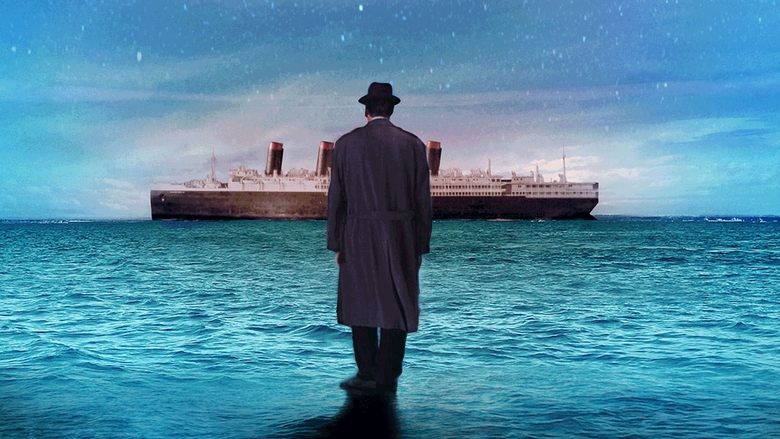
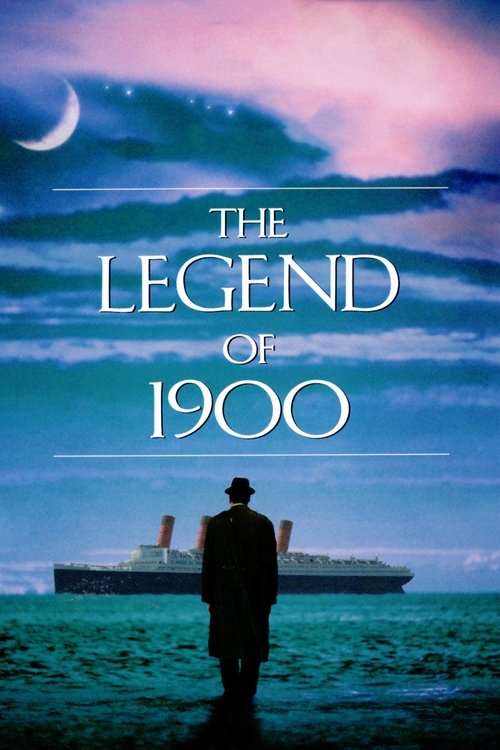
The ship symbolizes a self-contained world, a microcosm of society, and a floating cradle. It is both 1900's sanctuary and his prison. It represents a finite, comprehensible universe in contrast to the overwhelming infinity of the land. It's the only home and identity 1900 has ever known.
The entire film is set on or in relation to the SS Virginian. It is where 1900 is born, lives, creates his music, and ultimately chooses to die. Its constant movement—always traveling but never arriving for 1900—reflects his unique state of being.
The Piano
The piano is 1900's voice and his means of connection to the world. Critically, its 88 keys represent the finite boundaries within which infinite creativity is possible. It is the central metaphor for his entire worldview: that life and art are not about boundless options, but about creating endless beauty within a defined structure.
The piano is present in all of the film's key moments: 1900's discovery of music, his 'dance' with Max during a storm, his duel with Jelly Roll Morton, the recording of his masterpiece, and his final moments where he plays an imaginary keyboard before the ship explodes.
The Land/The City
The land, and specifically the sprawling city of New York, symbolizes the overwhelming, frightening infinity of life. It represents endless choices, a lack of clear boundaries, and a scale that is too vast for 1900 to comprehend. It's 'a ship too big for me'.
The land is always seen from the ship, a distant promise for immigrants but a source of anxiety for 1900. The most crucial scene involving the land is when 1900 stands halfway down the gangplank, looking at the city, before turning back, unable to face its 'infinite keyboard'.
The Broken Record
The fragmented record of 1900's only recording symbolizes his ephemeral genius and the pure, non-commercial nature of his art. It is a tangible piece of his soul, created for a single person out of pure emotion. By breaking it, he rejects the idea of his music being a commodity. Its eventual rediscovery by Max is what allows 1900's story to be told and his legend to survive, even in pieces.
1900 records a beautiful piece inspired by a girl, but smashes the master disc when he fails to give it to her. Max saves the pieces. Years later, Max playing the pieced-together recording on the derelict ship is the only way to lure 1900 from his hiding place.
Philosophical Questions
Does true freedom come from infinite choice or from mastering a finite world?
The film's central conflict explores this question through 1900's existential dilemma. The modern world often equates freedom with endless opportunity and the ability to go anywhere and do anything. 1900 rejects this notion, arguing that the 'infinite keyboard' of the world is paralyzing. He finds his freedom and his infinite artistic potential within the strict, finite confines of the 88 piano keys and the limited decks of his ship. The film forces the viewer to question whether the constant pursuit of 'more' leads to a richer life than one dedicated to achieving profound depth within a smaller, more focused existence.
What is the purpose of art if it is not shared with the world?
1900's genius is largely ephemeral, experienced only by those who happen to be on the ship at the same time as him. He has no interest in fame, fortune, or legacy. When he creates his masterpiece, he intends it for an audience of one and destroys the recording when that becomes impossible. This challenges the viewer's conventional understanding of art as something to be preserved and disseminated. The film suggests that perhaps the act of creation itself, as a pure expression of emotion, is the art's ultimate purpose, regardless of its audience or longevity.
Can a life lived in isolation still be a full life?
1900 never experiences many of the things we consider essential to a full life: romantic love, family, travel (in the conventional sense), or a home on solid ground. Yet, the film argues that his life is intensely rich. He experiences the entire spectrum of human emotion through the thousands of passengers he observes and translates into music. He has a deep and meaningful friendship with Max. The film asks what constitutes a 'full' life, suggesting it is not the breadth of experiences, but the depth of feeling and understanding one achieves.
Core Meaning
The core meaning of "The Legend of 1900" revolves around the profound and often paralyzing relationship between the infinite and the finite. Director Giuseppe Tornatore explores the idea that true freedom and creativity can be found within self-imposed limits. 1900's decision to never leave the ship, his 'finite' world, is not presented simply as a weakness or fear, but as a conscious choice to inhabit a space where he can comprehend and master his reality. The world outside, with its endless streets, choices, and possibilities, represents an overwhelming and terrifying infinity that he believes would dilute his art and his very being.
The film posits that a meaningful life does not necessarily require experiencing everything the world has to offer. Instead, it suggests that depth of experience and a profound connection to one's passion can create a universe of its own. 1900's life, though physically confined, is rich with emotion, observation, and artistic expression. His story becomes a fable about the nature of home, the fear of the unknown, and the tension between the artist's inner world and the vastness of external reality. It is a meditation on the idea that sometimes, the greatest art and the truest self are nurtured in isolation from the world's 'big scream'.