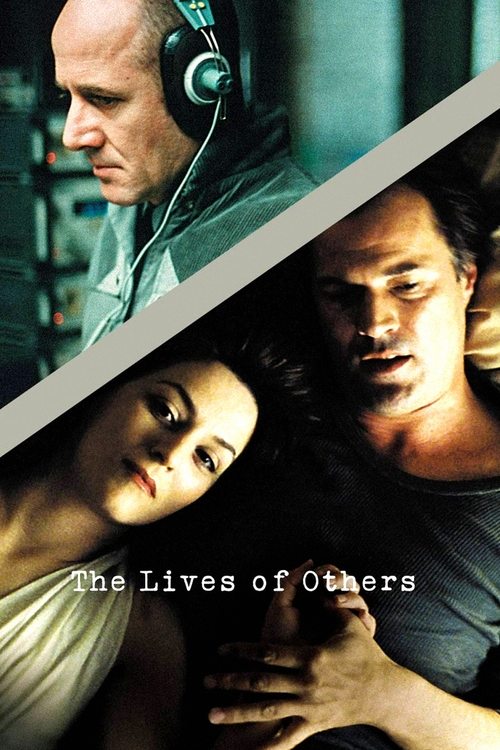
Das Leben der Anderen
"Before the Fall of the Berlin Wall, East Germany's Secret Police Listened to Your Secrets."
Director: Florian Henckel von Donnersmarck
Cast: Martina Gedeck, Ulrich Mühe, Sebastian Koch, Ulrich Tukur, Thomas Thieme
The Lives of Others — Movie Quotes
Memorable Quotes
Nein. Es ist für mich.
Context
Years after German reunification, Wiesler, now a mailman, sees Dreyman's new novel, "Sonata for a Good Man," in a bookstore window. He goes in and picks up a copy. The clerk asks if he wants it gift-wrapped, and he delivers this poignant final line.
Meaning
English: "No. It's for me." This is the final line of the film. It signifies Wiesler's complete transformation and his quiet acceptance of his new identity. He is no longer just HGW XX/7, an agent of the state, but a 'good man' who has been touched and changed by art and empathy. Buying the book is not an act of investigation but a personal acknowledgment of his own story and redemption.
Kann jemand, der diese Musik gehört hat, ich meine wirklich gehört hat, ein schlechter Mensch sein?
Context
Dreyman says this to Christa-Maria after playing the "Sonata for a Good Man" on the piano, shortly after learning that his friend Albert Jerska has committed suicide. Wiesler overhears this line through his surveillance equipment, and it resonates deeply with him, planting a seed of doubt about his work and his own moral standing.
Meaning
English: "Can someone who has heard this music, I mean truly heard it, really be a bad person?" This quote encapsulates the film's central theme about the transformative power of art. It suggests that art has a moral dimension and that a genuine aesthetic experience is fundamentally incompatible with true evil or inhumanity. It is this idea that plays out in Wiesler's own transformation.
Sie sind ein guter Mensch.
Context
Wiesler, wanting to prevent Christa-Maria from meeting Minister Hempf, anonymously approaches her in a bar. He appeals to her talent and sense of self-worth, encouraging her to be true to herself and her art. Touched by his words, she says this to him before deciding to go home to Dreyman instead.
Meaning
English: "You are a good man." This is a moment of profound dramatic irony. Christa-Maria says this to Wiesler, whom she does not recognize, believing him to be a stranger showing her kindness. For Wiesler, who knows the true nature of his actions (both as a Stasi agent and as her secret protector), this statement is both a validation of his recent change of heart and a painful reminder of the deception involved. It affirms his new path.
Wir sind Schild und Schwert der Partei.
Context
Grubitz says this to Wiesler early in the film, reinforcing their duty and importance within the GDR's power structure. It is stated with a sense of pride and purpose, establishing the ideological world from which Wiesler will eventually break free.
Meaning
English: "We are the shield and sword of the Party." This quote represents the official self-image and doctrine of the Stasi. It is the ideological justification for their repressive actions, framing them as protectors of the socialist state. It highlights the mindset that Wiesler initially embodies before his transformation begins.
Explore More About This Movie
Dive deeper into specific aspects of the movie with our detailed analysis pages