"An emotional earthquake!"
Director: Arthur Penn
Cast: Anne Bancroft, Patty Duke, Victor Jory, Inga Swenson, Andrew Prine
The Miracle Worker — Movie Quotes
Memorable Quotes
The room's a wreck, but her napkin is folded.
Context
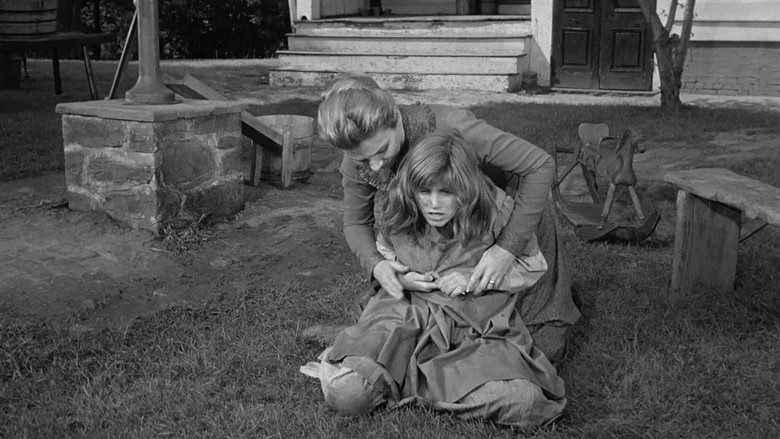
Spoken to Kate Keller after the famous, protracted physical battle between Annie and Helen in the dining room, where Annie has forced Helen to eat with a spoon and sit at the table.
Meaning
This quote encapsulates the first major victory in the battle for Helen's discipline. It signifies that despite the chaos and immense struggle of their fight in the dining room, a crucial lesson in order and obedience has been learned. It's a testament to Annie's perseverance and the first sign that her methods, however harsh, can yield results.
Obedience without understanding is a blindness, too.
Context
Annie says this to the Kellers when they are pleased with Helen's improved behavior after two weeks in the garden house. Annie is frustrated, feeling she has only taught obedience, not the true meaning of words, which is the real key to unlocking Helen's mind.
Meaning
This line reveals the core of Annie's teaching philosophy. She explains that mere discipline is not the end goal. Her objective is not just to make Helen behave, but to make her understand the world through language. It highlights the film's central theme that true sight and freedom come from comprehension, not just compliance.
Wah. Wah.
Context
Uttered by Helen at the water pump after Annie has repeatedly spelled "w-a-t-e-r" into her hand while pumping water over it. It's the moment of her great epiphany.
Meaning
This is the phonetic utterance of the word "water," the first word Helen consciously comprehends and speaks. It represents the "miracle" of the film's title—the moment language is unlocked and Helen's mind is set free from its dark and silent prison. It is the climax of the entire story.
I think Helen's worst handicap is your love. And pity.
Context
Spoken to Kate and Captain Keller during one of their early disagreements over how Helen should be handled. It crystallizes the central conflict between Annie's methods and the family's approach.
Meaning
A brutally honest and pivotal line where Annie confronts the Kellers about the true obstacle to Helen's progress. She identifies their well-intentioned but ultimately damaging pity as a greater barrier than Helen's deafness or blindness, as it prevents them from treating her as a capable individual who needs discipline and expectations.
Explore More About This Movie
Dive deeper into specific aspects of the movie with our detailed analysis pages