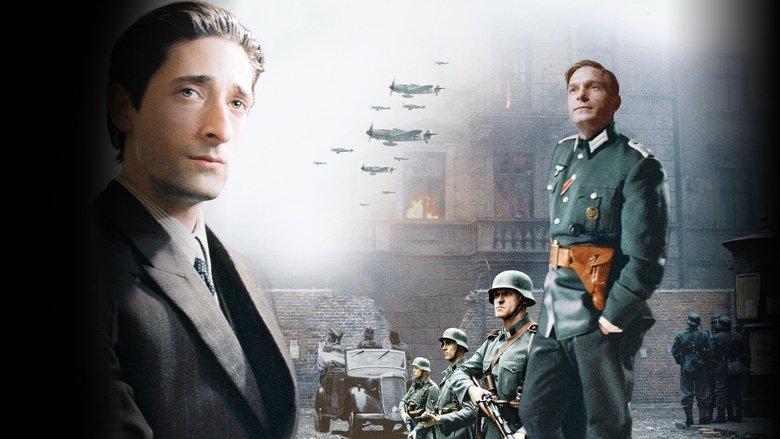

"Music was his passion. Survival was his masterpiece."
Director: Roman Polanski
Cast: Adrien Brody, Thomas Kretschmann, Frank Finlay, Maureen Lipman, Emilia Fox
The Pianist — Movie Quotes
Memorable Quotes
If I'm going to die, I prefer to die in my own home. I'm staying put.
Context
Szpilman says this to his family as they are packing to flee Warsaw after the German invasion. His decision to stay sets the stage for his subsequent ordeal.
Meaning
This quote, spoken early in the German occupation, reflects Szpilman's initial denial and his deep connection to his home and life in Warsaw. It highlights his initial underestimation of the true horror that is to come.
Thank God, not me. He wants us to survive. Well, that's what we have to believe.
Context
Hosenfeld says this to Szpilman after providing him with food and shelter, downplaying his own role in saving the pianist's life.
Meaning
This line reveals Captain Hosenfeld's humanity and his own need for faith and hope in the midst of the horrors of war. It's a moment of shared humanity between two men who should be enemies.
I'm not going anywhere.
Context
This is part of a conversation with his family when they are being forced to relocate to the ghetto. His earlier sentiment about staying home has now transformed into a will to endure whatever comes.
Meaning
Repeated in a different context, this quote shows Szpilman's grim determination to survive. It's no longer about comfort, but about a stubborn refusal to be eradicated.
It's a funny time to say this, but I wish I knew you better.
Context
Szpilman says this to his sister Halina as they are being marched to the trains that will take them to the Treblinka extermination camp. It is one of the last things he says to a family member.
Meaning
This poignant line underscores the tragedy of Szpilman's separation from his family. It's a moment of profound regret and a recognition of the lost opportunities for connection in the face of imminent death.
Explore More About This Movie
Dive deeper into specific aspects of the movie with our detailed analysis pages