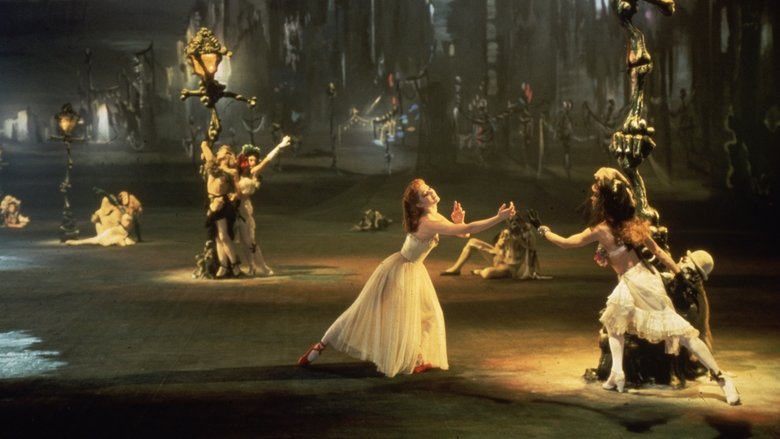
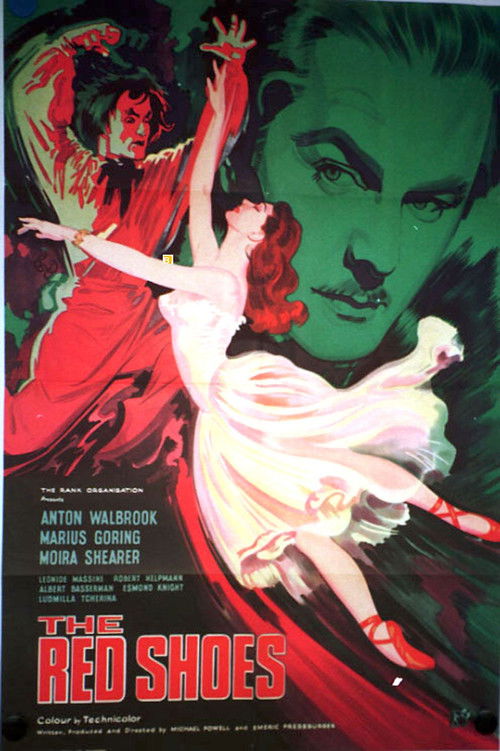
"Dance she did, and dance she must - between her two loves"
Director: Michael Powell, Emeric Pressburger
Cast: Anton Walbrook, Marius Goring, Moira Shearer, Robert Helpmann, Léonide Massine
The Red Shoes — Movie Quotes
Memorable Quotes
Why do you want to dance?
Context
This exchange occurs during Vicky and Lermontov's first significant meeting at an after-party. Lermontov is testing her commitment, and her profound, instinctual answer convinces him of her serious dedication to her art.
Meaning
This question, and Vicky's reply ("Why do you want to live?"), encapsulates the film's central theme. It establishes that for a true artist, the drive to create is not a hobby or a profession, but a fundamental, existential need equivalent to life itself.
A dancer who relies upon the doubtful comforts of human love can never be a great dancer. Never.
Context
Lermontov says this to Vicky after the prima ballerina Irina Boronskaya announces her engagement and he dismisses her. It is a warning to Vicky about the choice he believes she will inevitably have to make.
Meaning
This line is the clearest articulation of Lermontov's rigid philosophy and the central conflict of the film. It presents art and love as mutually exclusive forces and serves as the ultimatum that drives the narrative towards tragedy.
Take off the red shoes.
Context
Vicky says this to Julian after she has thrown herself from a balcony in front of a train. In this moment, the symbolic ballet shoes she wears have become indistinguishable from her fate, and their removal represents her final liberation.
Meaning
These are Vicky's dying words, a desperate plea for release from the artistic obsession that has consumed and destroyed her. It signifies her final, tragic understanding that the art she lived for has become a curse, and only in death can she be free of its demands.
It is much more disheartening to have to steal than to be stolen from.
Context
Lermontov says this to Julian Craster after Julian accuses his professor of plagiarizing his music for the ballet 'Heart of Fire'. Instead of being dismissive, Lermontov shows an understanding that acknowledges Julian's talent, leading to him hiring the young composer.
Meaning
This quote reveals Lermontov's complex character. While he appears to be offering a magnanimous perspective, it also underscores his supreme confidence and power. He positions himself as the source of genius, so secure in his own creative wellspring that he can afford to be magnanimous about theft.
Explore More About This Movie
Dive deeper into specific aspects of the movie with our detailed analysis pages