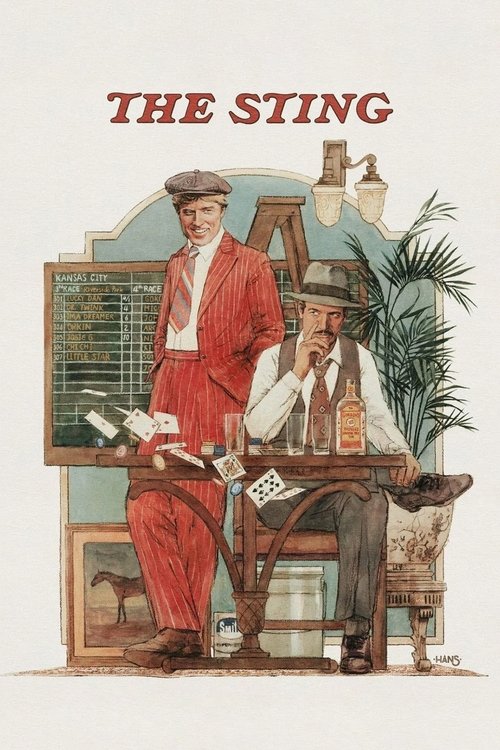
The Sting
A jazz-infused caper where deception pirouettes with revenge, painting a Depression-era cityscape in hues of cunning and camaraderie.
The Sting
The Sting

"...all it takes is a little confidence."

25 December 1973 United States of America 129 min ⭐ 8.0 (2,778)
Director: George Roy Hill
Cast: Paul Newman, Robert Redford, Robert Shaw, Charles Durning, Ray Walston
Drama Crime Comedy
Revenge and Justice Deception and Illusion Friendship and Mentorship Professionalism and Craft
Budget: $5,500,000
Box Office: $159,616,327

The Sting - Ending Explained

⚠️ Spoiler Analysis

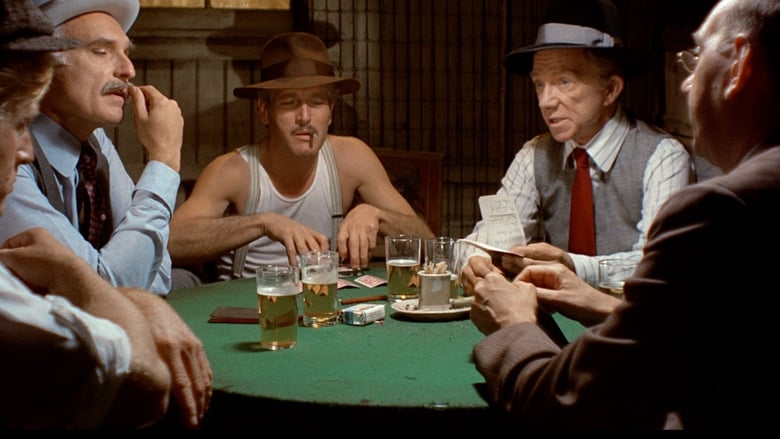
The brilliance of "The Sting" lies in its multi-layered deception, which cons both the antagonist and the audience. The central twist of the film is that the entire final act is a meticulously staged performance. Throughout the movie, Johnny Hooker is seemingly being pressured by FBI Agent Polk to betray Henry Gondorff. This creates immense tension, leading the audience to believe that Hooker's loyalty is genuinely in question.

In the climactic scene, after Lonnegan has placed his massive, un-winnable bet, the FBI storms the betting parlor. In the chaos, Gondorff, appearing to be betrayed, shoots Hooker. Agent Polk then immediately shoots Gondorff. For a moment, it seems both heroes are dead, a tragic end to their elaborate plan. Lt. Snyder quickly escorts a stunned Lonnegan away from the crime scene to avoid implication, leaving Lonnegan without his half-million dollars but believing his enemies are dead.

However, once Lonnegan is gone, Hooker and Gondorff rise, unharmed, to the cheers of the entire crew. It is revealed that the "FBI agents" were actually part of Gondorff's team of con men, and the shootings were faked with blanks and fake blood. The entire FBI pressure plot was the final layer of the con—a "con on the con" designed to ensure Lonnegan would be so flustered by the raid and the apparent murders that he would abandon his money without ever realizing he'd been swindled. The ultimate goal—to keep Lonnegan's con after taking his money—is achieved perfectly, as he leaves convinced he witnessed a federal bust gone wrong, not a masterful sting.

Alternative Interpretations

While "The Sting" is largely seen as a straightforward and cleverly plotted caper, some interpretations delve deeper into its structure and themes. One perspective views the entire film as a metanarrative about the art of filmmaking itself. The con artists are akin to a director (Gondorff), screenwriter, and actors, who create a believable world (the fake betting parlor) with sets, costumes, and props to manipulate their "audience" (Lonnegan). The film's self-aware structure, with its chapter-like title cards, supports this reading, suggesting that the audience is being let in on the craft of creating a compelling illusion, both as a con and as a movie.

Another interpretation focuses on the film as a form of social commentary. Set during the Great Depression, the story of clever individuals triumphing over a powerful, corrupt figure through wit rather than violence could be seen as an allegory for the common person's struggle against oppressive systems. The con men operate outside the law, but their target is a far greater and more brutal criminal, making them anti-heroes in a world where official channels of justice are ineffective. They represent a form of subversive, populist justice against the wealthy and ruthless.