The Tale of The Princess Kaguya
A heartbreakingly beautiful animated epic, this film uses a delicate watercolor aesthetic to paint a poignant fable about the ephemeral joys and profound sorrows of life on Earth.
The Tale of The Princess Kaguya

かぐや姫の物語

"A princess's crime and punishment."

23 November 2013 Japan 137 min ⭐ 8.1 (1,891)
Director: Isao Takahata
Cast: Aki Asakura, Takeo Chii, Nobuko Miyamoto, Kengo Kora, Atsuko Takahata
Drama Animation Fantasy
The Nature of Happiness Freedom vs. Societal Constraint The Beauty and Pain of Earthly Life Parental Love and Misguided Ambition
Budget: $49,300,000
Box Office: $24,366,656

The Tale of The Princess Kaguya - Ending Explained

⚠️ Spoiler Analysis

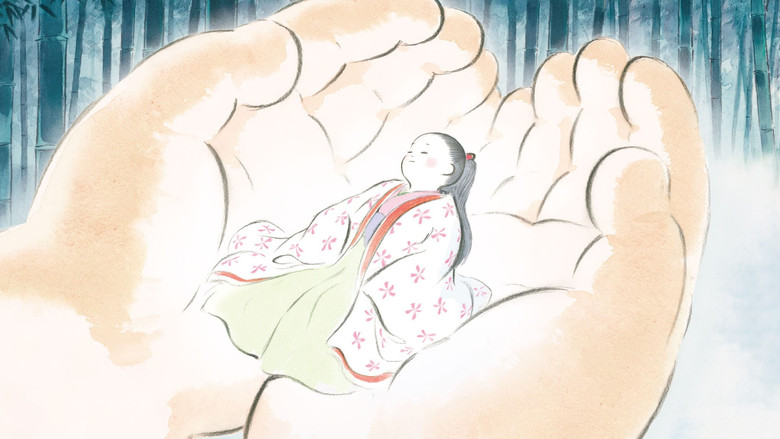
The central tragedy of The Tale of The Princess Kaguya is revealed in its final act: Kaguya is not from Earth. She is a celestial being from the Moon who was sent to Earth as a temporary exile. Her crime, she explains, was harboring a desire to experience mortal life. Her prayer to the Moon for help during the Emperor's aggressive advances was interpreted as a wish to return, and the celestial beings are coming to reclaim her at the next full moon. This revelation reframes her entire existence; she was never meant to stay, and her deep, loving connection to the world is the source of her ultimate anguish.

Her adoptive father's attempts to protect her with a fortress and samurai are utterly futile against the divine procession from the Moon. The celestial beings arrive not with malice, but with a serene, joyful music that contrasts sharply with the humans' grief, signifying that to them, this return is a celebration—a release from the defilement of earthly life. Kaguya's emotional climax comes in her reunion with Sutemaru. In a moment of pure, shared fantasy, they fly together, free from all constraints. This beautiful sequence is a dreamlike expression of the life she could have had, making her inevitable departure even more heartbreaking when Sutemaru wakes up to his own family, the memory already fading.

The ending is a powerful allegory for death. The celestial robe of feathers, when placed upon her, erases all her memories of Earth—its joys and its sorrows. She embraces her weeping parents one last time, full of love and regret, before the robe makes her forget them entirely. As she ascends, she looks back at the Earth, a single, uncomprehending tear falling from her eye—a subconscious remnant of the profound love she has lost. The film ends on the deep, inconsolable grief of her parents, a final, poignant statement on the beauty and pain of ephemeral, mortal love.

Alternative Interpretations

While the film is largely seen as a tragedy about the loss of a precious life, some interpretations offer different perspectives:

  • A Buddhist Allegory of Enlightenment: Kaguya's return to the Moon can be viewed through a Buddhist lens. The Earth represents the world of samsara—a cycle of suffering, attachment, and desire. The Moon is akin to Nirvana or the Pure Land, a state of being free from these earthly taints. In this reading, her return is not just death but a form of spiritual release. The robe of feathers that erases her memories is necessary to sever the attachments that cause suffering, allowing her to attain a state of peace.
  • A Punishment for a Celestial Crime: The film states that Kaguya was sent to Earth after breaking the laws of the Moon. One interpretation posits that her 'crime' was a desire to experience the messy, emotional reality of mortal life. Her time on Earth, therefore, is her punishment: to be given the very thing she longed for, only to have it cruelly taken away once she truly comes to love it. Her final, tearful look at the Earth is the culmination of this tragic punishment.
  • An Environmentalist Parable: Some view the story as a metaphor for humanity's relationship with nature. Kaguya, a being of natural and divine origin, thrives in the pristine countryside. When she is taken to the city—a symbol of human civilization—she is constrained, commodified, and made ill. Her eventual departure represents the inevitable retreat of the natural world in the face of human greed and artificiality. Her story is a lament for a lost, purer existence that has been corrupted by societal ambition.