The Tale of The Princess Kaguya
A heartbreakingly beautiful animated epic, this film uses a delicate watercolor aesthetic to paint a poignant fable about the ephemeral joys and profound sorrows of life on Earth.
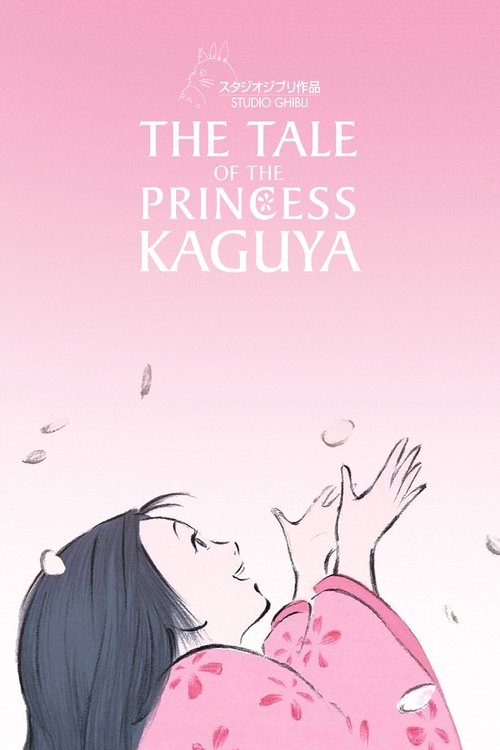
The Tale of The Princess Kaguya

The Tale of The Princess Kaguya

かぐや姫の物語

"A princess's crime and punishment."

23 November 2013 Japan 137 min ⭐ 8.1 (1,891)
Director: Isao Takahata
Cast: Aki Asakura, Takeo Chii, Nobuko Miyamoto, Kengo Kora, Atsuko Takahata
Drama Animation Fantasy
The Nature of Happiness Freedom vs. Societal Constraint The Beauty and Pain of Earthly Life Parental Love and Misguided Ambition
Budget: $49,300,000
Box Office: $24,366,656

Overview

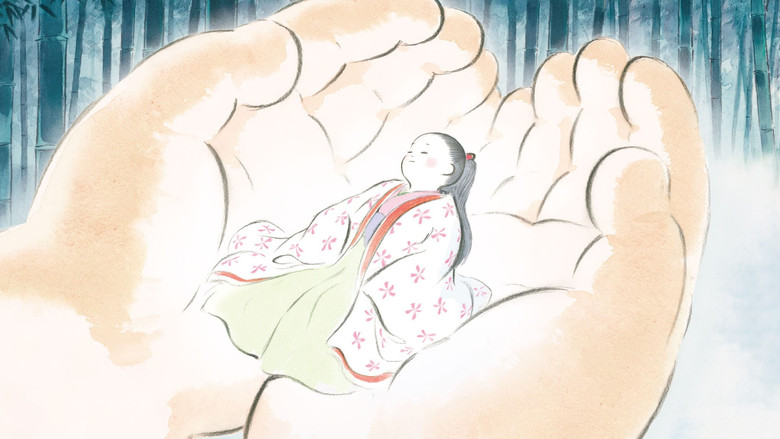
Based on the 10th-century Japanese folktale "The Tale of the Bamboo Cutter," the film begins when a humble bamboo cutter discovers a tiny, radiant girl inside a glowing bamboo shoot. Believing her to be a divine princess, he and his wife raise her as their own. The girl, who they name Kaguya, grows at an astonishing rate, finding immense joy in the simple, natural life of their rural village.

The bamboo cutter then finds gold and fine silks in the bamboo grove, interpreting it as a sign of Kaguya's noble destiny. He moves the family to the capital, determined to make her a proper princess. Stripped of her freedom and forced into the rigid constraints of aristocratic life, Kaguya becomes increasingly despondent, yearning for the simple life she left behind. Her extraordinary beauty attracts numerous suitors, including the Emperor himself, but she finds no happiness in their advances, setting them impossible tasks to win her hand.

Core Meaning

At its heart, The Tale of The Princess Kaguya is a profound meditation on the meaning of life and the inherent tension between worldly desires and spiritual fulfillment. Director Isao Takahata explores the idea that true happiness is not found in wealth or status, but in the genuine connections and simple, fleeting moments of joy that define our earthly existence. The film poignantly argues that the full spectrum of human experience, including its suffering and sorrow, is what makes life precious and vibrant. Kaguya's story is a tragic allegory for the transient nature of life (mono no aware), suggesting that our time on Earth is a beautiful, albeit painful, gift that should be lived with authentic emotion and connection to the natural world. Her ultimate return to the emotionless purity of the Moon serves as a metaphor for death, highlighting the invaluable richness of mortal life, with all its imperfections.

Thematic DNA

The Nature of Happiness 35%
Freedom vs. Societal Constraint 30%
The Beauty and Pain of Earthly Life 25%
Parental Love and Misguided Ambition 10%

The Nature of Happiness

The film constantly questions what constitutes true happiness. Kaguya's joyful, free-spirited childhood in the countryside is starkly contrasted with her miserable, restrictive life as a princess in the capital. Her father, blinded by societal values, believes that wealth, status, and a noble marriage will bring her happiness. However, Kaguya's experience proves the opposite; she is emotionally stifled by the very things meant to ensure her joy. The film posits that happiness is found not in material possessions or social standing, but in freedom, nature, and authentic human connection.

Freedom vs. Societal Constraint

A central conflict in the film is Kaguya's struggle for personal freedom against the oppressive conventions of Heian-era society. As a child of nature, she is wild and full of life. Once moved to the capital, she is subjected to a rigorous education designed to mold her into a docile noblewoman, a process that involves painfully plucking her eyebrows, blackening her teeth, and confining her within the mansion walls. Her resistance to these constraints and her rejection of powerful suitors represent a feminist critique of patriarchal structures that treat women as possessions or objects to be molded.

The Beauty and Pain of Earthly Life

The film portrays mortal life as a place of both immense beauty and profound suffering. Kaguya's time on Earth allows her to experience the vibrant joys of nature, friendship, and love. However, she also experiences loss, heartbreak, and the pain of being misunderstood. Her longing to return to Earth, even as she is being taken back to the sterile, painless perfection of the Moon, underscores the film's core message: that the messy, emotional, and ephemeral nature of human existence is what makes it truly valuable. The film embraces the Buddhist concept that life is suffering, but also frames that suffering as an integral part of its beauty.

Parental Love and Misguided Ambition

The Bamboo Cutter's love for Kaguya is genuine, but his ambition for her becomes a source of great sorrow. He truly believes he is acting in her best interest by forcing her into the life of a noble princess, convinced that this is her destiny and the path to her happiness. His actions, though well-intentioned, are ultimately selfish and ignorant of her true desires, causing her immense pain. This theme explores the tragic consequences that can arise when a parent's love is corrupted by societal pressures and a misunderstanding of what their child truly needs.

Character Analysis

Princess Kaguya

Aki Asakura

Archetype: The Innocent/Tragic Heroine
Key Trait: Spirited

Motivation

Her primary motivation is to live a life of freedom and authenticity, connected to nature and the people she loves. She resists being objectified or defined by others' expectations, whether from her father, her suitors, or society at large. She longs for the simple happiness she knew as a child.

Character Arc

Kaguya begins as a joyful, free-spirited child of nature, full of life and wonder. When forced into the role of a noblewoman, her spirit is gradually crushed by the rigid expectations and materialism of the capital. She struggles to please her beloved father while yearning for her lost freedom. Her journey is one of increasing sorrow and isolation, leading her to realize the profound value of the simple life she was forced to abandon. Ultimately, she accepts her celestial destiny with a heart full of love and regret for the world she must leave behind.

The Bamboo Cutter (Sanuki no Miyatsuko)

Takeo Chii

Archetype: The Well-Intentioned Antagonist
Key Trait: Ambitious

Motivation

He is motivated by a deep, albeit misguided, love for Kaguya. He genuinely believes that making her a princess and marrying her to a powerful lord will secure her happiness and fulfill her divine destiny. He is also driven by the societal belief that wealth and status are the ultimate goals.

Character Arc

The Bamboo Cutter starts as a simple, loving father. Upon finding gold, he becomes convinced that Kaguya is destined for greatness and that it is his duty to provide her with a life of nobility. His love for her becomes entangled with his own ambition and a misguided understanding of happiness. He forces a life upon her that makes her miserable, and by the time he realizes his grave mistake, it is too late. His arc is a tragic one, from a humble father to a man who, through love and ignorance, destroys his daughter's happiness.

The Bamboo Cutter's Wife (Ōna)

Nobuko Miyamoto

Archetype: The Nurturing Mother
Key Trait: Compassionate

Motivation

Her motivation is simple and pure: Kaguya's well-being and happiness. She is not concerned with status or wealth, but with nurturing the child she loves. She advocates for a simpler, more emotionally fulfilling life for her daughter.

Character Arc

The wife provides a constant source of unconditional love and maternal warmth for Kaguya. Unlike her husband, she is more attuned to Kaguya's emotional needs and is skeptical of the move to the capital. While she is often passive and unable to prevent her husband's decisions, her empathy and quiet support are Kaguya's main source of comfort within the stifling mansion. Her arc is less about change and more about being the emotional anchor in a turbulent story.

Sutemaru

Kengo Kora

Archetype: The Lost Love
Key Trait: Loyal

Motivation

Sutemaru is motivated by his love for Kaguya and his connection to their shared home and way of life. He represents a path not taken, a life of simple, earthly happiness that Kaguya was denied.

Character Arc

Sutemaru is Kaguya's childhood friend and first love, representing the joyful, free life she was forced to leave behind. He is a strong and kind presence in her early life. When they reunite years later, their connection is still powerful. Their magical flight together is a moment of pure, unadulterated freedom and joy, a glimpse of the life they could have had. However, he is now married with a child, and their reunion only serves to emphasize the tragedy of what has been lost.

Symbols & Motifs

The Moon

Meaning:

The Moon symbolizes a sterile, passionless, and detached form of existence, akin to a Buddhist conception of heaven or the afterlife. It is a place devoid of earthly suffering, memory, and attachment. For Kaguya, it represents her origin and ultimate, inescapable destiny, but also a profound loss of the vibrant life she has come to cherish on Earth. Her return is a metaphor for death, a release from earthly pain but also an erasure of its joys.

Context:

The Moon is a recurring visual motif. Kaguya is shown gazing at it, especially during moments of distress. It is to the Moon that she cries out for help, inadvertently sealing her fate to return. The climax of the film features a celestial procession from the Moon, led by a Buddha-like figure, coming to retrieve her.

Nature (Bamboo, Birds, Flowers)

Meaning:

Nature represents freedom, authenticity, and the simple, uncorrupted joy of life. Kaguya is born from a bamboo stalk and is most alive when she is outdoors, surrounded by plants and animals. The changing seasons are used to mark the passage of time and reflect her emotional state. The vibrant, living world of the countryside is contrasted with the rigid, artificial environment of the capital.

Context:

Kaguya is often called "Li'l Bamboo" by her childhood friends. Her early life is a montage of joyful moments playing in the forest and fields. One of the film's most iconic scenes is a frantic, impressionistic sequence where Kaguya flees the capital, her emotional turmoil rendered as a desperate rush through a natural landscape.

The Robe of Feathers

Meaning:

The celestial robe of feathers (hagoromo) symbolizes the erasure of memory and earthly attachment. When Kaguya puts it on, she will forget all the joy and sorrow of her life on Earth, allowing her to return to the untroubled state of the Moon. It represents a forced forgetting, a severing of the bonds that make her human, and is the final, tragic element of her departure.

Context:

In the film's climax, a celestial attendant offers Kaguya the robe. Before it is placed on her, she is able to embrace her parents one last time, filled with love and regret. The moment the robe touches her, her memories are wiped away, and she departs without a backward glance, leaving her parents devastated.

The Cage/Mansion

Meaning:

The stately mansion in the capital, where Kaguya is forced to live, symbolizes her imprisonment by societal expectations and her father's ambitions. Despite its luxury, it is a gilded cage that stifles her spirit and separates her from the freedom of nature and her true self. She is often depicted behind screens or in secluded rooms, physically and emotionally isolated.

Context:

During her naming ceremony, Kaguya is literally hidden from the guests in a screened-off area, reduced to an object of speculation. This confinement contrasts sharply with the open, expansive landscapes of her childhood. Her desperate escape from the mansion during the ceremony highlights her feeling of being trapped.

Philosophical Questions

What is the true meaning of a 'happy' life?

The film relentlessly explores this question by juxtaposing two opposing lifestyles. The Bamboo Cutter pursues a version of happiness defined by wealth, status, and societal approval, imposing it on Kaguya. This path, however, only brings her profound misery. Kaguya's own fleeting moments of joy come from freedom, nature, and simple human connections. The film suggests that happiness is not an end-state to be achieved through material gain, but an experience found in the authentic, ephemeral moments of being alive, even if those moments are tinged with sadness.

Is a life with suffering preferable to an existence without it?

Kaguya originates from the Moon, a place described as pure and free from earthly turmoil. However, it is also without true emotion or color. On Earth, she experiences immense joy but also deep sorrow, loss, and pain. In the end, she desperately clings to her life on Earth, with all its suffering, rather than return to the sterile peace of the Moon. The film argues that the richness of life is inseparable from its pain; suffering is the price of love, connection, and beauty. Takahata seems to conclude that an emotional, transient life, however painful, is infinitely more valuable than a passionless eternity.

Can one ever escape their destiny?

From the moment she is found, Kaguya is treated as a being with a preordained destiny—first by her father, who believes she is meant to be a noble princess, and later by the reveal of her true celestial origins. She fights against the destiny her father imposes but is ultimately powerless to prevent the destiny she was born into. Despite her deep attachment to Earth and the efforts of her loved ones to protect her, her return to the Moon is inevitable. The film presents a tragic view of fate, suggesting that some forces are beyond human control, and that our role is to live as fully as possible within the time we are given.

Alternative Interpretations

While the film is largely seen as a tragedy about the loss of a precious life, some interpretations offer different perspectives:

  • A Buddhist Allegory of Enlightenment: Kaguya's return to the Moon can be viewed through a Buddhist lens. The Earth represents the world of samsara—a cycle of suffering, attachment, and desire. The Moon is akin to Nirvana or the Pure Land, a state of being free from these earthly taints. In this reading, her return is not just death but a form of spiritual release. The robe of feathers that erases her memories is necessary to sever the attachments that cause suffering, allowing her to attain a state of peace.
  • A Punishment for a Celestial Crime: The film states that Kaguya was sent to Earth after breaking the laws of the Moon. One interpretation posits that her 'crime' was a desire to experience the messy, emotional reality of mortal life. Her time on Earth, therefore, is her punishment: to be given the very thing she longed for, only to have it cruelly taken away once she truly comes to love it. Her final, tearful look at the Earth is the culmination of this tragic punishment.
  • An Environmentalist Parable: Some view the story as a metaphor for humanity's relationship with nature. Kaguya, a being of natural and divine origin, thrives in the pristine countryside. When she is taken to the city—a symbol of human civilization—she is constrained, commodified, and made ill. Her eventual departure represents the inevitable retreat of the natural world in the face of human greed and artificiality. Her story is a lament for a lost, purer existence that has been corrupted by societal ambition.

Cultural Impact

The Tale of The Princess Kaguya is a masterful adaptation of Japan's oldest prose narrative, "The Tale of the Bamboo Cutter," from the 10th century. Director Isao Takahata's final film serves as both a faithful retelling and a profound, modern reinterpretation of the classic folktale. Where the original story's heroine can seem enigmatic, Takahata's version focuses intensely on Kaguya's inner emotional life, making her a relatable figure of tragic depth and feminist agency. The film was a significant artistic statement, pushing the boundaries of animation with its distinctive, expressive watercolor and charcoal style, standing in stark contrast to the more conventional aesthetics of its contemporaries.

Critically, the film was hailed as a masterpiece and a stunning swan song for its director, earning an Academy Award nomination for Best Animated Feature Film. While not a massive box office success, its influence is felt in its bold artistic choices and its emotionally resonant storytelling. It champions a different kind of animation—one that values simplicity, emotional expression, and the beauty of the unfinished line over polished realism. The film's themes of life's transient beauty (mono no aware), the critique of patriarchal society, and the search for authentic happiness resonated deeply with audiences and critics worldwide, cementing its place as one of the most poignant and artistically significant animated films of the 21st century.

Audience Reception

Audiences overwhelmingly praised The Tale of The Princess Kaguya for its stunning and unique visual style, frequently describing it as one of the most beautiful animated films ever made. The expressive, watercolor-and-ink aesthetic was celebrated for its artistic bravery and emotional power. Viewers were deeply moved by the film's poignant and heartbreaking story, with many highlighting its profound themes about life, happiness, and loss. The emotional weight of the narrative, particularly the tragic ending, left a lasting impact on many, who found it to be a sophisticated and mature work of art.

Points of criticism were minor but generally focused on the film's deliberate pacing and long runtime of 137 minutes, which some viewers found to be slow or repetitive, particularly in the middle section dealing with the suitors. A few also found the sudden shift into overt fantasy at the end to be slightly jarring after the film's more grounded, magical-realist tone throughout. Despite these points, the overall verdict from audiences is that the film is a masterpiece, a deeply emotional and visually breathtaking experience that stands as a worthy final film for its legendary director.

Interesting Facts

  • The film was in development for eight years, a notoriously long production schedule even for Studio Ghibli.
  • It was the final film directed by the legendary Isao Takahata, co-founder of Studio Ghibli, before his death in 2018.
  • The film's unique visual style was intended to look like a moving watercolor painting or a charcoal sketch, a deliberate choice by Takahata to evoke emotion and memory rather than realism.
  • Unlike most animated films, the dialogue was recorded first, and the animation was then drawn to match the voice actors' performances and timing (a technique known as pre-scoring).
  • The budget for the film was an estimated ¥5 billion (approximately $49.3 million), making it the most expensive Japanese animated film at the time of its release.
  • Director Isao Takahata had considered adapting the "Tale of the Bamboo Cutter" as early as the 1960s.
  • The score was composed by Joe Hisaishi, the celebrated composer famous for his work on most of Hayao Miyazaki's films.

⚠️ Spoiler Analysis

Click to reveal detailed analysis with spoilers

Frequently Asked Questions

Explore More About This Movie

Dive deeper into specific aspects of the movie with our detailed analysis pages

Comments (0)

Leave a comment

No comments yet. Be the first to share your thoughts!