Skip to content
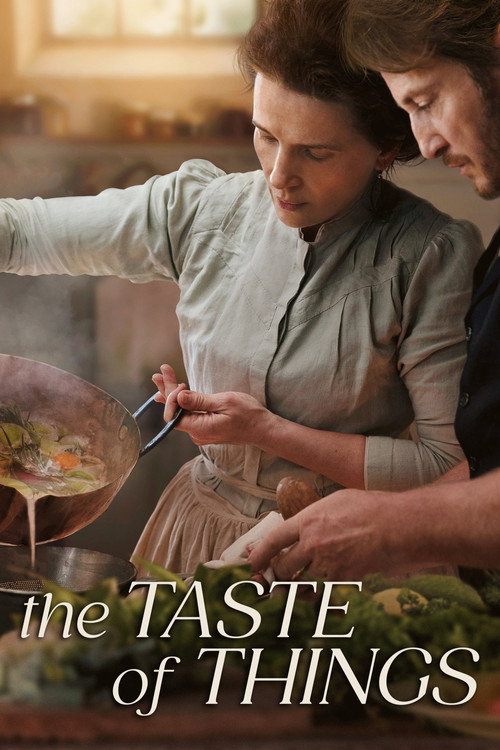
The Taste of Things
A luminous, simmering sensory poem where culinary creation becomes the purest dialect of devotion, capturing autumn's golden transience through the sacred choreography of butter, flame, and fleeting mortal grace.
The Taste of Things
The Taste of Things

La Passion de Dodin Bouffant

"Savor every moment."

08 November 2023 Belgium 135 min 7.1 (412)

Director: Trần Anh Hùng

Cast: Benoît Magimel, Juliette Binoche, Patrick d'Assumçao, Emmanuel Salinger, Jan Hammenecker

Drama Romance Gastronomy as Non-Verbal Emotional Language Love, Equality, and Partnership Ephemerality, Aging, and Mortality Pedagogy and Generational Legacy
Budget: $6,500,000
Box Office: $5,970,753

The Taste of Things — Ending Explained

⚠️ Spoiler Analysis

The narrative centers on an unspoken dread: Eugénie suffers from undiagnosed recurring fainting spells. Despite Dodin's pleas that she rest and his repeated proposals of marriage, Eugénie insists on working, wanting their relationship defined by culinary passion rather than matrimonial enclosure.

When her condition worsens, Dodin assumes the role of cook, preparing an elaborate four-course feast for her in bed and embedding an engagement ring inside a poached pear. Touched by this act of devotion, Eugénie finally accepts his proposal, and the two are wed. Their happiness is brief; one morning shortly after their wedding, Eugénie dies quietly in her sleep.

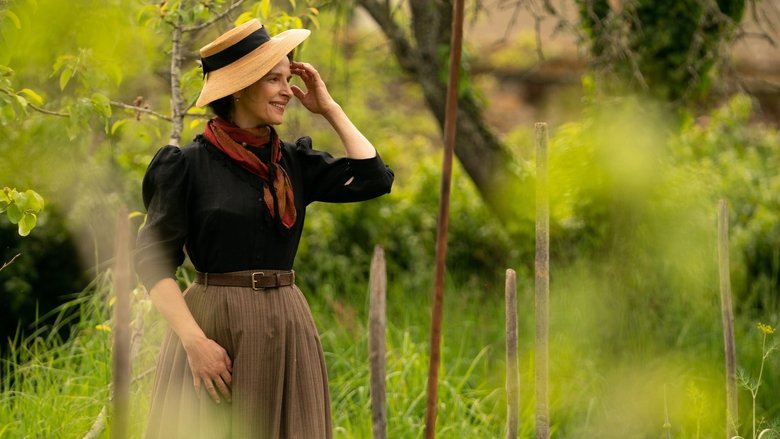
Dodin descends into aimless grief, unable to eat or cook, rejecting a stream of prospective replacement chefs who fail to grasp the soul of gastronomy. Dodin's emotional revival begins when young Pauline returns to the manor to apprentice under him. In the final sequence, a 360-degree tracking shot moves around the kitchen, revealing a vision of Eugénie in her radiant summer dress. When Dodin asks whether she was his wife or his cook, she answers that she was his cook, cementing her legacy as an artist whose spirit remains alive within the kitchen walls.

Alternative Interpretations

The narrative invites several distinct interpretations:

  • Autonomy vs. Domestication: One reading views Eugénie's acceptance of marriage as a poetic concession to Dodin's devotion, while an alternative reading sees her lingering insistence on being 'the cook' as a defense of female professional autonomy against 19th-century domestic containment.
  • Artistic Creation vs. Pure Privilege: Some critics view the manor as an insulated, bourgeois haven where labor is idealized without economic hardship, while others view it as a cinematic fable elevating culinary labor to an egalitarian spiritual practice.
  • Cyclical Continuity of the Ending: The final sequence can be read either as Dodin trapped in mournful psychological haunting, or as his liberation in carrying Eugénie's eternal 'summer' forward through Pauline.

Explore More About This Movie

Dive deeper into specific aspects of the movie with our detailed analysis pages

Similar Movies