Skip to content
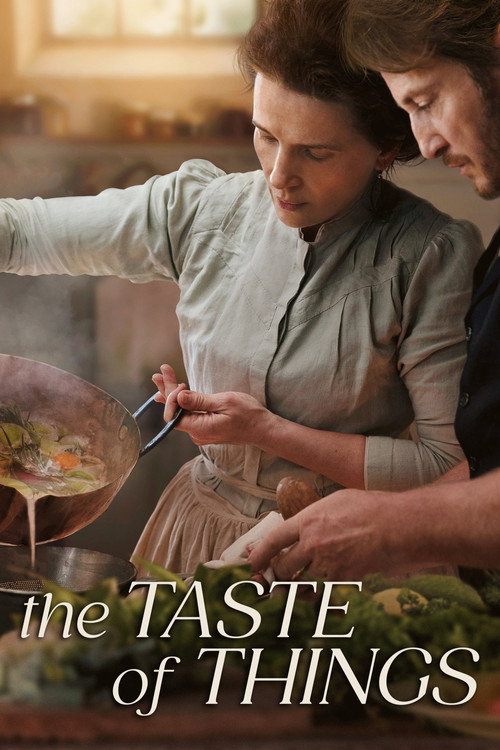
The Taste of Things
A luminous, simmering sensory poem where culinary creation becomes the purest dialect of devotion, capturing autumn's golden transience through the sacred choreography of butter, flame, and fleeting mortal grace.
The Taste of Things

The Taste of Things

La Passion de Dodin Bouffant

"Savor every moment."

08 November 2023 Belgium 135 min 7.1 (412)

Director: Trần Anh Hùng

Cast: Benoît Magimel, Juliette Binoche, Patrick d'Assumçao, Emmanuel Salinger, Jan Hammenecker

Drama Romance Gastronomy as Non-Verbal Emotional Language Love, Equality, and Partnership Ephemerality, Aging, and Mortality Pedagogy and Generational Legacy
Budget: $6,500,000
Box Office: $5,970,753

Overview

Set in 1889 within the sunlit French countryside of the Loire Valley, The Taste of Things follows the intimate, symbiotic relationship between Dodin Bouffant, a peerless culinary theorist and gourmet, and Eugénie, his gifted personal cook of over twenty years. In their rustic stone manor, life moves in harmony with the changing seasons and the natural world, revolving around an unhurried, rigorous devotion to French gastronomy.

Dodin and Eugénie share a domestic partnership that transcends the conventional boundaries of master and employee. Although they are occasional lovers bound by shared artistic dedication, Eugénie cherishes her personal autonomy and repeatedly declines Dodin's marriage proposals, preferring the equilibrium of their kitchen partnership. A young local girl, Pauline, is brought into the kitchen fold when she displays a naturally gifted palate, offering a glimpse of generational continuation.

The narrative unfolds through the tactile, meticulously staged preparation of feasts rather than high-stakes conflict. However, as subtle signs of Eugénie's failing physical health emerge through sudden fainting spells, Dodin must confront the fragility of their Edenic routine, prompting an unprecedented role reversal in which the master gourmand takes up the apron to cook exclusively for the woman who defined his life's work.

Core Meaning

Trần Anh Hùng conceives the film as an exploration of art, love, and time, positing that cooking is the most direct, tactile form of artistic expression where devotion and love are made tangible and shared.

The central message asserts that true passion thrives in mutual dedication to craft and quiet companionability rather than dramatic disruption. Furthermore, by intertwining the joy of culinary pleasure with the inevitability of mortality, the film articulates that ephemerality is precisely what grants beauty, taste, and human connection their value.

Thematic DNA

Gastronomy as Non-Verbal Emotional Language 35%
Love, Equality, and Partnership 25%
Ephemerality, Aging, and Mortality 25%
Pedagogy and Generational Legacy 15%

Gastronomy as Non-Verbal Emotional Language

Cooking serves as Dodin and Eugénie's primary medium of communication. Feasts are crafted not to display prestige, but as direct offerings of affection, understanding, and shared aesthetics.

Love, Equality, and Partnership

Moving beyond 19th-century class and gender hierarchies, Dodin and Eugénie operate in the kitchen as absolute peers. Eugénie's insistence on preserving her identity as 'the cook' emphasizes love built on mutual respect rather than possessiveness.

Ephemerality, Aging, and Mortality

Framed through metaphors of summer turning to autumn, the narrative reflects on aging artists facing the twilight of their physical capacities. The transient nature of a finished dish mirrors the impermanence of human life.

Pedagogy and Generational Legacy

Through the mentorship of young Pauline, Dodin and Eugénie pass along their sensory knowledge, ensuring that taste and culinary wisdom survive individual loss.

Character Analysis

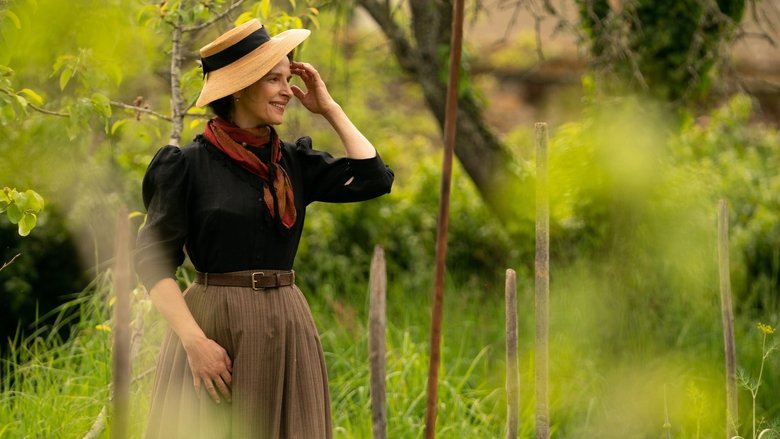
Eugénie Chatagne

Juliette Binoche

Archetype: Virtuoso Artist / Independent Soul Key Trait: Quiet dignity, sensory mastery, serene grace

Motivation

To perfect the culinary art and preserve her spiritual independence and identity as a cook.

Character Arc

Transitions from fiercely guarding her quiet autonomy to embracing a formal union with Dodin before succumbing to her fatal illness.

Dodin Bouffant

Benoît Magimel

Archetype: Gourmand / Devoted Lover Key Trait: Refined sensibility, deep vulnerability, obsessive dedication

Motivation

To create gastronomic harmony and express his boundless devotion to Eugénie.

Character Arc

Shifts from an intellectual culinary conceiver to a humble caregiver, then a grieving survivor who finds purpose through teaching.

All 4 characters and cast

Symbols & Motifs

The Pot-au-Feu

Meaning:

A cornerstone symbol representing humble, foundational French culinary tradition, emphasizing purity, substance, and restraint over hollow excess.

Context:

Planned by Dodin to be served in response to an overindulgent, ostentatious feast hosted by the Eurasian Prince.

The Copper Cookware and the Kitchen

Meaning:

Embody harmony, labor, and craftsmanship, representing a sanctuary detached from the chaotic outside world.

Context:

The rustic, gleaming cellar kitchen where the characters spend hours meticulously preparing meals in communal synchronization.

The Poached Pear with the Ring

Meaning:

A marriage proposal rendered entirely in the language of gastronomy, fusing culinary artistry with romantic commitment.

Context:

Concealed inside a delicately poached dessert during the intimate four-course dinner Dodin personally prepares for the ailing Eugénie.

Natural Sunlight and Golden Hues

Meaning:

Reinforce the warmth of late summer and early autumn while bathing the characters in a nostalgic, painterly glow that suggests transience.

Context:

Filtered, butter-yellow daylight that permeates every window and outdoor garden scene throughout the estate.

Ortolan Bunting

Meaning:

Represents sacred indulgence, French culinary tradition, and the intense sensory immersion required by true connoisseurship.

Context:

Consumed by the gourmands with white linen napkins draped over their heads to trap the aromas and hide their indulgence.

Memorable Quotes

Je veux juste savoir... est-ce que je suis votre cuisinière ou votre femme ? — Ma cuisinière.
— Eugénie and Dodin

Context

Spoken during their tender conversations reflecting upon their relationship and life together.

Meaning

Rather than diminishing her, Dodin's declaration that she is his 'cook' serves as the highest possible honor, recognizing her supreme artistry as the foundation of their spiritual union.

Puis-je vous regarder manger ?
— Dodin Bouffant

Context

Spoken as Dodin brings the lavish four-course meal he personally cooked to Eugénie's bedside.

Meaning

Marks the complete reversal of their dynamic, transforming the act of witnessing her eat into an intimate romantic and creative tribute.

All 4 quotes

Philosophical Questions

Can transient art forms hold equal weight to permanent monuments?

The film observes that meals disappear within moments of consumption, yet their sensorial impact and emotional resonance create an indelible memory that outlasts physical matter.

What constitutes true creative partnership?

Through Dodin's conceptual vision and Eugénie's execution, the film explores how collaborative art requires the dissolution of ego, allowing both minds to merge without dominance.

How does one find solace in the face of inevitable grief?

When love is lost to illness, healing is achieved not by rejecting passion, but by rededicating oneself to creation and passing knowledge forward to youth.

Alternative Interpretations

The narrative invites several distinct interpretations:

Full ending explanation

Cultural Impact

France's national Oscar selection committee chose The Taste of Things as its official entry for Best International Feature Film at the 96th Academy Awards over Justine Triet's Palme d'Or-winning courtroom drama Anatomy of a Fall. The decision sparked significant debate in France and international film circles. While the film made the Academy's 15-film December shortlist, it did not receive a final nomination.

International and Anglo-American critics celebrated the film for its technical virtuosity, choreography, and visual beauty, while some French cultural commentators debated its traditional, nostalgic depiction of rural French heritage.

Audience Reception

Critical and audience reception has been overwhelmingly warm, with particular praise directed toward:

  • The masterful, fluid camera choreography and long tracking takes by cinematographer Jonathan Ricquebourg.
  • Authentic culinary realism and rich natural sound design (sizzling butter, crackling fires, bubbling broth).
  • The deep, understated romantic chemistry between Juliette Binoche and Benoît Magimel.

Critiques centered on the deliberate, meditative pacing with minimal traditional conflict, as well as the controversy surrounding its Oscar selection over Anatomy of a Fall. Overall, it is widely regarded as a culinary cinema masterpiece and a sensual celebration of gastronomy and mature romance.

Interesting Facts

  • All dishes depicted on screen were cooked for real using authentic 19th-century recipes, with actors executing the culinary steps live during long takes without body doubles or synthetic food props.
  • Renowned three-Michelin-starred French chef Pierre Gagnaire served as Gastronomic Director, designing period-accurate menus and ensuring culinary precision.
  • Juliette Binoche and Benoît Magimel were previously a real-life couple who separated two decades earlier and share a daughter; their reunion added authentic affection and ease to their roles.
  • The film was shot on location in the Segré-en-Anjou Bleu area of the Atlantic Loire Valley in an authentic period manor house.
  • The screenplay adapts Swiss author Marcel Rouff's 1924 novel 'La Vie et la passion de Dodin-Bouffant, gourmet', inspired by Jean-Anthelme Brillat-Savarin.
  • The film opens with an unbroken, largely dialogue-free cooking sequence lasting nearly 40 minutes.
  • Trần Anh Hùng won the Best Director award at the 2023 Cannes Film Festival, where the film premiered in official competition.

Easter Eggs

Pierre Gagnaire Cameo

Three-Michelin-starred chef Pierre Gagnaire makes an on-screen cameo appearance as the head chef of the Prince of Eurasia, paying homage to his real-life role as the film's culinary director.

Brillat-Savarin's Physiology of Taste

The film weaves in the intellectual heritage of 19th-century epicurean philosopher Jean-Anthelme Brillat-Savarin, whose aphorisms on taste, digestion, and table fellowship govern Dodin's philosophy.

Cinematic Lineage to Classic Gastro-Cinema

The fluid kitchen choreography pays stylistic homage to classics such as Gabriel Axel's Babette's Feast (1987) and Ang Lee's Eat Drink Man Woman (1994), contrasting with modern high-stress culinary media.

Frequently Asked Questions

Explore More About This Movie

Dive deeper into specific aspects of the movie with our detailed analysis pages

Comments (0)

Leave a comment

No comments yet. Be the first to share your thoughts!

Similar Movies