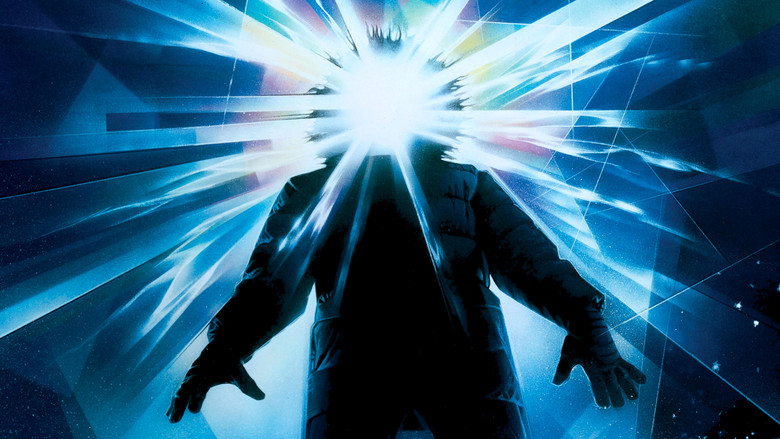
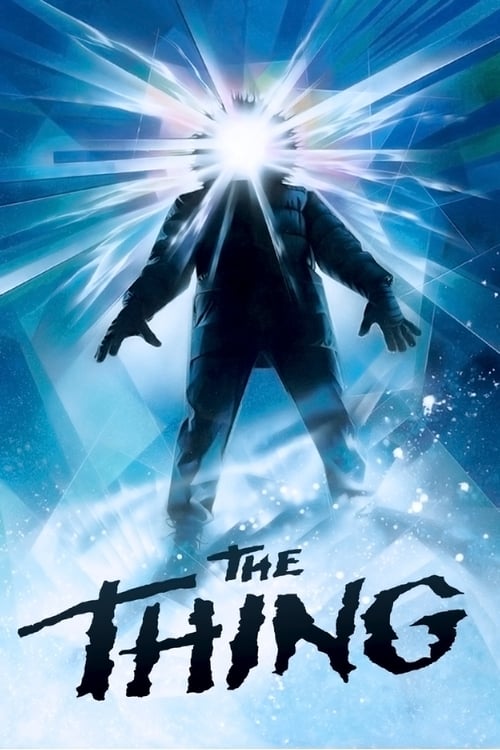
The Thing
A sci-fi horror descent into icy paranoia, where the chilling Antarctic isolation mirrors the terrifying loss of identity within a group of men hunted by a shapeshifting alien.
The Thing
The Thing

"Anytime. Anywhere. Anyone."

25 June 1982 United States of America 109 min ⭐ 8.1 (7,471)
Director: John Carpenter
Cast: Kurt Russell, Keith David, Wilford Brimley, T.K. Carter, David Clennon
Mystery Science Fiction Horror
Paranoia and Distrust Loss of Identity and Individuality Survival vs. Morality Fear of the Unknown
Budget: $15,000,000
Box Office: $19,629,760

The Thing - Ending Explained

⚠️ Spoiler Analysis

"The Thing" is a story of escalating infiltration and eradication. The alien lifeform, which crash-landed on Earth 100,000 years ago, is a cellular organism that absorbs, kills, and then perfectly imitates its victims. The film's plot unfolds as a series of gruesome discoveries and confrontations, revealing the creature's nature piece by piece. The initial assimilation of the sled dogs in the kennel provides the first shocking glimpse of the monster's capabilities.

The biologist Blair is the first to understand the global-level threat, realizing that if the creature reaches civilization, it could assimilate all life on Earth. His subsequent breakdown and destruction of the camp's communications and transport traps everyone, turning the outpost into a pressure cooker. Several characters are revealed to be Things in shocking set-pieces. Norris, who suffers an apparent heart attack, transforms on the defibrillator table, his chest cavity opening into a giant mouth that bites off Dr. Copper's arms. This event leads MacReady to the crucial discovery that every piece of the Thing is an individual organism with its own survival instinct, which forms the basis for his blood test.

The blood test scene is the film's nerve-wracking centerpiece. MacReady tests each man's blood with a hot wire, exposing Palmer as an imitation when his blood leaps away from the heat. The Palmer-Thing then transforms, killing Windows before being burned. In the climax, the crew discovers that Blair has also been assimilated and has been secretly building a small flying saucer to escape. The Blair-Thing transforms into a massive, monstrous creature. MacReady manages to destroy it and the entire station with dynamite. The final scene reveals two survivors: MacReady and Childs, who had gone missing earlier. They sit in the burning wreckage, neither trusting the other is human, sharing a bottle of whiskey as they wait to freeze to death. The ending is deliberately ambiguous, leaving the audience to wonder if the Thing has truly been defeated or if it sits there with MacReady, waiting for a rescue and a chance to infect the world.

Alternative Interpretations

The film's famously ambiguous ending has spawned numerous interpretations and debates among fans and critics for decades. The central question is whether Childs, MacReady, both, or neither are the Thing in the final scene.

  • Childs is the Thing: This is one of the most popular theories. Proponents point out that Childs was missing during the final confrontation and that he doesn't have a visible breath plume in the cold air (though this is debated). MacReady offering him the bottle of whiskey could be a final, fatalistic test, knowing the Thing wouldn't risk exposing itself.
  • MacReady is the Thing: A less common but plausible theory suggests MacReady was assimilated at some point, perhaps when he was separated from the group. In this reading, his actions to destroy the base are a clever ploy by the Thing to eliminate any remaining humans, leaving it as the sole survivor to be rescued. His offer of a drink to Childs is a gesture of a victor who has successfully won.
  • Both are Human: This is the most tragic interpretation. It suggests that both men survived the ordeal as humans, but the paranoia has won. They are doomed to freeze to death, forever suspicious of one another, representing the ultimate failure of humanity in the face of absolute distrust. Their shared drink is a moment of grim, final camaraderie before the end.
  • Neither is Human: A truly nihilistic view posits that both men have been assimilated. The Thing, now in two bodies, simply waits for the cold to pass before a rescue team arrives, ensuring its victory and eventual spread.
  • It Doesn't Matter: Many, including John Carpenter, argue that the specific answer is irrelevant. The power of the ending lies in its ambiguity. The core theme is the destruction of trust, and the final scene is the ultimate expression of that. The Thing has already won by turning humanity's defining trait—social cooperation—into a fatal weakness. The uncertainty is the true horror.