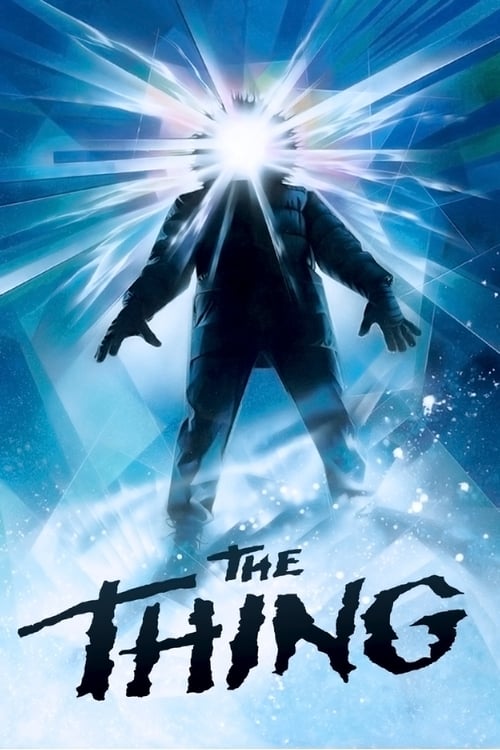
The Thing
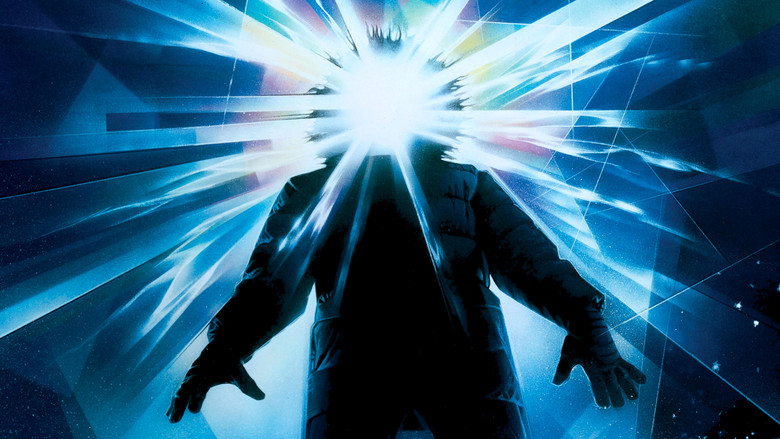
A sci-fi horror descent into icy paranoia, where the chilling Antarctic isolation mirrors the terrifying loss of identity within a group of men hunted by a shapeshifting alien.
The Thing

The Thing

"Anytime. Anywhere. Anyone."

25 June 1982 United States of America 109 min ⭐ 8.1 (7,471)
Director: John Carpenter
Cast: Kurt Russell, Keith David, Wilford Brimley, T.K. Carter, David Clennon
Mystery Science Fiction Horror
Paranoia and Distrust Loss of Identity and Individuality Survival vs. Morality Fear of the Unknown
Budget: $15,000,000
Box Office: $19,629,760

Overview

In the winter of 1982, a twelve-man American research team at a remote Antarctic outpost is thrown into chaos when a helicopter from a nearby Norwegian base pursues a sled dog to their station. In the ensuing confusion, the Norwegians are killed, leaving the Americans with the dog and a host of unanswered questions. They soon discover the Norwegians' obsession was justified, as the dog is a parasitic extraterrestrial lifeform with the ability to assimilate and perfectly imitate other living beings.

The film chronicles the escalating paranoia and distrust that grips the isolated group as they realize any one of them could be the alien creature. Led by the resourceful helicopter pilot, R.J. MacReady, the remaining men must find a way to identify and destroy the 'Thing' before it picks them off one by one and potentially escapes to the rest of the world. Their struggle for survival becomes a desperate battle against an enemy that can look like anyone, turning friend against friend in a desolate, frozen wasteland with no escape.

Core Meaning

At its heart, "The Thing" is a profound exploration of paranoia, identity, and the disintegration of trust in the face of an unknowable and insidious threat. Director John Carpenter uses the alien entity not just as a monster, but as a catalyst that strips away the veneer of humanity, revealing the suspicion and fear that lies beneath. The film serves as a powerful allegory for the loss of individuality and the fear of conformity, reflecting the anxieties of the Cold War era in which it was made. It posits that the true horror isn't just the grotesque creature, but the psychological breakdown that occurs when we can no longer be certain of who we are or who we can trust. The ultimate message is a bleak and nihilistic one: in a world where identity is fluid and easily replicated, the very fabric of society and human connection is horrifyingly fragile.

Thematic DNA

Paranoia and Distrust 40%
Loss of Identity and Individuality 30%
Survival vs. Morality 20%
Fear of the Unknown 10%

Paranoia and Distrust

This is the central theme of the film, permeating every scene. The alien's ability to perfectly mimic its victims creates an environment where no one can trust their senses or their companions. The isolation of the Antarctic base exacerbates this, breeding suspicion and hostility among the men. MacReady's famous line, "Nobody trusts anybody now," encapsulates the complete breakdown of social cohesion as the men turn on each other, driven by the terrifying uncertainty of who is human and who is a perfect imitation.

Loss of Identity and Individuality

The Thing's method of assimilation represents the ultimate loss of self. It doesn't just kill; it consumes and erases, replacing the original with a perfect copy. This raises profound questions about what constitutes identity. The film explores the horror of this existential threat, where characters are not only fighting for their lives but for their very essence of being. This fear of being absorbed into a collective, losing all agency and individuality, is a powerful and disturbing element.

Survival vs. Morality

Faced with an unprecedented threat, the characters are forced to make brutal choices. The instinct for self-preservation often overrides morality and camaraderie. MacReady, in particular, must adopt a ruthless pragmatism, tying up his colleagues and ultimately sacrificing the entire base to prevent the creature's escape. The film questions what lines people are willing to cross when their survival, and the survival of humanity, is at stake.

Fear of the Unknown

The alien is horrifying not just for its physical manifestations but for its utter alien-ness. Its biology, motives, and intelligence are completely beyond human comprehension. This taps into a primal fear of the unknown. The characters are not just fighting a monster; they are confronting a cosmic horror that shatters their understanding of life itself. The desolate, alien landscape of Antarctica serves as a visual metaphor for this terrifying unknown.

Character Analysis

R.J. MacReady

Kurt Russell

Archetype: Antihero / Reluctant Leader
Key Trait: Pragmatic

Motivation

Initially, his motivation is simple survival. However, as he begins to understand the existential threat the Thing poses to all of humanity, his motivation shifts to containment and destruction of the creature at any cost, even if it means his own death.

Character Arc

MacReady begins as a solitary, cynical helicopter pilot, preferring the company of a chess computer and a bottle of J&B to his colleagues. As the crisis escalates and official leadership falters, he is forced to take command through sheer force of will and pragmatism. His arc is one of a reluctant leader rising to the occasion, making incredibly difficult and morally ambiguous decisions to fight the alien threat, ultimately sacrificing everything in a pyrrhic victory.

Childs

Keith David

Archetype: The Skeptic / Rival
Key Trait: Suspicious

Motivation

Childs is motivated by a desire for order and a deep-seated suspicion of others, particularly those who seize power. His actions are driven by a mix of self-preservation and a refusal to blindly follow MacReady, whom he often believes could be the Thing.

Character Arc

Childs serves as a primary antagonist to MacReady within the human group. He is suspicious of MacReady's authority and methods, representing a faction of the crew that resists MacReady's leadership. His arc is defined by this conflict and the pervasive paranoia. His mysterious disappearance and reappearance at the very end leave his humanity, and the film's conclusion, deeply ambiguous.

Dr. Blair

Wilford Brimley

Archetype: The Cassandra / Doomed Prophet
Key Trait: Prescient

Motivation

His primary motivation becomes the protection of the entire planet. He is willing to sacrifice himself and the entire crew, whom he views as potentially contaminated, to stop the alien from ever reaching civilization.

Character Arc

As the senior biologist, Blair is the first to truly comprehend the horrifying implications of the Thing. His scientific mind quickly grasps the scale of the threat, calculating that it could assimilate all life on Earth in a few years. This knowledge drives him to paranoia and madness, leading him to destroy all means of communication and transport to prevent its escape. He is isolated by the others, and by the time they realize he was right, he has already been assimilated, becoming the final, formidable monster.

Garry

Donald Moffat

Archetype: The Deposed Leader
Key Trait: Authoritative

Motivation

Garry is motivated by a sense of duty and a desire to maintain order and protocol. He tries to follow the rules and keep his men safe, but these conventional methods prove utterly ineffective against the Thing's insidious nature.

Character Arc

As the station commander, Garry represents established authority. However, his leadership quickly crumbles under the weight of the extraordinary circumstances and the crew's escalating paranoia. After being implicated in a potential contamination scenario, he relinquishes his command to MacReady. His arc is a tragic one of a good man out of his depth, unable to maintain control in the face of an unimaginable horror, ultimately becoming another of its victims.

Symbols & Motifs

The Dog (Sled Dog)

Meaning:

The dog symbolizes the deceptive nature of the threat and the initial infiltration of the alien. It represents a Trojan Horse, a seemingly harmless and familiar creature that carries a horrifying secret. Its arrival marks the beginning of the end for the outpost's inhabitants.

Context:

The film opens with the frantic pursuit of the sled dog by the Norwegians. The American team takes the dog in, seeing it as an innocent victim. The creature's first grotesque transformation, erupting from the dog in the kennel, is a shocking reveal that establishes the true nature of the enemy and shatters the initial sense of security.

Blood Test

Meaning:

The blood test symbolizes the desperate search for certainty and truth in a world of deception. Blood, typically a symbol of life and shared humanity, becomes the final arbiter of identity. The test represents a moment of scientific rationality and order amidst the chaos and paranoia.

Context:

After realizing every part of the Thing is an individual organism, MacReady devises a test using a heated wire on petri dishes of blood samples from each survivor. The tension in this scene is palpable as the men, tied to chairs, await their fate. The explosive reaction of Palmer's blood is one of the film's most iconic and terrifying moments.

Fire and Flamethrowers

Meaning:

Fire symbolizes both destruction and purification. It is the only reliable weapon against the Thing, capable of destroying it at a cellular level. It represents humanity's primal defense against an unknowable, corrupting force and the willingness to destroy everything to ensure the threat is eradicated.

Context:

From the first encounter with the Dog-Thing, fire is established as the only effective way to kill the creature. The flamethrower becomes MacReady's signature weapon and a tool of grim necessity. The film's climax sees the entire base immolated in a final, desperate act of sterilization.

The Antarctic Setting

Meaning:

The vast, empty, and inhospitable landscape of Antarctica symbolizes the characters' profound isolation from the rest of the world and from each other. It is a sterile, alien environment on Earth, mirroring the nature of the creature they face. The cold represents the creeping death that awaits them, either from the elements or the creature itself.

Context:

The film is set entirely at U.S. Outpost 31, surrounded by an endless expanse of snow and ice. The harsh weather and remote location mean there is no hope of escape or immediate rescue, trapping the men with the monster and their own escalating paranoia.

Memorable Quotes

Why don't we just wait here for a little while, see what happens?

— R.J. MacReady

Context:

In the film's closing moments, MacReady and Childs, the only two apparent survivors, sit amidst the burning ruins of the camp. Neither can trust that the other is human, but they are too weak to fight. MacReady offers Childs a drink, and they share a final, grim moment, waiting for the cold to claim them.

Meaning:

This final line of the film encapsulates its bleak, ambiguous ending. It signifies a ceasefire born of mutual exhaustion and suspicion, an acceptance of their inevitable deaths, and the chilling uncertainty of whether the threat has truly been neutralized. It leaves the audience in a state of unresolved tension.

Nobody trusts anybody now, and we're all very tired.

— R.J. MacReady

Context:

MacReady records a final message into a tape recorder, documenting the situation after several crew members have been killed or assimilated. He is weary and understands that the social fabric of their small community has been irrevocably destroyed by suspicion.

Meaning:

This quote perfectly summarizes the central theme of the film: the complete erosion of trust and the psychological toll it takes. It highlights how the alien's greatest weapon is not its physical form but the paranoia it sows, turning a cohesive group into a collection of isolated, exhausted individuals.

I know I'm human. And if you were all these things, then you'd just attack me right now, so some of you are still human.

— R.J. MacReady

Context:

Having seized control, MacReady explains his theory about the creature's nature to the remaining, terrified survivors. He is about to perform the blood test with the hot wire to definitively expose who is human and who is an imitation.

Meaning:

This is a moment of cold, desperate logic that sets the stage for the film's most tense sequence. It's MacReady's rationale for his blood test plan, a gamble to force the creature's hand by appealing to its survival instinct. It's a declaration of his own humanity and a challenge to the hidden enemy among them.

Yeah, fuck you too!

— R.J. MacReady

Context:

During the film's climax, MacReady confronts the final, massive form of the Blair-Thing. As the grotesque creature lets out a deafening roar, MacReady, armed with a stick of dynamite, yells this line back in defiance before destroying it.

Meaning:

A moment of gallows humor and defiant humanity in the face of overwhelming horror. It's a classic action-hero line that provides a brief release of tension, showcasing MacReady's resilient, sardonic nature even as he faces a monstrous, world-ending threat.

Philosophical Questions

What defines humanity and identity when physical form can be perfectly replicated?

The film dismantles the idea that identity is tied to our physical bodies. The Thing creates perfect copies that are indistinguishable from the original, forcing the characters (and the audience) to question what truly makes someone human. Is it memory, personality, emotion? The film suggests that an imitation might even believe it is human. This leads to a terrifying existential crisis: if you can be perfectly duplicated and replaced without anyone knowing, what value does your individual existence have?

Can trust and social cohesion survive under extreme paranoia?

"The Thing" serves as a grim social experiment, demonstrating how quickly the bonds of teamwork and friendship can dissolve when suspicion is introduced. The alien's most potent weapon is the paranoia it instills. The men, isolated and terrified, turn on each other with brutal efficiency. The film bleakly concludes that trust is a fragile construct, easily shattered, and that in the absence of certainty, humanity's default state may be a self-destructive 'every man for himself' mentality.

Is it justifiable to sacrifice individuals for the sake of the collective?

The film forces its characters into a constant state of utilitarian calculus. MacReady takes control and makes ruthless decisions, such as restraining everyone and being prepared to kill anyone who fails his test. Blair's decision to destroy the radio and vehicles is an even more extreme example, dooming the entire crew to prevent the creature from reaching civilization. The film explores the dark moral territory of sacrificing the few to save the many, without offering any easy answers.

Alternative Interpretations

The film's famously ambiguous ending has spawned numerous interpretations and debates among fans and critics for decades. The central question is whether Childs, MacReady, both, or neither are the Thing in the final scene.

  • Childs is the Thing: This is one of the most popular theories. Proponents point out that Childs was missing during the final confrontation and that he doesn't have a visible breath plume in the cold air (though this is debated). MacReady offering him the bottle of whiskey could be a final, fatalistic test, knowing the Thing wouldn't risk exposing itself.
  • MacReady is the Thing: A less common but plausible theory suggests MacReady was assimilated at some point, perhaps when he was separated from the group. In this reading, his actions to destroy the base are a clever ploy by the Thing to eliminate any remaining humans, leaving it as the sole survivor to be rescued. His offer of a drink to Childs is a gesture of a victor who has successfully won.
  • Both are Human: This is the most tragic interpretation. It suggests that both men survived the ordeal as humans, but the paranoia has won. They are doomed to freeze to death, forever suspicious of one another, representing the ultimate failure of humanity in the face of absolute distrust. Their shared drink is a moment of grim, final camaraderie before the end.
  • Neither is Human: A truly nihilistic view posits that both men have been assimilated. The Thing, now in two bodies, simply waits for the cold to pass before a rescue team arrives, ensuring its victory and eventual spread.
  • It Doesn't Matter: Many, including John Carpenter, argue that the specific answer is irrelevant. The power of the ending lies in its ambiguity. The core theme is the destruction of trust, and the final scene is the ultimate expression of that. The Thing has already won by turning humanity's defining trait—social cooperation—into a fatal weakness. The uncertainty is the true horror.

Cultural Impact

Initially dismissed by critics as "instant junk" and a "barf-bag movie," "The Thing" was a box office disappointment in the summer of 1982. Audiences, captivated by the optimistic alien of Spielberg's "E.T.," were not prepared for Carpenter's bleak, nihilistic vision and gruesome special effects. However, the film found a second life on home video and television, where it developed a massive cult following and underwent a significant critical reappraisal. It is now widely regarded as a masterpiece of the horror and sci-fi genres and one of the best films ever made.

Its influence on cinema has been profound. The film's masterful use of practical effects set a new standard for creature design and body horror, directly inspiring generations of filmmakers and special effects artists. Directors like Quentin Tarantino have cited it as a major influence, particularly on films like "Reservoir Dogs" and "The Hateful Eight," which echo "The Thing's" themes of paranoia within an isolated group. The Duffer Brothers, creators of "Stranger Things," were also heavily inspired by Rob Bottin's practical monster effects. The film's legacy extends to video games, comic books, and even a 2011 prequel film of the same name. Its themes of paranoia and contagion have been seen as allegories for everything from the Cold War and the AIDS crisis to, more recently, the social anxieties of the COVID-19 pandemic, proving its timeless relevance.

Audience Reception

Upon its 1982 release, audiences largely rejected "The Thing." Viewers, who were flocking to see the heartwarming "E.T. the Extra-Terrestrial," were put off by the film's intense nihilism, graphic gore, and bleak ending. The critical reception was similarly hostile, with prominent critics like Roger Ebert calling it a "geek show" and a "great barf-bag movie," criticizing what they saw as superficial characters overwhelmed by the gruesome effects. However, over the subsequent years, with its release on home video and cable, audience perception shifted dramatically. The film garnered a passionate cult following that praised the very aspects initially criticized. Modern audiences and critics laud the film's masterfully built tension, its atmosphere of relentless paranoia, the incredible practical effects by Rob Bottin, and the chilling, ambiguous ending. It is now celebrated as a masterpiece of suspense and body horror, with many fans considering it one of the greatest horror films ever made.

Interesting Facts

  • The film was a critical and commercial failure upon its initial 1982 release, largely due to its bleak, nihilistic tone and competition from the more optimistic alien film, E.T. the Extra-Terrestrial.
  • The groundbreaking and grotesque special creature effects were designed by Rob Bottin, who was only 22 at the time. He worked so relentlessly that he was hospitalized for exhaustion after production wrapped.
  • To create the film's freezing Antarctic setting, the interior sets in Los Angeles were refrigerated to near-freezing temperatures.
  • The iconic opening title effect was created by filming an animation cell placed behind a smoke-filled fish tank that was covered with a plastic bag, which was then set on fire.
  • Multiple endings were filmed, including a happier one where MacReady is rescued and proven to be human. Director John Carpenter rejected this as "cheesy" and opted for the now-famous ambiguous conclusion.
  • The Norwegian dialogue at the beginning of the film is not subtitled, but the Norwegian helicopter passenger is shouting warnings to the Americans, saying, "Get the hell outta there. That's not a dog, it's some sort of thing! It's imitating a dog, it isn't real! GET AWAY YOU IDIOTS!!"
  • The destroyed Norwegian base seen at the beginning of the movie was actually the set of the American outpost after it had been blown up for the film's climax.
  • Legendary effects artist Stan Winston was brought in to create the iconic Dog-Thing for the kennel scene, but he declined a screen credit out of respect for Rob Bottin's work.
  • Kurt Russell nearly injured himself during the scene where he throws a stick of dynamite. The resulting explosion was much larger than he anticipated, and his reaction of surprise is genuine.

Easter Eggs

Director John Carpenter's then-wife, Adrienne Barbeau, provides the voice of the chess computer.

In an early scene, a frustrated MacReady pours his drink onto a chess computer after losing a game. The calm, female voice of the computer that checkmates him belongs to Adrienne Barbeau, who starred in two of Carpenter's previous films, "The Fog" and "Escape from New York." It's a fun, uncredited cameo for fans of Carpenter's work.

⚠️ Spoiler Analysis

Click to reveal detailed analysis with spoilers

Frequently Asked Questions

Explore More About This Movie

Dive deeper into specific aspects of the movie with our detailed analysis pages

Comments (0)

Leave a comment

No comments yet. Be the first to share your thoughts!