"On the air. Unaware."
Director: Peter Weir
Cast: Jim Carrey, Laura Linney, Noah Emmerich, Natascha McElhone, Holland Taylor
The Truman Show — Movie Quotes
Memorable Quotes
Good morning, and in case I don't see ya, good afternoon, good evening, and good night!
Context
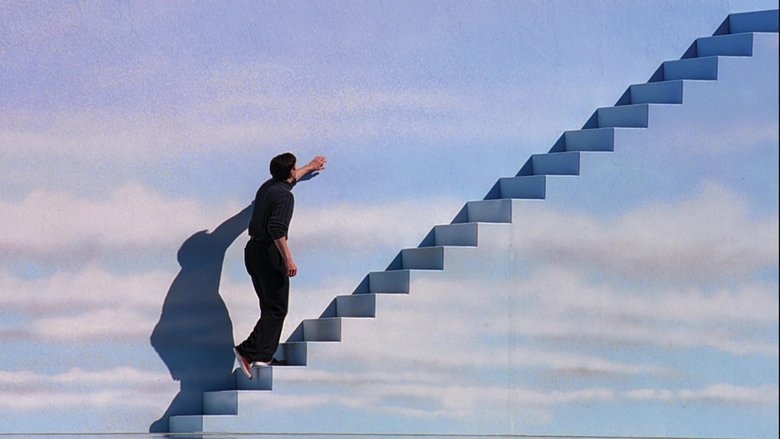
Truman says this line throughout the film as part of his daily routine. The final time is his last line in the film, delivered with a smile and a bow directly to the hidden camera (and to Christof) before he steps through the exit door into the real world.
Meaning
This is Truman's signature catchphrase, a cheerful greeting he says to his neighbors and into the mirror. Initially, it represents his naive and routine-bound existence. However, when he says it for the final time before exiting the dome, it becomes a powerful, poignant, and defiant farewell to his captors and the global audience, signifying he is taking control of his own narrative.
We accept the reality of the world with which we're presented. It's as simple as that.
Context
Christof says this during an in-show interview when asked why Truman has gone almost 30 years without discovering the truth. He delivers the line with confidence, revealing his cynical view of human nature and his justification for the entire project.
Meaning
This line is Christof's explanation for why Truman has never seriously questioned his reality before. It is the philosophical core of the film, suggesting that people are conditioned to accept their circumstances without question, especially if they are comfortable. The entire film serves as a rebuttal to this idea, as Truman ultimately rejects his presented reality.
I am the creator... of a television show that gives hope and joy and inspiration to millions.
Context
Christof says this during the televised interview, defending his show against criticism. He speaks with an air of immense pride and artistic authority, completely convinced of the moral righteousness of his life's work.
Meaning
This quote perfectly encapsulates Christof's god complex and his self-perceived benevolence. He sees himself not as a manipulative captor but as a gifted artist providing a valuable service to the world and a perfect life for his star. It highlights his profound delusion and the moral justification he has constructed for his actions.
You never had a camera in my head!
Context
After his boat hits the wall of the dome, Christof speaks to Truman directly for the first time. He argues that he knows Truman better than Truman knows himself. Truman screams this line back at the sky, rejecting Christof's claim to total ownership over his being.
Meaning
This is Truman's powerful retort to Christof during their final confrontation. It asserts that while his external world was completely controlled, his mind, his thoughts, and his spirit remained his own. It is a declaration of inner freedom and the ultimate limit of Christof's power. It echoes the sentiment of philosophers like Descartes, affirming the sovereignty of the individual mind.
Explore More About This Movie
Dive deeper into specific aspects of the movie with our detailed analysis pages