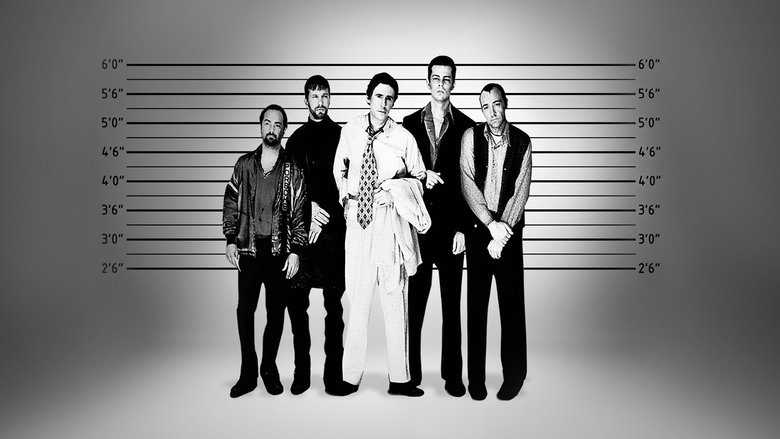
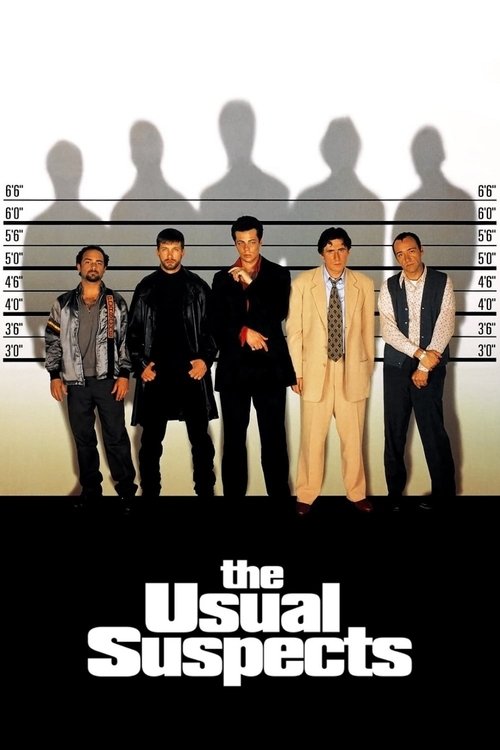
The central twist of "The Usual Suspects" is the revelation that the feeble, talkative narrator, Roger "Verbal" Kint, is the feared and mythical crime lord Keyser Söze. The entire, intricate story he tells Agent Dave Kujan is a lie, masterfully improvised on the spot using names and details from a cluttered bulletin board in the office where he is being interrogated. Kujan, convinced by Verbal's performance and his own hubris, concludes that Dean Keaton was Söze, a theory Verbal reluctantly "confirms" before being released.
As Verbal leaves the police station, his feigned limp vanishes and his palsied hand unclenches. Simultaneously, Kujan, in a moment of clarity, notices the brand name "Kobayashi" on the bottom of his shattered coffee mug and sees other names from Verbal's story on the bulletin board. A fax arrives with a composite sketch of Keyser Söze, based on the testimony of the burned Hungarian survivor; it is a perfect likeness of Verbal Kint. Kujan rushes out, but Verbal has already disappeared into a car driven by the man he had described as "Kobayashi."
This revelation recontextualizes the entire film. Every flashback is shown to be a fabrication. The sole purpose of the job on the ship was for Söze to personally eliminate a man who could identify him. He gathered the other criminals, all of whom had unknowingly crossed him in the past, to serve as disposable pawns in his plan. Verbal's entire interrogation was a performance designed to buy time until his bail was posted, misdirect the police, and then vanish, having reinforced his own myth. As he said himself, "The greatest trick the Devil ever pulled was convincing the world he didn't exist."