The Virgin Spring
A stark, medieval ballad of faith tested by brutality, where vengeance carves a wound in the earth from which a miracle of grace springs forth.
The Virgin Spring
The Virgin Spring

Jungfrukällan

"Ravished innocence... brings terrible revenge!"

08 February 1960 Sweden 90 min ⭐ 7.8 (644)
Director: Ingmar Bergman
Cast: Max von Sydow, Birgitta Valberg, Gunnel Lindblom, Birgitta Pettersson, Axel Düberg
Drama History
Faith vs. Doubt Revenge vs. Forgiveness Paganism vs. Christianity Loss of Innocence
Box Office: $700,000

The Virgin Spring - Ending Explained

⚠️ Spoiler Analysis

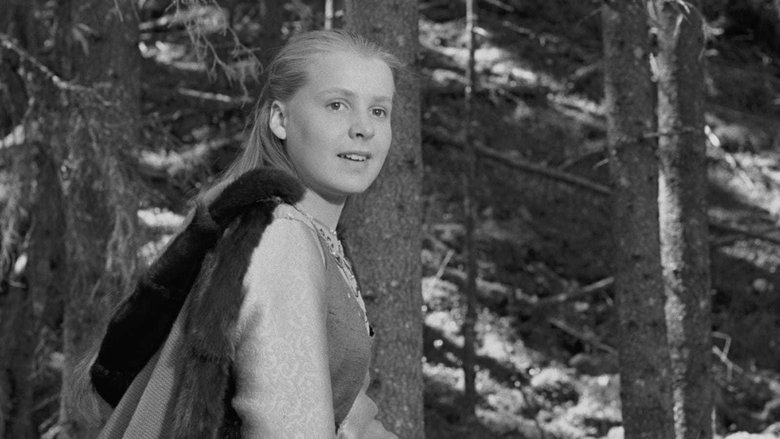
The central turning point of "The Virgin Spring" is the brutal rape and murder of Karin by the two elder goat herders. This act shatters the film's initial pastoral calm and sets in motion the themes of revenge and spiritual crisis. The foster sister, Ingeri, who had earlier placed a pagan curse on Karin, witnesses the entire ordeal from a hiding place, making her a complicit observer consumed by guilt.

The film's second major twist occurs when the murderers, by a cruel twist of fate, seek shelter at the home of Töre and Märeta, their victim's parents. The dramatic irony is heightened as the unsuspecting parents offer them Christian hospitality. The truth is revealed when one of the herders attempts to sell Märeta the very dress Karin was wearing—a dress she instantly recognizes. This discovery transforms Töre from a pious landowner into a cold-blooded avenger. He performs a strange purification ritual—uprooting a birch tree and whipping himself—before methodically killing all three herders, including the young, remorseful boy who was only a witness.

The film's climax is the discovery of Karin's body, guided by a guilt-ridden Ingeri. In his grief, Töre rails against God's silence but then vows to build a church on the site as penance for his own bloody revenge. As they lift Karin's body, a spring of pure water miraculously emerges from the spot where her head lay. This final event is the ultimate spoiler: an ambiguous act of God. It is not a resurrection, but a sign that can be interpreted as forgiveness, a promise of renewal, or simply a mystery. It provides a sliver of grace in the wake of immense brutality, purifying Ingeri and giving Töre a purpose to channel his grief and guilt, leaving the audience to ponder whether true redemption can follow such terrible sins.

Alternative Interpretations

While the film's ending is often seen as a miraculous affirmation of God's grace, several alternative interpretations exist. One reading suggests the ending is deeply ambiguous, if not ironic. The spring could be interpreted not as a divine miracle, but as a natural phenomenon, with the characters merely projecting their desperate need for meaning onto it. Is God rewarding Töre's vow, or is he mocking Töre's doubt and violence with a conveniently timed marvel? This reading portrays Töre's decision to build a church as an act of "philosophical suicide"—a retreat into dogma because he cannot face the absurd, meaningless reality of the violence that has occurred.

Another interpretation focuses on the triumph of pagan nature over organized religion. The raw, elemental force of the water bursting from the earth could be seen as a pagan response, a natural cycle of renewal that exists independently of Christian doctrine. Ingeri, the Odin-worshipper, is the one who finds cleansing in this natural spring, suggesting a synthesis or even a victory of primal forces over the rigidities of sin and penance. The film, in this light, doesn't resolve the conflict between paganism and Christianity but leaves it in a state of uneasy tension, suggesting that beneath the veneer of Christian faith lie primal, untamable instincts and natural forces.