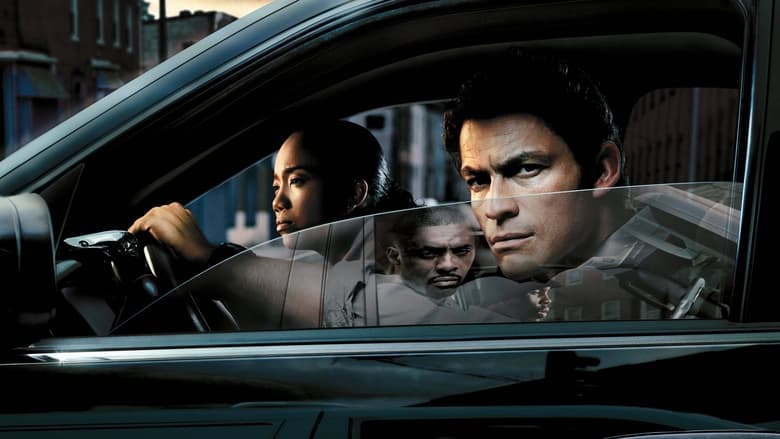
"Listen carefully."
The Wire - Symbolism & Philosophy
Symbols & Motifs
The Wiretap (The Wire)
The wiretap symbolizes the series' core method: patient, deep listening to uncover the hidden structures of power and communication within an institution. It represents an attempt to bypass the official, often misleading, narratives and get to the truth of how things actually work, whether in a drug crew or a police department. It's a tool for seeing the whole picture, connecting the "pieces" that others ignore.
The titular wiretap is central to the police investigations in Seasons 1 and 3. The painstaking process of monitoring calls mirrors the show's own narrative patience. Beyond the literal device, "the wire" becomes a metaphor for the interconnectedness of the city's disparate worlds, showing how conversations in boardrooms and back alleys are inextricably linked.
Chess
Chess represents the strategic nature of "the game," whether it's the drug trade or police work. It symbolizes foresight, hierarchy, and the idea that every piece on the board has a role and a value. D'Angelo Barksdale's explanation of the game—"The king stay the king" while pawns get sacrificed—serves as a powerful metaphor for the rigid, brutal hierarchies of the drug world and the expendability of those at the bottom.
The most iconic use of this symbol is in Season 1, when D'Angelo teaches Bodie and Wallace how to play chess in the low-rise courtyard, explaining the roles of each piece by comparing them to figures in their drug organization. This scene lays out the ruthless philosophy of their world, a lesson that tragically plays out for Wallace and, eventually, Bodie himself.
The Brown Paper Bag
The brown paper bag symbolizes the normalization and mundane nature of corruption. It's the unassuming vessel used to transfer illicit cash—bribes for politicians, payments for dirty cops, or laundered drug money. Its plainness highlights how deeply ingrained and unremarkable corruption is within the city's institutions, a routine part of doing business.
This symbol appears repeatedly, most notably in Season 3, where drug money is passed in paper bags to political figures like Clay Davis. Stringer Bell's attempts to legitimize his operation by investing in real estate constantly involve these discreet, cash-filled bags, showing that the supposed legitimate world operates on the same principles of dirty money as the street.
Philosophical Questions
Can an individual be moral within an immoral system?
This is a central question explored through nearly every character. Figures like McNulty, Lester Freamon, and Cedric Daniels constantly bend or break the rules of a corrupt police department in the pursuit of what they see as a greater good. Their actions raise the question of whether the ends justify the means. Conversely, characters like Omar Little operate outside the law but live by a strict personal code. The series suggests that true morality may be impossible within the confines of these broken institutions, and that ethical actions often require rebellion against the system itself.
Is meaningful social or institutional change possible?
"The Wire" presents a deeply pessimistic answer to this question. Throughout its five seasons, every attempt at genuine reform is either co-opted, crushed, or results in failure. Major Colvin's Hamsterdam is a spectacular failure. Councilman Carcetti's idealistic campaign for mayor dissolves into pragmatic, compromised governance. The series finale, with its cyclical montage of new faces in old roles, strongly implies that the systems are too entrenched and powerful for any individual or small group to change them. The show argues that the institutions themselves are designed to resist change and preserve the status quo, making any true reform feel like a Sisyphean task.
What defines a community, and who gets to be a part of it?
The series explores various forms of community, from the police fraternity to the union dockworkers, from the Barksdale drug crew to the neighborhood kids in Season 4. It examines the codes, loyalties, and rituals that bind these groups together. At the same time, it portrays a city deeply segregated by race and class, where these communities are often in conflict. The show constantly asks who is considered a legitimate member of the city. The drug dealers, addicts, and poor children are often treated as an underclass to be policed and controlled rather than as citizens to be served, highlighting the profound social fractures within the urban landscape.
Core Meaning
The core meaning of "The Wire" is a profound and sustained critique of modern American institutions and the dehumanizing effect they have on individuals. Creator David Simon has stated the show is about "how institutions have an effect on individuals" and how people are ultimately compromised by the systems they are committed to. It argues that systems—whether the police department, the drug trade, city politics, schools, or the media—are inherently dysfunctional and self-perpetuating. The series posits that these institutions prioritize their own survival and statistics over genuine reform or the well-being of the people they are supposed to serve, trapping individuals in cyclical, tragic patterns. Simon has described it as a modern Greek tragedy where the "petulant and jealous gods" are not Olympians but postmodern institutions, and the central theme is the triumph of capitalism over human value, where individuals are worth less and less.