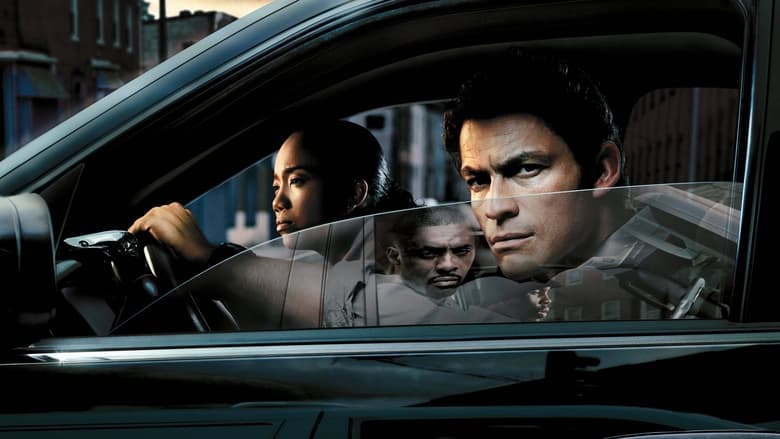
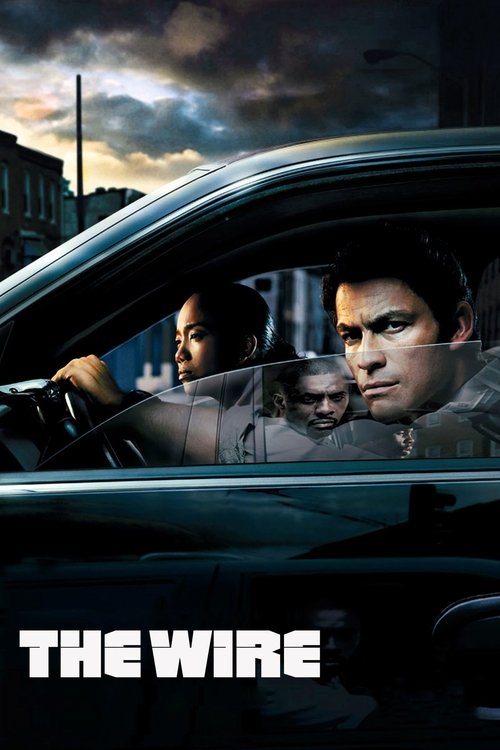
The Wire
A gritty, symphonic tragedy of a city at war with itself, where the lines between law and crime blur into a haunting grey.
The Wire

The Wire

"Listen carefully."

02 June 2002 — 09 March 2008 United States of America 5 season 60 episode Ended ⭐ 8.6 (2,448)
Cast: Dominic West, Lance Reddick, Sonja Sohn, Wendell Pierce, Deirdre Lovejoy
Drama Crime
The Failure of Institutions The War on Drugs as a War on the Underclass Capitalism and the Devaluation of Human Life The Illusion of Reform (The Game is Rigged)

Overview

"The Wire" presents a sweeping, novelistic exploration of Baltimore, examining the city's drug trade from the perspectives of both the law enforcement officers trying to dismantle it and the drug dealers and users caught within it. Created by former police reporter David Simon, the series unfolds over five seasons, with each season shifting its focus to a different facet of the city while maintaining an overarching narrative. The first season introduces the intricate cat-and-mouse game between a specialized police detail and the Barksdale drug organization. Subsequent seasons broaden the scope to include the city's struggling port system (Season 2), the political machine (Season 3), the public school system (Season 4), and the print news media (Season 5).

Hailed for its stark realism, the series eschews typical police procedural tropes in favor of a meticulous, patient examination of the systemic issues that perpetuate crime, poverty, and institutional decay. It populates its world with a vast ensemble of complex characters on all sides of the law, each navigating a world where individual morality is constantly tested by the flawed and often corrupt institutions they serve or defy. The narrative is dense and interconnected, revealing how decisions made in a police precinct, a city hall office, or a newspaper room have profound and often devastating consequences on the streets.

Core Meaning

The core meaning of "The Wire" is a profound and sustained critique of modern American institutions and the dehumanizing effect they have on individuals. Creator David Simon has stated the show is about "how institutions have an effect on individuals" and how people are ultimately compromised by the systems they are committed to. It argues that systems—whether the police department, the drug trade, city politics, schools, or the media—are inherently dysfunctional and self-perpetuating. The series posits that these institutions prioritize their own survival and statistics over genuine reform or the well-being of the people they are supposed to serve, trapping individuals in cyclical, tragic patterns. Simon has described it as a modern Greek tragedy where the "petulant and jealous gods" are not Olympians but postmodern institutions, and the central theme is the triumph of capitalism over human value, where individuals are worth less and less.

Thematic DNA

The Failure of Institutions 35%
The War on Drugs as a War on the Underclass 30%
Capitalism and the Devaluation of Human Life 20%
The Illusion of Reform (The Game is Rigged) 15%

The Failure of Institutions

This is the central theme of the entire series. Each season dissects a different Baltimore institution—law enforcement, the seaport union, city government, the school system, and the press—to expose its internal rot and systemic dysfunction. The police department is shown to be crippled by bureaucracy, careerism, and a focus on stats over meaningful police work. The political machine is driven by ambition and compromise, often sacrificing the city's welfare for personal gain. Season 4 provides the most heartbreaking illustration, showing how the education system fails its most vulnerable students, effectively creating the next generation for the drug trade. The show consistently argues that these institutions are not just flawed, but fundamentally incapable of fixing themselves, creating a cycle of failure that ensnares everyone involved.

The War on Drugs as a War on the Underclass

"The Wire" portrays the War on Drugs not as a noble crusade, but as a perpetual, unwinnable conflict that functions to marginalize and control the urban poor. The series meticulously details the futility of street-level arrests and the immense resources wasted on a policy that fails to address the root causes of addiction and crime, such as poverty and lack of opportunity. Characters like Major Colvin in Season 3 explicitly frame it as a war, creating the "Hamsterdam" zone as a radical experiment to challenge the status quo, which is ultimately rejected by the political establishment. The show suggests the drug trade is a perverse form of capitalism that thrives in neglected communities, becoming one of the only viable, albeit destructive, employers.

Capitalism and the Devaluation of Human Life

David Simon has explicitly stated the show is about "the triumph of capitalism over human value." This theme is explored through various lenses. In the drug trade, Stringer Bell attempts to apply macroeconomic principles to his organization, treating murder and betrayal as mere business decisions. In Season 2, the decline of the working-class stevedores symbolizes the death of organized labor and the shift from an economy of production to one of illicit enterprise. Across the board, individuals are treated as disposable cogs in larger machines. Whether it's a corner boy killed for a minor infraction, a police officer exiled for making waves, or a student passed along despite being unable to read, the value of a human life is consistently subordinated to the goals of the institution or the pursuit of profit.

The Illusion of Reform (The Game is Rigged)

A deep sense of fatalism pervades "The Wire." Characters who attempt to enact meaningful change are consistently thwarted by the systems they inhabit. McNulty's efforts to pursue high-level targets are punished; Major Colvin's 'Hamsterdam' experiment is shut down; Carcetti's mayoral ambitions curdle from idealism into cynical pragmatism. The series finale powerfully reinforces this theme through a montage showing a new generation of characters stepping into the roles of their predecessors: Michael becomes the new Omar, Dukie becomes the new Bubbles. The message is clear: individuals can change, but the game itself remains the same. The powerful stay in power, the systems perpetuate themselves, and real, lasting reform is nearly impossible.

Character Analysis

Jimmy McNulty

Dominic West

Archetype: Antihero / Rebel
Key Trait: Insubordinate

Motivation

McNulty's primary motivation is his intellectual vanity and the thrill of the chase. He views a complex case as a personal challenge, an affront to his intelligence that he must solve. While he sometimes exhibits a sense of justice, his superiors and even his partners believe his crusades are more about proving his own cleverness and defying authority than about the victims. This singular drive costs him his marriage and fuels his alcoholism, as the job is the only thing that gives him a sense of purpose.

Character Arc

Jimmy McNulty begins as a talented but insubordinate homicide detective, driven by an intellectual arrogance and a belief that he is the smartest person in the room. His arc is a cyclical journey of self-destruction and redemption. In Season 1, his defiance of the chain of command gets him exiled to the marine unit. He spends Season 2 in this purgatory before maneuvering his way back to major cases. He finds a period of contentment and stability in Season 4 as a patrolman, but his fundamental nature pulls him back into the chaos. His final act in Season 5—inventing a serial killer to fund an investigation—is the ultimate expression of his hubris and his belief that the ends justify the means. He is ultimately forced out of the department, finding a quiet, ambiguous peace, seemingly free from the institutional battles that defined him.

Russell "Stringer" Bell

Idris Elba

Archetype: The Strategist / Tragic Figure
Key Trait: Ambitious

Motivation

Stringer's core motivation is the pursuit of legitimacy and insulation from the risks of the drug trade. He believes that by adopting the rational, profit-driven models of corporate America, he can achieve sustainable wealth and power without the constant threat of violence and prison. He is driven by a desire to be seen as more than just a gangster; he wants to be a businessman, a respected player in the world of real estate and politics. This ambition blinds him to the unwritten codes of both the street and the corridors of power, leading to fatal miscalculations.

Character Arc

Stringer Bell is the second-in-command of the Barksdale drug empire, a calculating and ambitious figure who aspires to transform their criminal enterprise into a legitimate business. His arc across the first three seasons is a tragic attempt to escape the violence and chaos of "the game" by applying principles of economics and business strategy. He attends community college, chairs meetings using Robert's Rules of Order, and tries to form a cooperative with other drug kingpins. However, his efforts are constantly undermined by his partner Avon's street-level mentality and his own naivety about the legitimate business world, where he is easily conned. His downfall comes when he realizes he belongs to neither world—he's not ruthless enough for the streets (ordering D'Angelo's murder, a move Avon would never sanction) and not savvy enough for the boardroom. His arc culminates in his death, betrayed by Avon and cornered by Omar and Brother Mouzone.

Omar Little

Michael K. Williams

Archetype: The Outlaw / Noble Thief
Key Trait: Principled

Motivation

Omar is motivated by a unique combination of survival, revenge, and adherence to his personal code. His primary income is robbing drug dealers, which he views as fair game ("It's all in the game"). A major driver of his actions is vengeance, particularly after the Barksdale crew tortures and murders his partner, Brandon, in Season 1. This event fuels a personal war that lasts for years. Above all, Omar is motivated by his code: he does not harm civilians (or "taxpayers") and believes "a man must have a code." This internal compass distinguishes him from nearly every other character in the criminal world.

Character Arc

Omar Little is a legendary Baltimore stick-up artist who exclusively robs drug dealers, operating by a strict personal code. His character subverts gangster tropes: he is openly gay, doesn't use profanity, and cares for his grandmother. His arc is not one of transformation but of consistency and consequence. He lives as a force of nature within the city's ecosystem, a lone predator who enforces his own brand of justice. He serves as a recurring antagonist to the Barksdale and Stanfield organizations and an occasional, reluctant informant for the police. His arc explores the nature of reputation and the inevitability of street life. Despite his legendary status, his death is not epic; he is unceremoniously shot in the head by a young boy, Kenard, a stark statement that in the game, a fearsome reputation can't save you from a random bullet.

Howard "Bunny" Colvin

Robert Wisdom

Archetype: The Reformer / Mentor
Key Trait: Humanistic

Motivation

Colvin is motivated by a deep-seated disillusionment with the status quo of policing and a genuine desire to make a tangible difference. After decades of fighting a losing war on drugs, he is desperate to try anything that might actually work. His motivation is not career advancement—he is at the end of his career—but a moral and pragmatic need to find a better way. In Season 4, this transforms into a paternalistic drive to understand and save the next generation of kids who are being failed by every institution around them.

Character Arc

Major Bunny Colvin is introduced in Season 3 as a police district commander on the verge of retirement. Frustrated with the futility of the drug war, his arc centers on a radical act of dissent: he secretly decriminalizes drugs in a designated area of his district, nicknamed "Hamsterdam." This experiment, while effective at reducing crime in other neighborhoods, is a spectacular failure politically, leading to his forced retirement and the loss of his pension. In Season 4, he finds a new purpose as a researcher working with at-risk youth, where he attempts to understand and mentor the "corner boys." His adoption of Namond Brice offers a small, personal victory in a system defined by failure, showing that while he couldn't save the system, he could save one individual from it.

Symbols & Motifs

The Wiretap (The Wire)

Meaning:

The wiretap symbolizes the series' core method: patient, deep listening to uncover the hidden structures of power and communication within an institution. It represents an attempt to bypass the official, often misleading, narratives and get to the truth of how things actually work, whether in a drug crew or a police department. It's a tool for seeing the whole picture, connecting the "pieces" that others ignore.

Context:

The titular wiretap is central to the police investigations in Seasons 1 and 3. The painstaking process of monitoring calls mirrors the show's own narrative patience. Beyond the literal device, "the wire" becomes a metaphor for the interconnectedness of the city's disparate worlds, showing how conversations in boardrooms and back alleys are inextricably linked.

Chess

Meaning:

Chess represents the strategic nature of "the game," whether it's the drug trade or police work. It symbolizes foresight, hierarchy, and the idea that every piece on the board has a role and a value. D'Angelo Barksdale's explanation of the game—"The king stay the king" while pawns get sacrificed—serves as a powerful metaphor for the rigid, brutal hierarchies of the drug world and the expendability of those at the bottom.

Context:

The most iconic use of this symbol is in Season 1, when D'Angelo teaches Bodie and Wallace how to play chess in the low-rise courtyard, explaining the roles of each piece by comparing them to figures in their drug organization. This scene lays out the ruthless philosophy of their world, a lesson that tragically plays out for Wallace and, eventually, Bodie himself.

The Brown Paper Bag

Meaning:

The brown paper bag symbolizes the normalization and mundane nature of corruption. It's the unassuming vessel used to transfer illicit cash—bribes for politicians, payments for dirty cops, or laundered drug money. Its plainness highlights how deeply ingrained and unremarkable corruption is within the city's institutions, a routine part of doing business.

Context:

This symbol appears repeatedly, most notably in Season 3, where drug money is passed in paper bags to political figures like Clay Davis. Stringer Bell's attempts to legitimize his operation by investing in real estate constantly involve these discreet, cash-filled bags, showing that the supposed legitimate world operates on the same principles of dirty money as the street.

Memorable Quotes

You come at the king, you best not miss.

— Omar Little

Context:

Omar delivers this line in Season 1, Episode 8 ("Lessons"), after being shot at by Wee-Bey and Stinkum. He emerges from the shadows to confront them, underscoring his fearlessness and solidifying his reputation as a formidable opponent in the game.

Meaning:

This is Omar's iconic warning, a succinct and chilling expression of his confidence and the deadly stakes of challenging him. It encapsulates his legendary status on the streets; he is the king of his domain, and any attempt to usurp him must be absolute and final, because there will be no second chances.

All the pieces matter.

— Lester Freamon

Context:

In Season 1, Episode 6 ("The Wire"), Lester says this to his partners as he begins to piece together the structure of the Barksdale organization from disparate and seemingly unimportant clues. It's a key moment that establishes his investigative philosophy.

Meaning:

This line serves as the thesis statement for both police work and the series itself. Lester, a methodical and patient detective, explains that solving a complex case requires meticulous attention to every small detail, as they all connect to form a larger picture. It reflects the show's narrative structure, where seemingly minor characters and subplots are crucial to understanding the whole.

It's all in the game, yo. All in the game.

— Omar Little

Context:

The phrase is used multiple times, but one of its most powerful expressions is in Season 2, Episode 6 ("All Prologue"), during his courtroom testimony against Bird. When the Barksdales' lawyer tries to paint him as a parasite, Omar equates the lawyer's briefcase with his own shotgun, suggesting they are both just tools for profiting from the same game.

Meaning:

This is Omar's mantra, a phrase that reflects his acceptance of the brutal, unwritten rules of his world. It's a statement of fatalism and justification. For Omar, the violence, robbery, and death are not personal; they are simply the required moves in the game he has chosen to play. It's how he rationalizes his actions and the actions of others within the narco-economy.

We used to make shit in this country, build shit. Now we just put our hand in the next guy's pocket.

— Frank Sobotka

Context:

Frank Sobotka says this in Season 2, Episode 6 ("All Prologue"), as he justifies his union's turn to crime. He sees it as the only way for his men to survive in a city and a country that no longer values their labor.

Meaning:

This quote encapsulates the theme of deindustrialization and the decline of the American working class, central to Season 2. Frank, a union leader for the stevedores, laments the loss of legitimate, productive labor and its replacement by a parasitic economy, whether it's financial services or, in his case, smuggling and theft. It's a cry of despair for a lost way of life and the dignity of manual work.

The game is rigged, but you cannot lose if you do not play.

— Marla Daniels

Context:

Marla Daniels offers this advice to her husband, Cedric Daniels, in Season 1, as he grapples with the political pressures and ethical compromises of his police career. She encourages him to quit the force and return to being a lawyer, arguing that it's a game he can't win.

Meaning:

This quote captures the cynical reality that many characters in the show face. It suggests that engaging with the corrupt and dysfunctional institutions is a losing proposition. The only way to maintain one's integrity or avoid being crushed by the system is to refuse to participate in its power games. It's a philosophy of strategic withdrawal as a form of self-preservation.

Episode Highlights

Cleaning Up

S1E12

This episode marks a pivotal turning point for the first season, showcasing the brutality and moral compromises inherent in the game. The Barksdale crew, needing to eliminate potential witnesses, orders the murder of their own, including the young and conflicted Wallace. The cold-blooded execution of Wallace by his friends Bodie and Poot is one of the series' most devastating moments, illustrating the loss of innocence and the ruthlessness required to survive.

Significance:

Wallace's death is a profound loss of innocence that haunts the characters and the audience. It solidifies the show's realistic and bleak worldview, demonstrating that no one is safe and that emotional attachments are a liability in this world. It raises the stakes for D'Angelo Barksdale, pushing him further away from his family's business and setting up his own tragic arc in Season 2.

All Prologue

S2E6

A masterful episode that balances two significant plot points. The first is Omar Little's electrifying courtroom testimony, where he brazenly admits to his profession and turns the tables on the slick defense attorney, Maurice Levy. The second is the quiet, tragic murder of D'Angelo Barksdale in prison, staged to look like a suicide on Stringer Bell's orders. D'Angelo's death signals the end of a character who desperately wanted to be something more than his name.

Significance:

This episode is significant for its brilliant character work. Omar's courtroom scene cements him as an iconic, charismatic figure who plays by his own rules. D'Angelo's murder is a shocking development that demonstrates Stringer Bell's ruthless pragmatism and creates a schism between him and Avon Barksdale that will ultimately lead to their downfall.

Middle Ground

S3E11

Widely considered one of the series' best episodes, "Middle Ground" features the climactic and tragic confrontation between lifelong friends Avon Barksdale and Stringer Bell. Their final conversation on a balcony, reminiscing about their past, is laden with the knowledge that each has betrayed the other. The episode culminates in Stringer Bell's assassination by Omar Little and Brother Mouzone, a death orchestrated by Avon.

Significance:

This episode is the dramatic apex of the Barksdale storyline. The dissolution of Avon and Stringer's partnership represents the core conflict between the old-school gangster mentality and the new, corporate criminal ambition. Stringer's death is a monumental moment, signaling the end of an era and paving the way for Marlo Stanfield's rise. The episode earned the show one of its only two Emmy nominations.

Boys of Summer

S4E1

The premiere of what many critics regard as the show's best season. It masterfully introduces the season's new focus—the Baltimore school system—through the eyes of four young friends: Michael, Namond, Randy, and Dukie. It also sets up the new power dynamic on the streets, with Marlo Stanfield now dominant, and follows Roland "Prez" Pryzbylewski's new career as a middle school teacher.

Significance:

This episode flawlessly pivots the show's focus to the theme of education and the societal forces that shape young lives. It lays the groundwork for the season's heartbreaking exploration of how children are failed by institutions and funneled into the criminal justice system. It's a perfect introduction to the characters who will become the emotional core of the series.

Final Grades

S4E13

The devastating finale of Season 4, which concludes the arcs of the four young protagonists. Each boy's fate is a poignant commentary on the systems that have failed them. Randy is sent to a group home after being labeled a snitch, Dukie drops out to work on a trash truck, Michael becomes a killer in Marlo's crew, and only Namond escapes the streets when he is adopted by Bunny Colvin. Bubbles' attempt at suicide after his young friend Sherrod dies is another gut-wrenching storyline.

Significance:

This episode is arguably the emotional climax of the entire series. It provides a powerful and tragic answer to the question of where the corner boys come from. The final montage, showing each boy settling into his new reality, is a masterful and heartbreaking piece of storytelling that encapsulates the show's themes of institutional failure and cyclical destiny.

-30-

S5E10

The series finale brings the sprawling narrative to a close while reinforcing the show's core theme: the cycle continues. McNulty and Lester are forced out of the police department for their serial killer hoax, but their actions lead to the dismantling of the Stanfield organization. The final, extended montage shows the fates of dozens of characters and, most importantly, reveals the new generation stepping into the roles of the old.

Significance:

The finale provides a deeply satisfying, if somber, conclusion. It avoids easy answers or happy endings, instead emphasizing the idea that while individuals may rise and fall, the flawed systems remain unchanged. The title, "-30-", is a journalistic term for the end of a story, a fitting capstone for a series that acted as a piece of deep, investigative reporting on the American city.

Philosophical Questions

Can an individual be moral within an immoral system?

This is a central question explored through nearly every character. Figures like McNulty, Lester Freamon, and Cedric Daniels constantly bend or break the rules of a corrupt police department in the pursuit of what they see as a greater good. Their actions raise the question of whether the ends justify the means. Conversely, characters like Omar Little operate outside the law but live by a strict personal code. The series suggests that true morality may be impossible within the confines of these broken institutions, and that ethical actions often require rebellion against the system itself.

Is meaningful social or institutional change possible?

"The Wire" presents a deeply pessimistic answer to this question. Throughout its five seasons, every attempt at genuine reform is either co-opted, crushed, or results in failure. Major Colvin's Hamsterdam is a spectacular failure. Councilman Carcetti's idealistic campaign for mayor dissolves into pragmatic, compromised governance. The series finale, with its cyclical montage of new faces in old roles, strongly implies that the systems are too entrenched and powerful for any individual or small group to change them. The show argues that the institutions themselves are designed to resist change and preserve the status quo, making any true reform feel like a Sisyphean task.

What defines a community, and who gets to be a part of it?

The series explores various forms of community, from the police fraternity to the union dockworkers, from the Barksdale drug crew to the neighborhood kids in Season 4. It examines the codes, loyalties, and rituals that bind these groups together. At the same time, it portrays a city deeply segregated by race and class, where these communities are often in conflict. The show constantly asks who is considered a legitimate member of the city. The drug dealers, addicts, and poor children are often treated as an underclass to be policed and controlled rather than as citizens to be served, highlighting the profound social fractures within the urban landscape.

Alternative Interpretations

While the dominant interpretation of "The Wire" is as a critique of institutional failure, some view it through a more specific lens as a modern Greek tragedy. David Simon himself has cited Greek tragedy as an influence, with the institutions serving the role of the gods, meddling in the lives of mortals who are trapped by fate and their own character flaws. The tragic falls of characters like Stringer Bell, who suffers from hubris, and Jimmy McNulty, whose pride leads to his downfall, fit classic tragic structures.

Another interpretation views the series as a profound critique of late-stage capitalism. From this perspective, the illegal drug trade is not an aberration but rather the purest form of capitalism—unregulated, violent, and exploitative, with a focus on maximizing profit at all costs. Stringer Bell's attempts to apply business school theories to the drug trade make this link explicit. The decay of the unions in Season 2 and the commodification of news in Season 5 further support this reading, suggesting that all aspects of the city are being corrupted by market logic, where human beings are reduced to their economic value.

Cultural Impact

"The Wire" is widely regarded by critics as one of the greatest television series of all time, despite receiving poor ratings and no major awards during its original run. Its legacy lies in its radical ambition and literary depth. Creator David Simon pitched it as a "novel for television," and the show's structure, with its dense plotting, sprawling cast, and patient storytelling, fundamentally challenged the conventions of episodic television. It pioneered a form of long-form narrative that would influence the subsequent "Golden Age of Television," paving the way for other complex, socially conscious dramas.

The series is celebrated for its searing social commentary and its unflinching realism, rooted in the journalistic and law enforcement experience of its creators. It brought a new level of authenticity to the crime genre, depicting the lives of criminals, police, and ordinary citizens with nuanced humanity. Each season's focus on a different urban institution created a comprehensive, systemic critique of the American city that was unprecedented. The show is now taught in universities, including Harvard, in courses on sociology, law, and film studies, analyzed for its exploration of urban decay, institutional failure, and the consequences of the War on Drugs. Its influence can be seen in numerous subsequent series that aim for similar social realism and narrative complexity.

Audience Reception

During its initial run from 2002 to 2008, "The Wire" struggled to find a large audience and received surprisingly low ratings. Viewers accustomed to faster-paced, conventional police procedurals were often put off by its deliberate pacing, complex narrative, and large ensemble cast. Its challenging themes and bleak outlook also made it a difficult watch for a mass audience. Consequently, it never became a commercial hit for HBO in the vein of "The Sopranos."

However, the series was an immediate and overwhelming critical success. Critics lauded its realism, literary ambition, and powerful social commentary. In the years since its finale, its reputation has grown exponentially through word-of-mouth, DVD sales, and streaming services. It is now widely considered by audiences and critics alike to be one of the greatest television series ever made. While some viewers still find it slow or dense, the overwhelming audience consensus is one of profound admiration for its depth, complexity, and unflinching honesty.

Interesting Facts

  • Creator David Simon was a former police reporter for The Baltimore Sun, and his co-writer Ed Burns was a former Baltimore homicide detective and public school teacher. Many of the show's plots are loosely based on their real-life experiences.
  • Barack Obama has stated that "The Wire" is his favorite television series and that his favorite character is Omar Little.
  • Despite being widely considered one of the greatest television shows ever made, "The Wire" never won a major television award, receiving only two Emmy nominations for writing during its five-season run.
  • The character of Omar Little was inspired by a real-life Baltimore stick-up artist named Donnie Andrews, who later reformed and had a recurring role on the show.
  • The role of Detective Jimmy McNulty was almost given to actor John C. Reilly, who ultimately turned it down because he didn't want to move his family to Baltimore.
  • Felicia "Snoop" Pearson, who played the ruthless enforcer of the same name, was discovered in a Baltimore club by Michael K. Williams (Omar). She was cast despite having no prior acting experience and having served prison time for second-degree murder.
  • Melvin Williams, the actor who played the Deacon, was a real-life Baltimore drug kingpin in the 1970s and 80s. The character of Avon Barksdale was partially based on him. Ed Burns was one of the detectives who arrested him.
  • Throughout the entire five-season run, only one police officer, Roland "Prez" Pryzbylewski, is shown firing his weapon.
  • HBO executives initially wanted to end the show after Season 3, but David Simon successfully pitched them on two more seasons to cover the school system and the media.

Easter Eggs

Several real-life Baltimore figures, including former Maryland Governor Robert L. Ehrlich Jr. and former Baltimore Mayor Kurt Schmoke, make cameo appearances as themselves.

These cameos add to the show's deep sense of realism and its connection to the actual city of Baltimore. They blur the line between fiction and reality, reinforcing the idea that the show is a thinly veiled portrayal of a real American city and its struggles.

In the series finale, there is a quick shot of a young, white police officer complaining to Judge Phelan, mirroring the exact scene in the pilot where a young Jimmy McNulty does the same.

This is a deliberate visual cue to reinforce the series' central theme of cyclicality. It shows that even though McNulty is gone, there will always be another rebellious detective to take his place, and the institutional problems will persist. The game remains the same, only the players change.

⚠️ Spoiler Analysis

Click to reveal detailed analysis with spoilers

Frequently Asked Questions

Explore More About This Movie

Dive deeper into specific aspects of the movie with our detailed analysis pages

Comments (0)

Leave a comment

No comments yet. Be the first to share your thoughts!