The plot of "The Young and the Damned" culminates in a series of tragic and interconnected deaths. A key turning point is when El Jaibo, the escaped juvenile delinquent, murders Julián, a boy he wrongly accuses of being an informant. Pedro is the only witness to this crime, and Jaibo's threat to implicate him as an accomplice traps Pedro in a web of fear and silence.
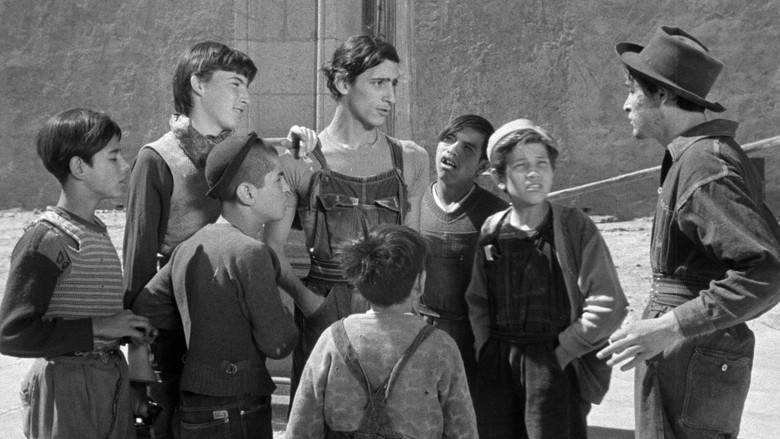
Despite this, Pedro makes a genuine attempt to reform. He gets a job as an apprentice blacksmith, but Jaibo finds him and steals a valuable knife, leading to Pedro being blamed and sent to a farm-like reform school. The school's director sees potential in Pedro and, as a test of trust, gives him 50 pesos to run an errand. On his way, Pedro is ambushed by Jaibo, who steals the money. This is the final catalyst for the tragedy. Enraged and desperate, Pedro confronts Jaibo in front of the other boys and publicly accuses him of murdering Julián.
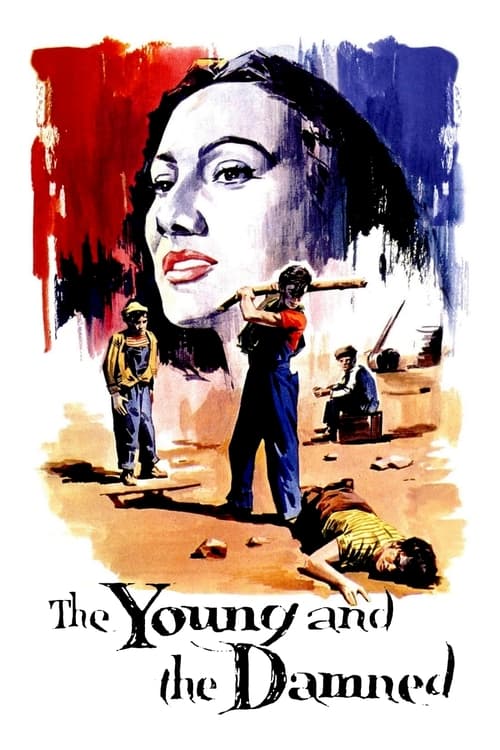
Fearing exposure, Jaibo hunts Pedro down in a barn and kills him by striking him with a heavy object. In the film's devastating final sequence, Meche and her grandfather, fearing they will be accused of the murder, take Pedro's body and dump it in a garbage heap on the outskirts of the city. As they do so, they pass Pedro's mother, who is finally searching for her son, completely unaware that his corpse is just feet away. Meanwhile, the blind man, having overheard Pedro's accusation, informs the police of Jaibo's whereabouts. The police corner Jaibo, and he is shot and killed while trying to flee. The ending underscores the film's central theme: in this environment, there is no escape, and the cycle of violence consumes everyone.