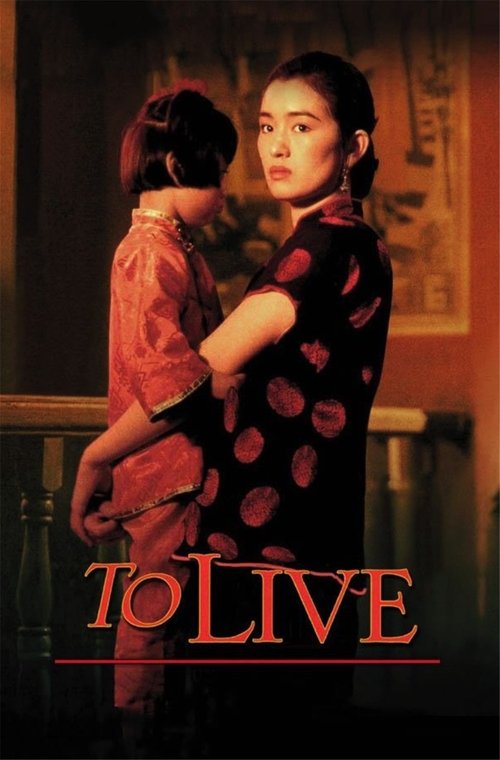
活着
Director: Zhang Yimou
Cast: Ge You, Gong Li, Niu Ben, Guo Tao, Jiang Wu
To Live — Movie Quotes
Memorable Quotes
我们家就像一只小鸡,小鸡长大了就变成了鹅,鹅长大了就变成了羊,羊长大了就变成了牛。牛以后就是共产主义了,那就天天吃饺子,天天吃肉了。
Context
Fugui first says this to his son Youqing during the Great Leap Forward, explaining the progression towards a communist paradise in simple, agricultural terms. He repeats a variation of this to his grandson Mantou at the very end of the film, but this time it feels more like a personal fairy tale of hope rather than political rhetoric.
Meaning
This quote, which translates to "Our family is like a little chicken. When it grows up, it becomes a goose, then a sheep, then an ox. After the ox is Communism, and there will be dumplings and meat every day," reflects the simple, almost childlike hope and propaganda of the era. Fugui repeats a version of this to his grandson at the end, but with a more personal, less political hope for a better future, showing his evolution.
你还欠我们家一条命呢,你得好好活着!
Context
Chunsheng, who has been branded a reactionary during the Cultural Revolution and whose wife has committed suicide, comes to Fugui and Jiazhen to give them all his money and announce his intention to kill himself. After Fugui refuses the money, a grieving but resolute Jiazhen says this to him, forcing him to continue living.
Meaning
Translated as "You still owe us a life, you have to live well!", this is a powerful and unexpected statement from Jiazhen. Instead of seeking revenge on Chunsheng, who accidentally killed her son, she commands him to live when he is suicidal. It's a profound expression of the film's theme of the value of life, even in the depths of grief and despair. It shows that even in her immense sorrow, Jiazhen understands the sanctity of life.
我什么都不要,我只要我们一家人安安靜靜地在一起過日子。
Context
Jiazhen says this early in the film after Fugui has lost their fortune. It establishes her character's central motivation and the film's overarching theme of valuing simple, everyday life over wealth or status.
Meaning
This line, meaning "I don't want anything, I just want our family to live a quiet life together," encapsulates the core desire of the ordinary people in the film, a stark contrast to the grand, tumultuous political ambitions of the era. It is the emotional thesis of the movie, highlighting the universal human yearning for peace and stability.
Explore More About This Movie
Dive deeper into specific aspects of the movie with our detailed analysis pages