To Live
活着
Overview
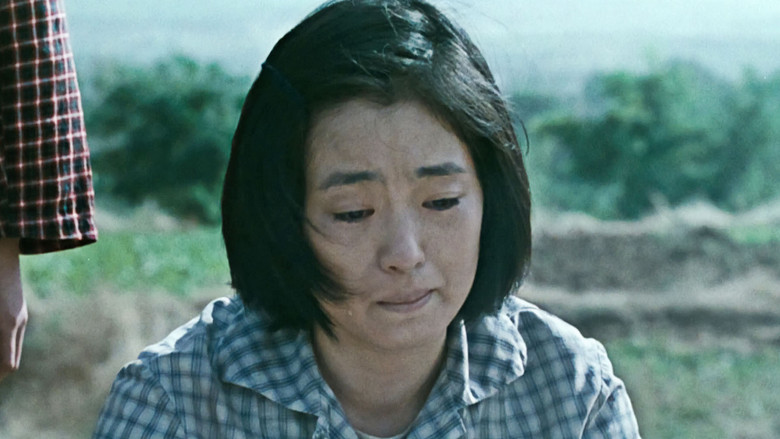
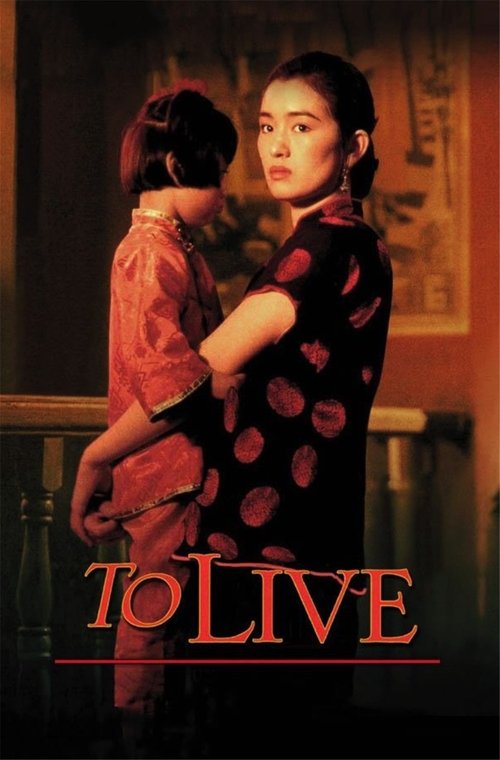
"To Live" (活着), directed by Zhang Yimou, is a powerful and moving drama that chronicles the lives of a Chinese family from the 1940s to the 1970s. The film follows Xu Fugui, who begins as a compulsive gambler from a wealthy family. After losing his entire fortune and family home, Fugui is forced to confront a life of poverty with his devoted wife, Jiazhen, and their two children, Fengxia and Youqing.
Through decades of immense political and social upheaval in China, including the Chinese Civil War, the Great Leap Forward, and the Cultural Revolution, the family endures unimaginable hardships and personal tragedies. Fugui's journey from a dissipated aristocrat to a humble shadow puppet performer, and ultimately a resilient survivor, forms the core of this poignant narrative. The film is a testament to the strength of the human spirit and the enduring power of family in the face of relentless adversity.
Core Meaning
The core meaning of "To Live" revolves around the profound resilience of the human spirit in the face of immense suffering and historical turmoil. Director Zhang Yimou sought to portray the lives of ordinary Chinese people and their capacity to endure, find hope, and maintain their humanity amidst the political campaigns that shaped 20th-century China. The film suggests that the ultimate meaning of life is found not in wealth or political ideology, but in the simple, tenacious act of living and the bonds of family. It's a quiet celebration of survival and an intimate look at how historical events impact the lives of everyday individuals, often with tragic irony. The film also serves as a subtle critique of the political extremism and fanaticism that caused so much suffering, emphasizing personal experience over grand political narratives.
Thematic DNA
Resilience and Survival
The central theme of the film is the enduring capacity of individuals to survive through immense hardship. The Xu family is repeatedly struck by personal tragedies that are direct or indirect consequences of the political upheavals in China. Despite losing their wealth, their children, and their health, Fugui and Jiazhen persist. Their will to live is not heroic in a grand sense, but a quiet, stubborn refusal to be completely broken by fate. The film portrays survival as a fundamental human instinct that transcends political ideologies.
The Impact of Political Change on Ordinary Lives
"To Live" powerfully illustrates how major historical events—the Chinese Civil War, the Great Leap Forward, and the Cultural Revolution—dramatically and often tragically impact the lives of ordinary people. The Xu family's personal story becomes a microcosm of the nation's tumultuous history. The film critiques the human cost of political campaigns and the way ideologies can lead to senseless suffering, such as the death of Youqing during the Great Leap Forward and Fengxia's death during the Cultural Revolution due to the persecution of experienced doctors.
Family and Love
The unwavering bond of the family serves as the emotional anchor of the film. Despite Fugui's initial flaws as a husband and Jiazhen's suffering, their love for each other and their children is what enables them to endure their hardships. The family unit is presented as a sanctuary, a source of meaning and strength when the outside world is chaotic and cruel. Jiazhen’s simple desire for a “quiet life together” becomes the film's most profound aspiration.
Fate and Irony
The film is filled with a sense of fatalism and cruel irony. Fugui's loss of his family fortune through gambling, which at first seems to be his ruin, ironically saves him from being executed as a landlord during the Communist revolution. The man who wins his house, Long'er, is later executed for being a landlord. Chunsheng, the man who accidentally kills their son, is the same person whose life Fugui and Jiazhen later save. These ironic twists of fate highlight the unpredictable and often senseless nature of life under a volatile political system.
Character Analysis
Xu Fugui
Ge You
Motivation
Initially, Fugui is motivated by his own pleasure and addictions. After losing everything, his primary motivation becomes the survival and well-being of his family. He adapts to each new political reality, not out of ideological conviction, but out of a pragmatic need to keep his loved ones safe and to simply keep on living.
Character Arc
Fugui begins as a reckless and irresponsible gambling addict who causes his family's ruin. His journey through war, poverty, and political turmoil transforms him. He learns humility, responsibility, and the importance of his family. While he never becomes a traditional hero, his resilience and his simple desire to protect his family and live a peaceful life demonstrate a profound character arc. He evolves from a symbol of decadent capitalism to a symbol of the enduring Chinese everyman.
Jiazhen
Gong Li
Motivation
Jiazhen's motivation is constant: to keep her family together and to live a peaceful life. She endures Fugui's initial irresponsibility and the subsequent decades of hardship out of a deep love for her family and a powerful sense of duty.
Character Arc
Jiazhen starts as the long-suffering wife of a gambler. Throughout the film, she is the emotional and moral core of the family. Her unwavering devotion and strength in the face of unimaginable loss are central to the family's survival. Her character does not undergo a dramatic transformation but rather reveals deeper and deeper reserves of strength and resilience as tragedies mount. Her simple wish for a "quiet life together" encapsulates the film's central theme.
Youqing
Fei Deng
Motivation
As a child, Youqing is motivated by love for his family, a desire to help (seen in his enthusiasm for the commune's activities), and a fierce protectiveness of his sister.
Character Arc
Youqing is the beloved son of Fugui and Jiazhen. He is a bright and energetic boy who represents the hope for a new generation. His arc is tragically cut short when he is accidentally killed by Chunsheng, a direct result of the exhaustion and fervor of the Great Leap Forward. His death is a pivotal moment in the film, representing the senseless loss of life caused by political extremism.
Fengxia
Liu Tianchi
Motivation
Fengxia is motivated by a desire for love and connection, which she finds with her family and later with her husband. She embodies quiet strength and the ability to find happiness in simple things despite her difficult circumstances.
Character Arc
Fengxia is the quiet and gentle daughter who becomes deaf and mute after a fever in her childhood. Despite her disabilities, she is a kind and loving presence in the family. She finds happiness in her marriage to Wan Erxi, but her life also ends in tragedy. Her death during childbirth, due to the lack of experienced doctors during the Cultural Revolution, is another indictment of the era's political fanaticism.
Symbols & Motifs
Shadow Puppets
The shadow puppets are a multi-layered symbol in the film. Initially, they represent a traditional art form and a means for Fugui to make a living after his downfall. More deeply, they symbolize the powerlessness of individuals in the face of larger historical forces; the characters, like the puppets, are manipulated by unseen hands. The puppets are also a means of survival for Fugui, as his performances for both the Nationalist and Communist armies save his life. Ultimately, the chest for the puppets becomes a home for the new chicks at the end, symbolizing hope and the continuation of life.
Fugui is given the puppets by Long'er after losing his house. He uses them to entertain soldiers during the civil war. During the Cultural Revolution, he is advised to burn them as they represent old culture, but he manages to save the chest. In the final scene, the chest is used to house the chicks, signifying a transformation from a tool of the past to a vessel for the future.
Food (Noodles, Dumplings, Buns)
Food in "To Live" often appears in moments of both comfort and tragedy, representing the basic necessities of life and the fragility of existence. Dumplings are a recurring symbol of family and tradition, which Jiazhen offers to her deceased son. The seven steamed buns that lead to a doctor being unable to save Fengxia represent the absurd and tragic consequences of the political turmoil of the Cultural Revolution.
Youqing spills a bowl of noodles with chili on another child to defend his sister. Jiazhen brings dumplings to Youqing's grave. Professor Wang, the only qualified doctor available to help Fengxia during childbirth, is imprisoned and starves. When he is finally given buns to eat, he consumes them so quickly with water that he is unable to help, leading to Fengxia's death.
The Family Home
The loss of the grand family home at the beginning of the film symbolizes the end of an era and the family's fall from the landlord class. This loss, however, ironically saves Fugui from being executed by the Communists. The humble dwelling they subsequently live in represents their new reality and becomes the enduring center of their family life, a place of both suffering and love.
Fugui gambles away his family's mansion to Long'er at the start of the film. This event triggers the family's long journey of hardship. Later, they find a simple, small home which they occupy for the rest of the film.
Memorable Quotes
我们家就像一只小鸡,小鸡长大了就变成了鹅,鹅长大了就变成了羊,羊长大了就变成了牛。牛以后就是共产主义了,那就天天吃饺子,天天吃肉了。
— Xu Fugui
Context:
Fugui first says this to his son Youqing during the Great Leap Forward, explaining the progression towards a communist paradise in simple, agricultural terms. He repeats a variation of this to his grandson Mantou at the very end of the film, but this time it feels more like a personal fairy tale of hope rather than political rhetoric.
Meaning:
This quote, which translates to "Our family is like a little chicken. When it grows up, it becomes a goose, then a sheep, then an ox. After the ox is Communism, and there will be dumplings and meat every day," reflects the simple, almost childlike hope and propaganda of the era. Fugui repeats a version of this to his grandson at the end, but with a more personal, less political hope for a better future, showing his evolution.
你还欠我们家一条命呢,你得好好活着!
— Jiazhen
Context:
Chunsheng, who has been branded a reactionary during the Cultural Revolution and whose wife has committed suicide, comes to Fugui and Jiazhen to give them all his money and announce his intention to kill himself. After Fugui refuses the money, a grieving but resolute Jiazhen says this to him, forcing him to continue living.
Meaning:
Translated as "You still owe us a life, you have to live well!", this is a powerful and unexpected statement from Jiazhen. Instead of seeking revenge on Chunsheng, who accidentally killed her son, she commands him to live when he is suicidal. It's a profound expression of the film's theme of the value of life, even in the depths of grief and despair. It shows that even in her immense sorrow, Jiazhen understands the sanctity of life.
我什么都不要,我只要我们一家人安安靜靜地在一起過日子。
— Jiazhen
Context:
Jiazhen says this early in the film after Fugui has lost their fortune. It establishes her character's central motivation and the film's overarching theme of valuing simple, everyday life over wealth or status.
Meaning:
This line, meaning "I don't want anything, I just want our family to live a quiet life together," encapsulates the core desire of the ordinary people in the film, a stark contrast to the grand, tumultuous political ambitions of the era. It is the emotional thesis of the movie, highlighting the universal human yearning for peace and stability.
Philosophical Questions
What is the meaning of life in the face of relentless suffering?
The film explores this question by stripping its characters of wealth, status, and even their children. Fugui and Jiazhen are left with only the bare essentials of life. The film suggests that meaning is not found in grand achievements or ideologies, but in the simple act of enduring, in the love between family members, and in the hope for a better future for the next generation. The title itself, "To Live," becomes the profound and ultimate answer.
To what extent are our lives determined by fate versus personal choices?
Fugui's life is initially shaped by his poor choices (gambling), but this very choice ironically saves him from a worse fate. Subsequently, his life is largely dictated by the unpredictable whims of political history, forces completely beyond his control. The film seems to suggest that while personal choices have consequences, individuals are often like puppets (a key symbol in the film) in the hands of larger, impersonal forces of fate and history.
How does political ideology impact individual humanity?
"To Live" examines how grand political ideologies, when taken to extremes, can devalue individual human lives. The deaths of Youqing and Fengxia are not malicious acts but are the results of a system where political fervor and dogma override common sense and basic human needs. The film champions the personal, the familial, and the humane over the abstract and often cruel demands of political movements.
Alternative Interpretations
One of the main areas of alternative interpretation lies in the film's ending compared to the novel. The film's more optimistic conclusion, where Fugui's wife, son-in-law, and grandson survive, can be read in several ways. Some see it as a concession to censors or a desire for a more commercially palatable story that affirms the resilience of the Chinese family. Others interpret it as a genuine statement of hope by Zhang Yimou, who personally experienced the Cultural Revolution and believed in the capacity of people to survive and find reasons to live.
Another interpretation revolves around the film's political stance. While it is clearly critical of the excesses of the Communist campaigns, some argue it is not a wholesale condemnation of communism itself. Instead, it can be viewed as a humanist film that focuses on the universal human experience of suffering and endurance, with the political backdrop serving as a catalyst for the family's trials. The film's focus on the personal rather than the explicitly political allows for a more ambiguous and universal reading of its message.
Cultural Impact
"To Live" is considered a masterpiece of Chinese cinema and a key film of the Fifth Generation of Chinese filmmakers. Its international success, including the Grand Prix at the 1994 Cannes Film Festival, brought significant attention to Chinese cinema. However, its critical portrayal of the consequences of Maoist policies led to it being banned in China, highlighting the country's strict censorship. This ban paradoxically increased its international fame and its status as a significant piece of political and cultural commentary.
The film has been widely used in educational settings in the West to teach modern Chinese history, as it provides a powerful and personal perspective on events like the Great Leap Forward and the Cultural Revolution. It sparked discussions both within and outside China about historical trauma and the relationship between art and politics. Despite the ban, the film was widely seen in China through pirated copies, influencing a generation of viewers and filmmakers. Zhang Yimou's subsequent career, including his direction of the 2008 Beijing Olympics opening ceremony, is often viewed in the context of his earlier, more politically charged works like "To Live".
Audience Reception
"To Live" was met with widespread critical acclaim internationally, with reviewers praising its powerful storytelling, emotional depth, and stunning performances by Ge You and Gong Li. It won the Grand Prix, Prize of the Ecumenical Jury, and Best Actor for Ge You at the 1994 Cannes Film Festival. Critics lauded Zhang Yimou's direction for its combination of epic scope and intimate, personal focus. The film's portrayal of resilience in the face of suffering resonated strongly with international audiences.
However, the film's reception in China was complicated by the government's ban. While it was not publicly screened, it gained a significant underground following through pirated copies and became a highly regarded classic among many Chinese viewers who appreciated its honest depiction of a painful period in their country's history. Some nationalist viewers and, later, online commentators have criticized Zhang Yimou for allegedly catering to Western audiences by focusing on the negative aspects of China's past.
Interesting Facts
- The film was banned in mainland China by the Chinese government due to its critical portrayal of the Communist Party's policies and for being screened at the Cannes Film Festival without government permission.
- Director Zhang Yimou and lead actress Gong Li were banned from filmmaking for two years as a result of the controversy surrounding the film.
- Ge You, who played Fugui, won the Best Actor award at the 1994 Cannes Film Festival for his performance, a first for a Chinese actor.
- The film's ending is significantly more hopeful than the novel it is based on. In Yu Hua's novel, all of Fugui's family members die, leaving him alone with an ox. Zhang Yimou changed the ending because he felt it was too bleak and wanted to convey a sense of hope and survival.
- Zhang Yimou was initially interested in adapting another of Yu Hua's novels, but became captivated by "To Live" after reading it.
⚠️ Spoiler Analysis
Click to reveal detailed analysis with spoilers
Frequently Asked Questions
Explore More About This Movie
Dive deeper into specific aspects of the movie with our detailed analysis pages
Comments (0)
No comments yet. Be the first to share your thoughts!