
The narrative hinges on several critical revelations and cosmic shifts:
- The Nature of Fushi's Forms and Memory Stripping: Fushi can only transform into entities that have physically died after making a meaningful emotional impact on him. The Nokkers target these forms specifically; each time a Nokker steals a form, Fushi completely forgets the corresponding person, turning combat into an existential struggle to safeguard his memories.
- The Reality of Fye (Souls) and Resurrection: In Season 2, Bonchien reveals that souls (fye) do not automatically disappear; they linger near Fushi if they choose not to enter the paradise cycle. Consequently, Fushi discovers that creating empty duplicate bodies allows lingering souls to re-enter their physical vessels, enabling full resurrection.
- The Battle of Renril and Planetary Consciousness: To defend the city of Renril, Fushi expands his nervous system throughout all building materials, bricks, and metal. This allows him to fight across the entire city simultaneously, but forces him to feel every death and structural rupture in real time.
- The Era Shifts and Modern Re-emergence: At the end of Season 2, Fushi disperses his body across the globe for centuries to eliminate the Nokkers, bringing the medieval era to a close. When he reconstitutes himself in the 21st century (Season 3), he discovers that Nokkers have evolved to peacefully inhabit willing human hosts, forcing Fushi to rethink conflict in an age of mental health struggles and modern alienation.
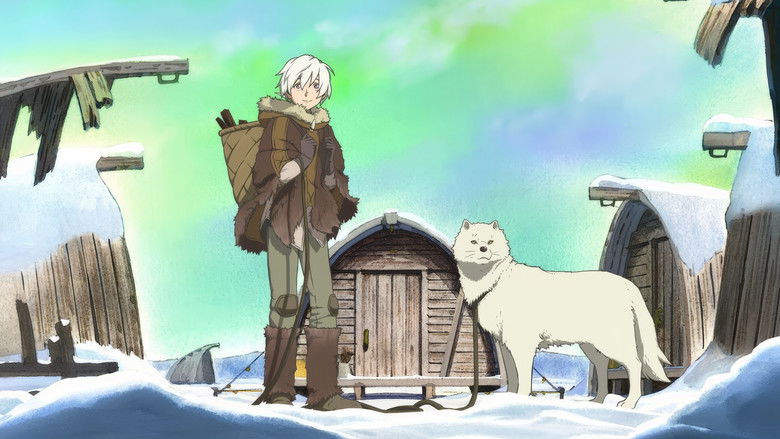
- The Climax and Series Finale: Fushi confronts The Beholder’s cosmic role. He rejects becoming a cold, detached deity, choosing instead to remain rooted in the mortal realm alongside his resurrected loved ones. The story concludes with Fushi keeping his original promise to remember the Nameless Boy, bringing the eight-year saga full circle back to the snowy tundra.