Skip to content
To Your Eternity
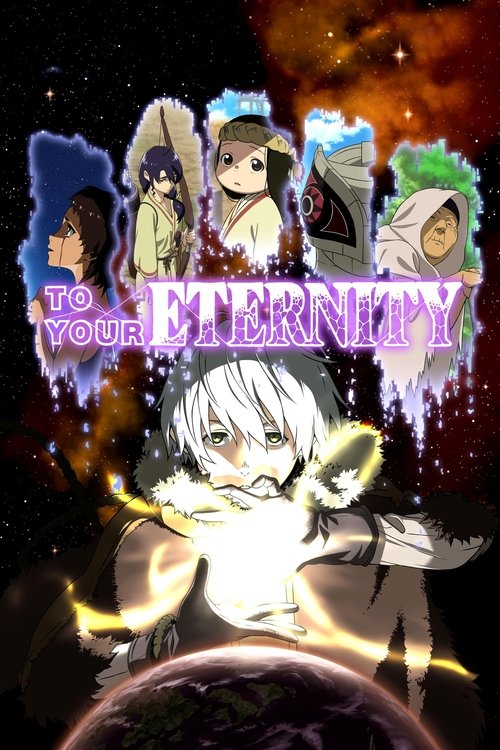
An atmospheric mythological fantasy of aching melancholy and radiant warmth, where an immortal soul gathers humanity piece by piece, blooming like moss across frozen stone with every tear shed and life remembered.
To Your Eternity

To Your Eternity

不滅のあなたへ

12 April 2021 — 28 March 2026 Japan 3 season 62 episode Ended 8.2 (342)

Cast: Reiji Kawashima, Kenjiro Tsuda, Aya Uchida, Tomori Kusunoki, Megumi Han

Animation Sci-Fi & Fantasy Action & Adventure Mortality and Memory as True Immortality Pain and Suffering as Catalysts for Growth The Construction of Identity and Humanity Free Will vs. Predestination and Creator Expectations Paradise, Despair, and the Reality of Living

Overview

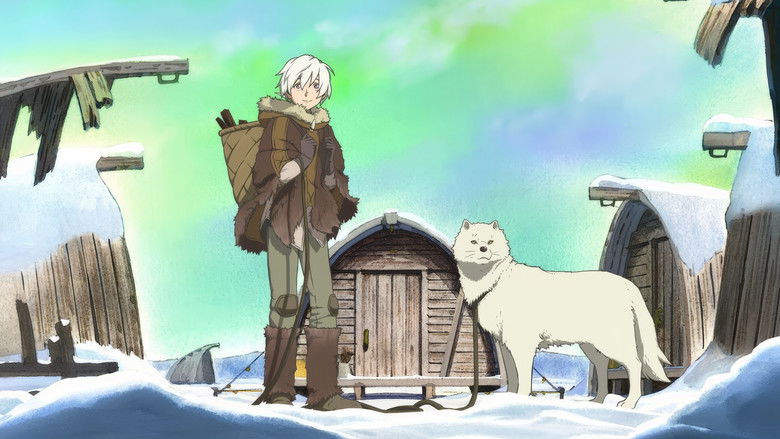
To Your Eternity (Fumetsu no Anata e) is an epic philosophical fantasy that chronicles the centuries-long transformation of an extraterrestrial, immortal entity cast down to Earth without form, consciousness, or memories. Created by an enigmatic, hooded deity known as The Beholder (Kansatsusha), the entity begins as a simple sphere capable of absorbing stimuli and duplicating whatever it interacts with. Starting with inanimate nature, the being gradually adopts organic vessels, ultimately taking the form of a lone youth in the frozen tundra and assuming the name Fushi. From this origin, Fushi embarks on an odyssey across civilizational eras to discover what it means to be alive, conscious, and human.

Across multiple expansive eras—spanning primordial wilderness, feudal fiefdoms, medieval sieges, and evolving modern societies—Fushi encounters diverse companions, each leaving a lasting imprint on his identity and emotional faculties. However, this journey of self-discovery is fraught with conflict: Fushi is relentlessly pursued by the Nokkers, antagonistic hive-mind parasites seeking to strip him of his memories and accumulated human forms, alongside fanatic cults and zealous empires that seek to venerate, exploit, or exterminate him.

As the narrative deepens, the series expands from an intimate, episodic coming-of-age journey into a generational conflict over the destiny of human souls. Fushi transitions from a passive observer reacting to trauma into a guardian forced to shoulder the existential burden of life, loss, and the eternal cycle of rebirth.


Core Meaning

Through Fushi’s perpetual existence, creator Yoshitoki Ōima presents a poignant exploration of mortality: to live is to experience pain and love simultaneously, and a finite life derives its deepest value from the bonds forged with others.

The series conveys that death is not the erasure of identity; rather, human existence endures through memory, emotional inheritance, and the legacy passed to those who outlive us. Pain is portrayed not as an error to be eradicated, but as an indispensable catalyst for empathy, emotional growth, and genuine consciousness. The ultimate measure of a meaningful existence is found not in physical longevity or divine omnipotence, but in the willingness to love, endure grief, and carry forward the hopes of the departed.

Thematic DNA

Mortality and Memory as True Immortality 30%
Pain and Suffering as Catalysts for Growth 25%
The Construction of Identity and Humanity 20%
Free Will vs. Predestination and Creator Expectations 15%
Paradise, Despair, and the Reality of Living 10%

Mortality and Memory as True Immortality

The series presents mortality as the defining feature of human beauty. While physical lives are fleeting, people achieve true immortality through the memories and emotional imprints they leave behind. Fushi literally manifests this truth: every form he adopts and every item he creates is a direct testament to someone he loved and lost.

Pain and Suffering as Catalysts for Growth

From Fushi’s initial sensory awakenings—freezing, starving, and enduring physical death—pain serves as the primary impetus for evolution. As the story shifts from physical agony to profound psychological grief, pain becomes the foundation of empathy, distinguishing organic life from emotionless divinity.

The Construction of Identity and Humanity

Fushi starts as an emotionless vessel. Through eating food with March, learning social nuance and self-sacrifice with Gugu, and confronting moral complexity with Pioran, Tonari, and Bonchien, Fushi piece by piece acquires morality, love, and a distinct soul.

Free Will vs. Predestination and Creator Expectations

The Beholder created Fushi to be a detached observer and successor to preserve the world. Throughout the story, Fushi rebels against this detached divine mandate, rejecting passive observation to intervene, protect mortal lives, and establish his own agency.

Paradise, Despair, and the Reality of Living

Explored from the Nameless Boy’s futile search for 'paradise' to the Nokkers' distorted ideal of freeing humans from physical anguish, the series argues that a sterilized utopia devoid of pain is an illusion; true fulfillment is found in embracing the messy, imperfect world.

Character Analysis

Fushi

Reiji Kawashima

Archetype: The Evolving Divine / Mythic Hero Key Trait: Boundless empathy and experiential adaptation

Motivation

Initially driven purely by basic sensory stimuli and the desire to honor dying wishes; evolves into an unwavering desire to protect loved ones from pain and preserve their existence.

Character Arc

Begins as an emotionless, instinct-driven blank vessel. Over centuries, he learns language, culture, empathy, and love. In later eras, burdened by relentless warfare and grief, he transitions from a wandering immortal into a guardian protector who masters the physical realm and learns to resurrect the dead before redefining his role in the world.

The Beholder / Kansatsusha

Kenjiro Tsuda

Archetype: The Detached Creator / Cosmic Mentor Key Trait: Cold omnipotence and philosophical detachment

Motivation

Preparing Fushi to preserve the world and eventually take over cosmic responsibilities.

Character Arc

Created the universe and deposited the Orb on Earth. Maintains an objective, cold distance, viewing mortality and suffering as natural functions of a complete ecosystem. As Fushi develops mortal will and challenges his instructions, the Beholder observes the limits of his own omniscience, eventually seeking Fushi as a successor so he may step away.

All 6 characters and cast

Symbols & Motifs

The White Orb / Vessel (Utsuwa)

Meaning:

Symbolizes pure potential and the blank slate of consciousness.

Context:

It begins as featureless matter and takes on shape and texture only through connection, trauma, and experiential stimulation.

The Wolf (Joaan)

Meaning:

Symbolizes instinct, loyalty, and the bridge between nature and humanity.

Context:

Joaan represents Fushi’s first biological connection and introduces the fundamental concept of returning to a companion.

Fruit and Cooking (Food as Connection)

Meaning:

Represents communication, caretaking, and the transfer of culture.

Context:

Used throughout all seasons, from March feeding Fushi fruit to teach him to eat, to Pioran’s and Gugu’s culinary lessons.

Gugu’s Mask / The Alter Ego

Meaning:

Symbolizes societal perception, outer deformity versus inner humanity, and chosen identity.

Context:

Reinforces the theme that humanity is defined by internal character rather than external form during the Takunaha Arc.

The Nokkers

Meaning:

Symbolize nihilism, emotional erasure, and the denial of organic life’s worth.

Context:

They physically strip Fushi of his forms (his memories of loved ones), embodying the existential dread of forgetting those who mattered.

The Black Hood / The Beholder’s Mantle

Meaning:

Represents cosmic indifference, fatalism, and the dispassionate machinery of creation.

Context:

As Fushi pushes back against it, it highlights the conflict between detached observation and active empathy.

Memorable Quotes

僕のこと… ずっと、覚えてて。
— The Nameless Boy

Context

Spoken on his deathbed in the tundra after failing to reach paradise (Season 1, Episode 1).

Meaning

This plea forms the emotional foundation of the entire series and Fushi's core mission to carry the memories of the deceased.

マーチ、大人になりたかったなぁ。
— March

Context

Uttered as she shields Parona from Yanome arrows (Season 1, Episode 5).

Meaning

Highlights the tragedy of stolen potential and crystallizes Fushi’s fury and sorrow.

All 6 quotes

Episode Highlights

The Last One

S1E1

The premier origin story showing the Orb taking root in rock, moss, wolf, and human.

Significance:

The Nameless Boy’s tragic demise in the snow sets the thematic backbone of memory, loss, and physical yearning for the entire series.

Those Who Accompany

S1E5

March sacrifices herself to save Parona from Yanome forces.

Significance:

Fushi experiences the anguish of losing a maternal caregiver for the first time, awakening the capacity for rage and intentional combat.

Awakening

S1E12

The climax of the Takunaha Arc; Gugu sacrifices his life to protect Rean and Fushi from a collapsing structure and Nokker assault.

Significance:

Fushi inherits Gugu’s form and inner strength, solidifying the emotional weight of brotherhood.

Echoes

S1E20

Pioran succumbs to old age and dementia while Fushi cares for her on an uninhabited shore.

Significance:

Pioran bargains with the Beholder to assist Fushi in future reincarnations, bringing Season 1 to a devastating, bittersweet conclusion.

Secret Behind the Veil

S2E12

Prince Bonchien reveals to Fushi the reality of fye (souls) and the fact that spirits of his fallen friends have been accompanying him invisibly.

Significance:

This fundamentally alters Fushi’s understanding of death and existence.

The Battle of Renril

S2E19

Fushi integrates his sensory network across the entire city of Renril, experiencing every stone, building, and death simultaneously.

Significance:

Pushes Fushi's powers to a semi-godlike scale at tremendous psychological cost.

Dawn of Peace

S2E20

Fushi revives March, Gugu, and the warriors of Renril, realizing his long-dormant resurrection power.

Significance:

He embeds his root system across the entire planet to root out Nokkers for centuries, setting the stage for the era leap into Season 3.

A New World

S3E1

Fushi awakens in the 21st century after centuries of stasis.

Significance:

Explores the stark contrast between ancient survival and the complex existential isolation of modernity.

To The Undying

S3E20

Resolves Fushi's cosmic struggle with the Nokkers and his relationship with The Beholder.

Significance:

Completes the cycle of reincarnation, bringing Fushi’s eternal journey full circle back to the snowy tundra of Chapter 1.

Philosophical Questions

What constitutes the core of a human soul?

Explored through Fushi duplicating biological bodies—demonstrating that a person is defined not merely by flesh or instincts, but by consciousness, memories, and choices.

Is a suffering-free existence truly desirable?

Explored through the Nokkers’ desire to 'liberate' humanity from physical torment versus Fushi’s realization that emotional warmth and personal meaning cannot exist without vulnerability and grief.

What is the true burden of survival?

Explored through Fushi outliving every mortal who loves him, reframing survival not as a victory, but as an ongoing duty to remember the fallen.

Alternative Interpretations

The series can be analyzed through three primary critical lenses:

Full ending explanation

Cultural Impact

To Your Eternity is deeply rooted in Japanese animism and Shinto metaphysics, incorporating concepts of kami, soul transfer, and the spiritual presence residing within natural objects like stones, plants, and wolves.

Season 1 received universal critical acclaim, frequently singled out for having one of the most powerful premiere episodes in contemporary anime. Season 2 shifted the genre towards political fantasy and large-scale warfare, prompting debate among fans who missed the episodic intimacy of Season 1, while Season 3 reframed the premise in a modern sociological light.

The series stands out as a unique deconstruction of immortality tropes in shōnen/seinen media. Rather than treating immortality as an invincible superpower, the series examines it as a burden of perpetual bereavement and historical memory.

Audience Reception

Season 1 was praised by critics and viewers worldwide, with Episode 1 frequently lauded as an emotional masterpiece of self-contained storytelling. The emotional arcs of March, Gugu, and Pioran earned consistent acclaim for their character writing.

Some critics and fans noted pacing inconsistencies during the Jananda Island arc and voiced disappointment over the visual animation shifts when Studio Drive took over production in Season 2.

Overall, To Your Eternity is regarded as one of the most poignant, emotionally affecting, and conceptually ambitious fantasy anime of the 2020s, celebrated for its raw exploration of grief, love, and memory.

Interesting Facts

  • The series is based on the manga by Yoshitoki Ōima, the critically acclaimed author of A Silent Voice (Koe no Katachi).
  • The opening song, 'PINK BLOOD', was written and performed by Japanese pop superstar Hikaru Utada—marking the very first time Utada wrote a dedicated opening theme specifically for a television anime series.
  • Season 1 was animated by Studio Brain’s Base under director Masahiko Murata; production then moved to Studio Drive with director Kiyoko Sayama taking the helm for Seasons 2 and 3 (co-produced with Studio Massket in Season 3).
  • Creator Yoshitoki Ōima originally conceptualized the protagonist as female, but adjusted Fushi to a male youth based on editorial collaboration to achieve a distinct archetypal resonance.
  • Composer Ryo Kawasaki incorporated folk strings, non-traditional percussion, and organic wind instruments to reflect the distinct historic and ethnic settings of each arc.
  • Reiji Kawashima (Fushi) described the voice acting role as uniquely challenging because he had to start with guttural, pre-lingual grunts in early episodes and gradually layer articulated speech, grammar, and emotional nuance as Fushi grew.
  • Originally scheduled to premiere in October 2020 on NHK Educational TV, the anime production was delayed to April 2021 due to the impact of the COVID-19 pandemic on the animation schedule.

Easter Eggs

Literary Japanese Title (不滅のあなたへ)

The title uses the archaic and intimate pronoun Anata (あなた), emphasizing that the story is a personal epistolary dedication to mortal lives that pass away while leaving their memory behind.

The Nameless Boy’s Parallel to Paradise

The boy in Episode 1 dreams of reaching an Eden filled with lush fruit and people. In Season 3’s modern era, Fushi wanders into supermarkets overflowing with fruit, visually fulfilling the boy's impossible dream across centuries.

The 'Pink Blood' Symbolism in the OP

The opening sequence depicts black and pink ichor flowing into stone, symbolizing the infusion of vibrant, messy mortality into cold, unfeeling divine matter.

Reincarnation Visual Cameos

Background characters in public modern settings subtly resemble deceased companions from ancient eras (such as Parona and the Booze Man), representing the soul cycle (fye) continuing unhindered.

Hayase's Descendant Lineage Voice Casting

Every successive guardian leader from the Guardian Force shares voice actress Mitsuki Saiga’s distinct voice, highlighting how Hayase’s obsession was genetically and culturally passed down through generations.

Frequently Asked Questions

Explore More About This Movie

Dive deeper into specific aspects of the movie with our detailed analysis pages

Comments (0)

Leave a comment

No comments yet. Be the first to share your thoughts!

Similar Movies