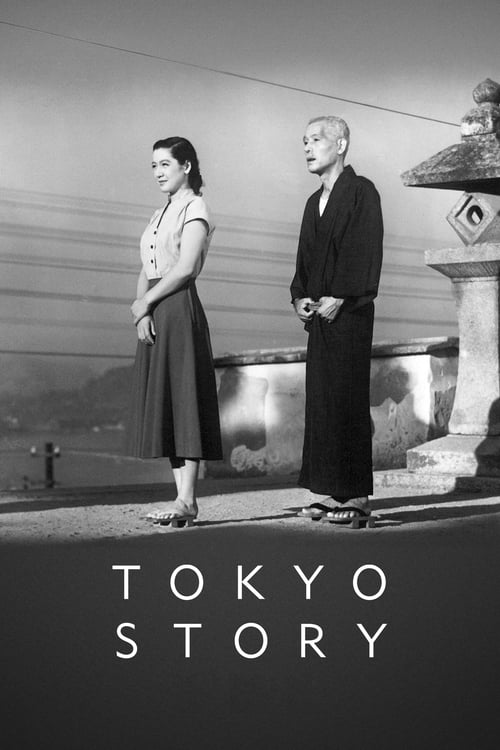
Tokyo Story
A quiet, melancholic portrait of generational drift, where the gentle rhythms of daily life reveal the profound, unspoken distances within a family, like ships passing in the calm morning light.
Tokyo Story
Tokyo Story

東京物語

"As long as life goes on, relationships between parents and children will bring boundless joy and endless grief."

03 November 1953 Japan 137 min ⭐ 8.2 (1,146)
Director: Yasujirō Ozu
Cast: Chishū Ryū, Chieko Higashiyama, Setsuko Hara, Haruko Sugimura, Sō Yamamura
Drama
Generational Conflict and Disconnect Modernization and the Decline of Tradition Loneliness and Mortality Disappointment and Acceptance

Tokyo Story - Ending Explained

⚠️ Spoiler Analysis

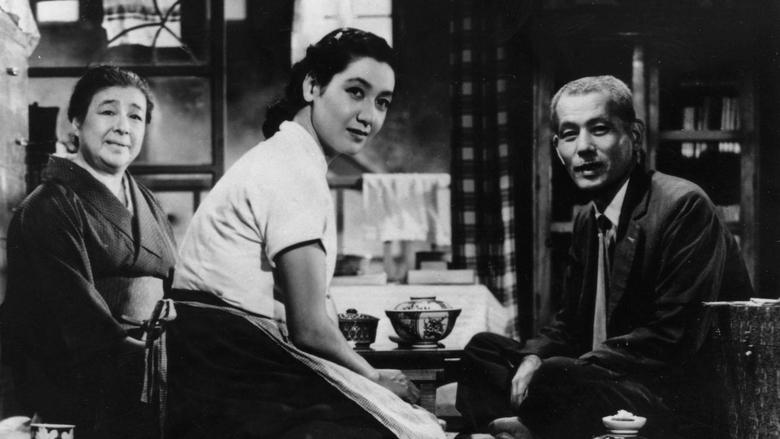
The emotional core of "Tokyo Story" is fully realized in its final act, which contains the story's major plot turn: the death of Tomi. After the disappointing and truncated trip to Tokyo, Tomi falls critically ill during the train journey home. She passes away peacefully in Onomichi, surrounded by her eldest children and Noriko, who have rushed to be by her side (her younger son, Keizō, arrives too late).

This event reveals the true depths of the characters' personalities. The selfishness of Shige and Kōichi becomes starkly apparent when they decide to return to Tokyo almost immediately after the funeral. Shige callously asks for her mother's clothes as keepsakes before leaving, a moment that deeply upsets the youngest daughter, Kyōko. This act underscores the theme that for the urban children, pragmatic concerns have completely overridden grief and familial duty.

The film's hidden meaning becomes clear in the final conversations. Kyōko's bitter disillusionment ("Isn't life disappointing?") is met by Noriko's gentle, sad acceptance ("Yes, it is."). This exchange suggests that the film's ultimate message is one of resignation to the painful realities of life. The ending finds Shūkichi alone in his house. Noriko, having stayed behind the longest, must also eventually return to her life in Tokyo. Shūkichi gives her his late wife's watch, urging her to remarry and not end up lonely like him. The final shot is of Shūkichi, alone, fanning himself in the quiet house, a portrait of profound loneliness and the quiet dignity of enduring it. The cycle of life continues, symbolized by a boat passing in the harbor, indifferent to his personal sorrow.

Alternative Interpretations

While the most common interpretation of "Tokyo Story" is that it's a critique of the younger generation's selfishness due to modernization, some alternative readings offer more nuance:

  • A Critique of the Parents: Some analyses suggest the film is not entirely one-sided. There are hints that Shūkichi's past behavior, particularly his drinking, may have contributed to the emotional distance with his older children. Shige and Kōichi remember their father's drinking, an issue the youngest daughter, Kyōko, was spared. This suggests their resentment may be rooted in past grievances, making their behavior a result of unresolved family history rather than just modern selfishness.
  • The Children as Victims of Modernity: Another interpretation posits that the children are not inherently bad people, but rather victims of a demanding and unforgiving modern economy. Kōichi's life as a doctor in a poor suburb and Shige's struggle to run her small business show that they are not living in luxury. Their neglect of their parents can be seen as a tragic consequence of their own difficult lives and struggle for survival in the new Japan, making them figures to be pitied as much as condemned.
  • A Political Allegory: A more political reading views the film as a commentary on post-occupation Japan. In this interpretation, the parents (especially Shūkichi) represent traditional, pre-war Japan, while the children represent the new, Westernized Japan that has forgotten its history and traditions in its rush to embrace American-influenced values. The children's neglect of their parents thus symbolizes the nation's neglect of its own past.