Toto, Peppino, and the Hussy
A comically chaotic clash of cultures unfolds with heartfelt ignorance as two provincial brothers bumble through the big city on a misguided mission of family honor.
Toto, Peppino, and the Hussy

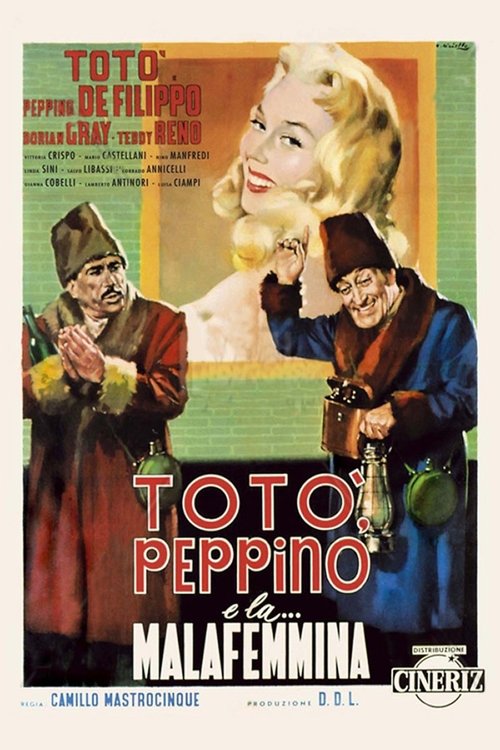
Totò, Peppino e la... malafemmina

23 August 1956 Italy 101 min ⭐ 8.0 (360)
Director: Camillo Mastrocinque
Cast: Totò, Peppino De Filippo, Dorian Gray, Teddy Reno, Vittoria Crispo
Comedy Romance
North vs. South Cultural Divide Appearance vs. Reality Family Honor and Duty The Comedy of Ignorance

Toto, Peppino, and the Hussy - Ending Explained

⚠️ Spoiler Analysis

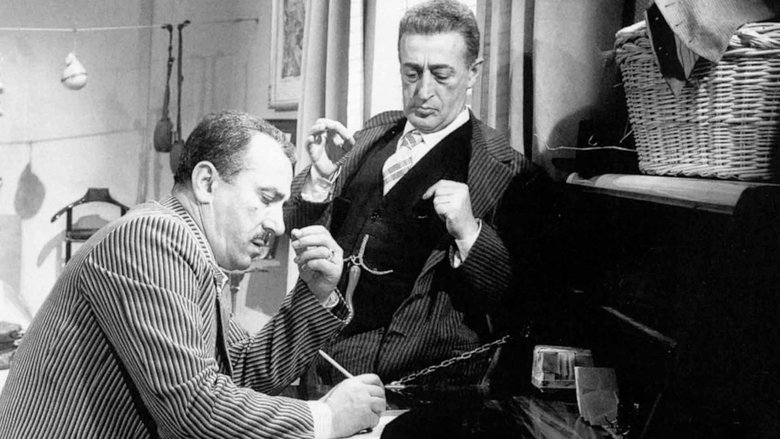
The central twist of "Toto, Peppino, and the Hussy" is that the titular "hussy," Marisa Florian, is not a villainous seductress but a kind and sincere woman who genuinely loves Gianni. The entire premise is built on the false assumption propagated by an anonymous letter from a jealous girl. When Antonio and Peppino finally confront Marisa, their elaborate, intimidating plan, built up through the famous letter-writing scene, crumbles in the face of her genuine emotion and grace.

After receiving their garbled but still hurtful letter and a sum of money, Marisa is heartbroken. Gianni finds her and, to prove his love and the depth of his feelings, he sings "Malafemmena" to her in front of a theater audience. The song, written by Totò himself, is about a man's heartbreak over a "bad woman" he can't help but love. In the context of the film, Gianni's heartfelt performance reclaims the term, showing Marisa that his love is true despite his family's opinion. The raw emotion of the performance deeply moves Marisa. Crucially, Gianni's mother, Lucia, witnesses this moment and realizes the couple's love is authentic and that Marisa is a good person.

In the end, Lucia overrules her brothers' objections. The family accepts Marisa, who happily agrees to give up her career in the revue. The final scene shows Marisa fully integrated into the Caponi family, having moved to their rural village to marry Gianni. The supposed "hussy" becomes the perfect daughter-in-law, completely subverting the brothers' initial, ignorant fears and prejudices.

Alternative Interpretations

While the film is overwhelmingly seen as a lighthearted comedy, some analysis views it through a more critical, sociological lens. One interpretation suggests that the film, beneath its humor, presents a rather melancholic portrait of the Southern Italian condition. The brothers are not just funny; they are figures of profound displacement, whose ignorance renders them powerless and ridiculous in the face of Northern modernity. Their journey can be seen as a tragicomic allegory for the internal migration of Southerners to the North, where they were often met with prejudice and condescension.

Another reading focuses on the character of Marisa. While the film's ending sees her happily abandoning her career for marriage and domesticity, a feminist interpretation might critique this as a conventional and patriarchal resolution. Marisa, an independent working woman, is ultimately "tamed" and assimilated into the traditional family structure she initially threatened. Her redemption is contingent on her renouncing her profession and conforming to the Caponi family's values, which could be seen as reinforcing the conservative social norms of the era.