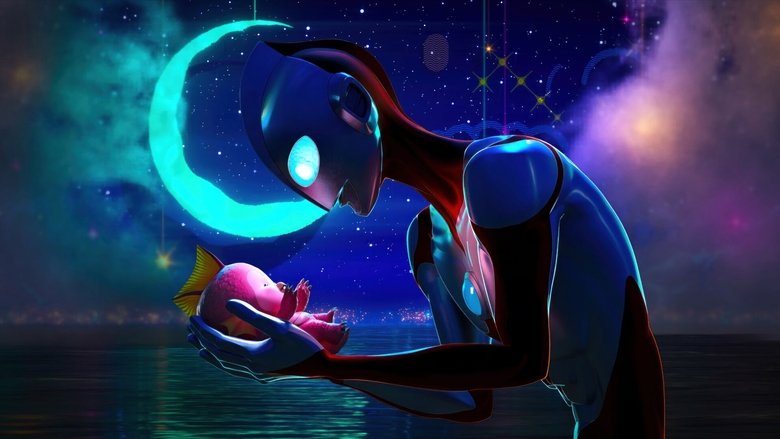
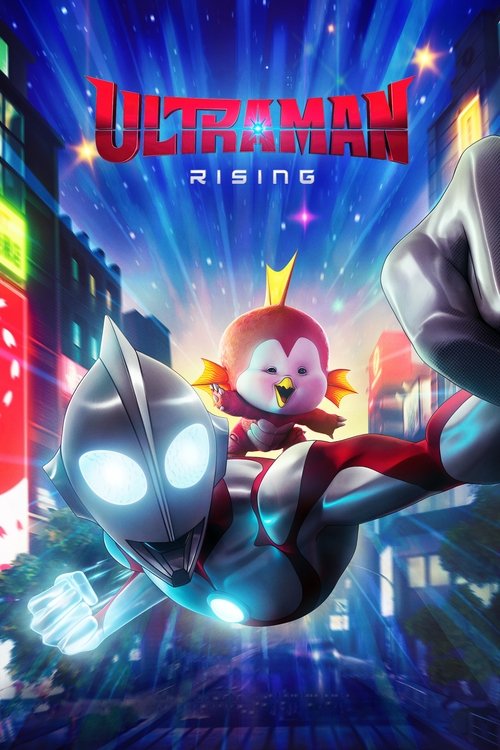
The plot's major twist revolves around the fate of Emi's mother, Gigantron. After being seemingly killed by the Kaiju Defense Force (KDF) early in the film, it is later revealed that the KDF salvaged her body and resurrected her as a mind-controlled cyborg, "Mecha Gigantron," as part of Dr. Onda's 'Project Surrogate.' Onda's plan is to use the controlled Gigantron to lead them to the hidden Kaiju Island, where he intends to wipe out all kaiju.
During the final battle, Emi manages to break the KDF's control over her mother. This leads to a powerful alliance where Ken as Ultraman, his father Professor Sato as 'Ultradad,' the newly freed Gigantron, and Emi team up to fight Dr. Onda's giant mech. Defeated, Onda triggers a self-destruct sequence to destroy the city. In a final act of true heroism, Ken contains the explosion with an energy shield at great personal risk, fully embracing his role as a protector. The film concludes with Ken and his father, their relationship mended, accompanying a reunited Emi and Gigantron to the safety of Kaiju Island.
The post-credits scene provides a significant cliffhanger for a potential sequel. Ken receives a mysterious transmission from Nebula M78, the homeworld of the Ultras. The message is from his mother, Emiko, who was presumed dead for years. She reveals she is alive and needs his help to come home, setting up a new, cosmic-level mission.