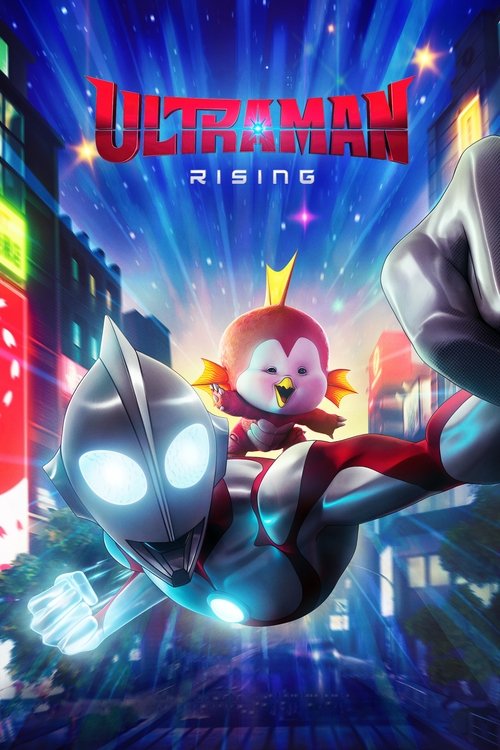
Ultraman: Rising
A heartfelt animated spectacle where a hero's colossal power is dwarfed by the immense responsibility of parenthood, painting Tokyo with strokes of dazzling action and tender vulnerability.
Ultraman: Rising

Ultraman: Rising

"Big hero. Bigger responsibility."

14 June 2024 Japan 117 min ⭐ 8.2 (348)
Director: Shannon Tindle
Cast: Christopher Sean, Gedde Watanabe, Tamlyn Tomita, Keone Young, Julia Harriman
Animation Family Action Science Fiction
Parenthood and Responsibility Family and Generational Reconciliation Empathy vs. Vengeance Redefining Heroism

Overview

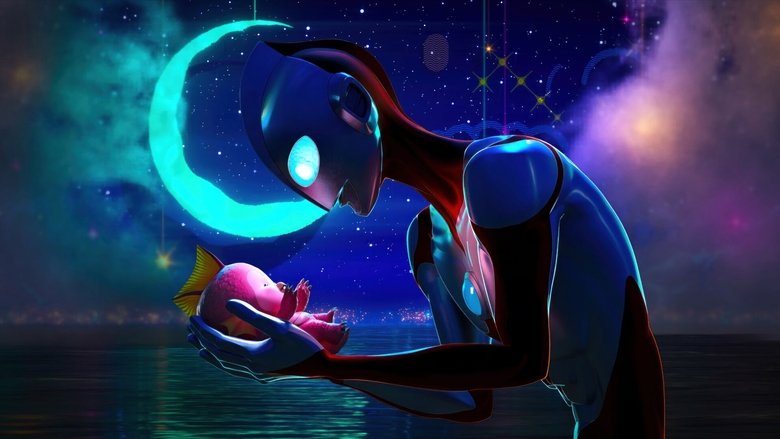
"Ultraman: Rising" follows Ken Sato, a superstar baseball player who lives a self-centered life in the shadow of his estranged father, the original Ultraman. Reluctantly returning to Japan to take up the mantle, Ken is arrogant and disconnected from the true meaning of being a hero. His world is turned upside down when a battle with a formidable kaiju, Gigantron, results in him becoming the unwilling guardian of her orphaned, 35-foot-tall baby.

Forced to juggle his demanding baseball career, his new duties as Ultraman, and the chaotic, messy reality of raising a fire-breathing infant named Emi, Ken is pushed to his limits. He must learn to move past his ego and reconnect with his father to understand the sacrifices required of both a parent and a hero. All the while, he must protect the innocent baby kaiju from the relentless Kaiju Defense Force (KDF), led by the uncompromising Dr. Onda, who sees all kaiju as a threat to be eradicated.
Core Meaning

At its heart, "Ultraman: Rising" is an exploration of fatherhood and the true meaning of strength. Director Shannon Tindle infused his personal experiences as a parent into the narrative, transforming the superhero story into a universal allegory for the challenges and rewards of raising a child. The film posits that true heroism isn't found in monumental feats of power, but in the quiet, selfless acts of care and sacrifice. It deconstructs the archetypal hero by forcing Ken Sato to confront a responsibility that cannot be punched into submission: parenthood. The core message is that finding balance between personal ambition, legacy, and family is the most heroic battle one can fight, suggesting that empathy and understanding are mightier than any superpower.

Thematic DNA

Parenthood and Responsibility 40%
Family and Generational Reconciliation 30%
Empathy vs. Vengeance 20%
Redefining Heroism 10%

Parenthood and Responsibility

This is the central theme of the film. Ken Sato, an egotistical star, is thrust into the role of a single parent to a baby kaiju. His journey is a crash course in selflessness, forcing him to balance his demanding career with the unpredictable needs of a child. The film humorously and poignantly uses kaiju-sized baby problems—like giant messes and fiery tantrums—to mirror the universal struggles of new parents. Ken's initial reluctance gives way to a profound bond with the baby, Emi, teaching him that the responsibility of nurturing another being is a greater calling than fame or even saving the world.

Family and Generational Reconciliation

The film explores the fractured relationship between Ken and his father, Professor Sato, the original Ultraman. Ken harbors resentment due to his father's frequent absences during his childhood, a sacrifice made for the greater good. By becoming a father himself, Ken begins to understand and empathize with the difficult choices his own father had to make. This shared experience bridges the emotional gap between them, leading to a heartfelt reconciliation and a powerful team-up as two generations of Ultraman fighting side-by-side.

Empathy vs. Vengeance

The antagonist, Dr. Onda, represents a path of vengeance. His family was tragically killed in a kaiju incident, fueling his belief that all kaiju must be destroyed to protect humanity. This contrasts sharply with the ethos of Ultraman, which is to "maintain balance" and protect both humans and kaiju. The film advocates for empathy, showing that the monsters are not inherently evil but are often acting on instinct. Ken's journey is one of learning to see the kaiju, especially the baby Emi, not as a monster but as a child in need of protection, ultimately choosing compassion over prejudice.

Redefining Heroism

"Ultraman: Rising" challenges the conventional idea of a superhero. Initially, Ken views being Ultraman as a chance for glory and showboating. However, his experience raising Emi forces him to redefine heroism. He learns that true strength lies in vulnerability, patience, and sacrifice. The film culminates in him making the ultimate sacrifice not for applause, but to protect his newfound family and the city, demonstrating that being a hero is less about the power you wield and more about the love you have for others and the choices you make.

Character Analysis

Ken Sato / Ultraman

Christopher Sean

Archetype: The Reluctant Hero
Key Trait: Egotistical (initially), Protective (later)

Motivation

Initially motivated by fame and a desire to escape his father's shadow, his motivation shifts entirely to protecting the baby kaiju, Emi. This protective instinct becomes the driving force for all his actions, compelling him to become a better hero and a better man.

Character Arc

Ken begins as an arrogant, ego-driven baseball star, resentful of the heroic mantle passed down by his father. Forced into the role of guardian for a baby kaiju, he undergoes a profound transformation. He learns humility, empathy, and the true meaning of sacrifice. His arc is about moving from selfishness to selflessness, reconciling with his father, and embracing his dual responsibilities as both a hero and a parent, ultimately becoming the hero he was always meant to be.

Professor Sato / Ultradad

Gedde Watanabe

Archetype: The Mentor
Key Trait: Wise and Dutiful

Motivation

His primary motivation is to protect the world and guide his son to understand the true weight and meaning of being Ultraman. He is driven by a deep-seated sense of duty and a desire to mend the bond with his son that was strained by that very duty.

Character Arc

Professor Sato is the original, seasoned Ultraman who is now injured and estranged from his son. He starts as a distant figure in Ken's life, representing a legacy Ken rejects. Through the shared challenge of protecting Emi, he reconnects with his son, offering wisdom and support. He steps back into the fight as 'Ultradad,' not to reclaim the spotlight, but to fight alongside his son, symbolizing the mending of their relationship and the passing of the torch.

Dr. Onda

Keone Young

Archetype: The Tragic Antagonist
Key Trait: Obsessive and Vengeful

Motivation

His motivation is vengeance and a desperate need to create a world free from the threat of kaiju. He wants to find the hidden Kaiju Island to exterminate all monsters, believing it is the only way to ensure humanity's safety.

Character Arc

Dr. Onda is the leader of the Kaiju Defense Force (KDF). He is not a one-dimensional villain; his arc is rooted in tragedy. Having lost his own family in a kaiju attack, he is driven by a powerful, albeit misguided, desire to prevent anyone else from suffering the same fate. His methods become increasingly extreme, blinding him to the possibility that not all kaiju are malevolent. He remains tragically committed to his path of eradication until his defeat.

Ami Wakita

Julia Harriman

Archetype: The Voice of Reason
Key Trait: Insightful and Empathetic

Motivation

As a journalist, she is motivated to uncover the truth about Ken's sudden return to Japan. As a mother, she is motivated to provide a good life for her daughter and offers heartfelt advice to Ken when she sees him struggling with his own 'family emergency.'

Character Arc

Ami is a journalist and a single mother. She serves as a grounding force for Ken. While covering his career, she senses his internal struggles. As a parent herself, she offers him crucial, down-to-earth advice on parenthood, helping him see beyond the chaos and appreciate the rewarding aspects of raising a child. Her character doesn't have a dramatic arc but provides a vital, stabilizing perspective for the protagonist.

Mina

Tamlyn Tomita

Archetype: The Loyal Assistant (AI)
Key Trait: Efficient and Supportive

Motivation

Mina is programmed to assist Ken in all his endeavors, from his baseball schedule to his Ultraman duties. As the story progresses, her motivation appears to shift towards genuinely caring for Ken and Emi's well-being, going beyond her programmed directives.

Character Arc

Mina is Ken's AI assistant, a floating, spherical robot that manages his life. Initially, her role is purely logistical. However, as Ken takes on the responsibility of caring for Emi, Mina evolves into a key parental partner, providing research, support, and even moments of encouragement. Her arc culminates in an act of self-sacrifice, highlighting her growth from a simple AI to a cherished member of Ken's unconventional family.

Symbols & Motifs

Baseball

Meaning:

Baseball symbolizes Ken's initial, self-centered worldview and his connection to his father. It represents a world of individual achievement, fame, and teamwork on his own terms. It is also the passion he inherited from his family.

Context:

Ken is a superstar baseball player for the Tokyo Giants. His struggle to balance his team responsibilities with his Ultraman duties and parenthood is a major conflict. Ultimately, he learns to be a true team player, both on the field and as a hero, and even shares his love of the game with the baby kaiju, Emi.

The Baby Kaiju (Emi)

Meaning:

Emi symbolizes vulnerability, innocence, and the transformative power of unconditional love. She is the catalyst for Ken's entire character arc, forcing him to confront his selfishness and learn empathy. She represents the idea that even perceived "monsters" are deserving of care and protection.

Context:

After her mother, Gigantron, is killed, the baby kaiju hatches and imprints on Ken. Ken's reluctant journey of caring for her—feeding her, cleaning up her messes, and protecting her from the KDF—is the emotional core of the film.

The Color Timer

Meaning:

A classic element from the Ultraman franchise, the color timer on Ultraman's chest symbolizes limitation, urgency, and the immense physical and emotional strain of being a hero. It serves as a constant reminder that his power is finite and that he must remain focused.

Context:

In a flashback, Ken's father explains that Ultraman must maintain focus and balance, or the color timer will blink, and he will revert to his human form. This becomes a crucial plot device during intense battles, heightening the stakes and reflecting Ken's internal state.

Memorable Quotes

Ultraman's most important task is finding balance. Understand?

— Emiko Sato (Ken's Mother)

Context:

This is said by Ken's mother to a very young Kenji, as his father (the original Ultraman) prepares for a battle. It foreshadows the central conflict Ken will face as an adult.

Meaning:

This line, delivered in a flashback, encapsulates the central theme of the entire film. It establishes that being Ultraman is not just about fighting, but about managing dualities: hero and civilian, strength and compassion, personal life and public duty. It's the lesson Ken spends the entire movie learning.

There's no place for the Ken Sato show on my team.

— Coach Shimura

Context:

Ken's baseball coach says this to him during practice, criticizing his individualistic attitude and making it clear that he needs to become a team player if he wants to succeed.

Meaning:

This quote directly addresses Ken's primary character flaw at the beginning of the film: his ego. It highlights his selfish, showboating nature and sets up his journey toward learning the value of humility and teamwork, both on the baseball field and as a superhero.

More than anything in the world, you want him to notice.

— Ami Wakita

Context:

Ami says this to Ken while discussing the difficulties and motivations of parenthood. She is explaining the simple, powerful desire a child has for their parent's acknowledgment, which resonates deeply with Ken's own past.

Meaning:

Ami's line offers a profound insight into the child's perspective and the complex father-son dynamic. It speaks to Ken's own childhood longing for his father's attention, helping him understand his own emotional baggage and the importance of being present for Emi.

Philosophical Questions

What is the true nature of monstrosity?

The film challenges the viewer's perception of who the real monsters are. While the kaiju cause immense destruction, the film often portrays them as creatures acting on instinct, particularly Gigantron, who is simply trying to protect her child. Conversely, the human antagonist, Dr. Onda, driven by grief and fear, becomes monstrous in his singular, destructive purpose. The film suggests that monstrosity is not defined by appearance or power, but by a lack of empathy and an unwillingness to see the humanity—or innocence—in others.

Can personal ambition and selfless duty truly coexist?

Ken Sato's central struggle is the conflict between his life as a celebrity athlete and his inherited duty as Ultraman, which is further complicated by his sudden parenthood. The film explores the idea that a balanced life requires sacrifice. Ken cannot be a self-centered star and a true hero simultaneously. His journey suggests that true fulfillment is not found in achieving personal glory, but in integrating one's duties to others into one's sense of self. The 'balance' his mother spoke of is not a perfect split, but a re-prioritization of what truly matters.

Alternative Interpretations

While the film's primary message about fatherhood is quite direct, some interpretations view the central conflict through a cultural lens. Ken Sato's initial character, an Americanized baseball star returning to Japan, can be seen as a metaphor for the struggle of second or third-generation immigrants reconnecting with their cultural heritage. His journey to becoming Ultraman is also a journey of re-embracing his Japanese roots and the responsibilities tied to his family's legacy.

Another perspective focuses on the Kaiju Defense Force (KDF) and Dr. Onda as a critique of militaristic, fear-based approaches to foreign or unknown threats. Onda's trauma leads him to a "destroy them all" ideology, refusing to see the kaiju as anything other than mindless monsters. The film's resolution, where empathy and protection prevail over aggression, can be interpreted as a commentary on the need for understanding and coexistence over preemptive violence. Ultraman's role as a 'balancer' rather than a pure destroyer supports this reading, suggesting a more nuanced approach to conflict resolution.

Cultural Impact

"Ultraman: Rising" serves as a significant cultural bridge, reintroducing one of Japan's most enduring pop culture icons to a new global audience through the accessible platform of Netflix. Debuting in 1966, Ultraman is a foundational character in the tokusatsu (special effects) genre, and this film honors that legacy while modernizing its themes for contemporary viewers. By centering the story on the universal theme of parenthood rather than complex lore, director Shannon Tindle created an entry point for newcomers who may be unfamiliar with the franchise's 50+ year history.

Critically, the film was received very positively, with praise for its stunning, stylized animation by ILM, heartfelt storytelling, and strong vocal performances. Critics noted that it successfully blended the spectacle of kaiju battles with a surprisingly emotional and relatable family drama. The film's visual language, which draws inspiration from Japanese manga and classic anime, was also highlighted as a successful fusion of Eastern and Western artistic sensibilities. It was ranked in Netflix's Global Top 10 for English language films upon its release, indicating a strong audience reception worldwide. Ultimately, "Ultraman: Rising" revitalizes a beloved franchise, proving its timeless appeal by showing that the struggles of a 40-meter-tall superhero can mirror the very human challenges of family, responsibility, and love.

Audience Reception

Audience reception for "Ultraman: Rising" was overwhelmingly positive. On platforms like Rotten Tomatoes, the film boasts a very high audience score, indicating widespread enjoyment. Viewers praised the film for its stunning and unique animation style, often comparing its visual flair to acclaimed films like "Spider-Man: Into the Spider-Verse." The emotional core of the story—Ken's journey into fatherhood—was a major highlight for many, who found the blend of superhero action and heartfelt family drama to be both touching and entertaining. The adorable design of the baby kaiju, Emi, was also frequently mentioned as a standout element. Criticism was mild and infrequent, with some viewers finding the plot somewhat predictable or the runtime slightly too long for a family film. Overall, audiences considered it a successful reboot that was accessible to newcomers while still respecting the legacy of the franchise.

Interesting Facts

  • The film was in development for over two decades; director Shannon Tindle first conceived of the story in 2001, long before it was adapted into an Ultraman project.
  • This was the first fully animated feature film produced by Industrial Light & Magic (ILM) since "Rango" (2011).
  • Director Shannon Tindle drew heavily from his own experiences as a new father to shape the story's emotional core, infusing Ken's struggles with his own journey of finding balance.
  • The film's visual style was influenced by a unique blend of classic American animation, Japanese manga, anime, and the textures of Copic markers used on manga covers.
  • The creative team worked closely with Tsuburaya Productions, the owners of the Ultraman IP, who established a cultural committee to ensure the film was authentically Japanese and true to the spirit of the franchise.
  • Several voice actors in the Japanese dub have connections to the Tokusatsu genre, including Hiroko Sakurai, who played Akiko Fuji in the original 1966 "Ultraman" series.

Easter Eggs

In Ken Sato's apartment, toy figures of classic Ultraman kaiju such as Gomora, Baltan, and Neronga can be seen on a shelf.

These are direct homages to some of the most iconic monsters from the original "Ultraman" television series, serving as a nod to longtime fans of the franchise.

Professor Sato's car is a Mazda Cosmo, and its license plate reads "M78 U7."

The Mazda Cosmo was the official vehicle for the defense team in the series "Return of Ultraman." The license plate is a dual reference: "Nebula M78" is the home world of the Ultras, and "U7" is a nod to "Ultraseven," another iconic hero from the franchise.

The baby kaiju Emi performs the "Shē" pose, a victory dance made famous by Godzilla.

This is a tribute to the shared history between Ultraman's creator, Eiji Tsuburaya, and the Godzilla franchise, which he co-created. The dance itself originated from the "Osomatsu-kun" manga series.

Ken's final transformation sequence combines visual elements from the transformation sequences of several classic Showa-era Ultra Brothers.

The sequence incorporates the red background of the original Ultraman, the starry background of Ultraman Ace, the white rings of Ultraman Taro, and the sparkling orange of Ultraman Jack, creating a visual tribute to the franchise's history.

⚠️ Spoiler Analysis

Click to reveal detailed analysis with spoilers

Frequently Asked Questions

Explore More About This Movie

Dive deeper into specific aspects of the movie with our detailed analysis pages

Comments (0)

Leave a comment

No comments yet. Be the first to share your thoughts!