Skip to content
Under Paris
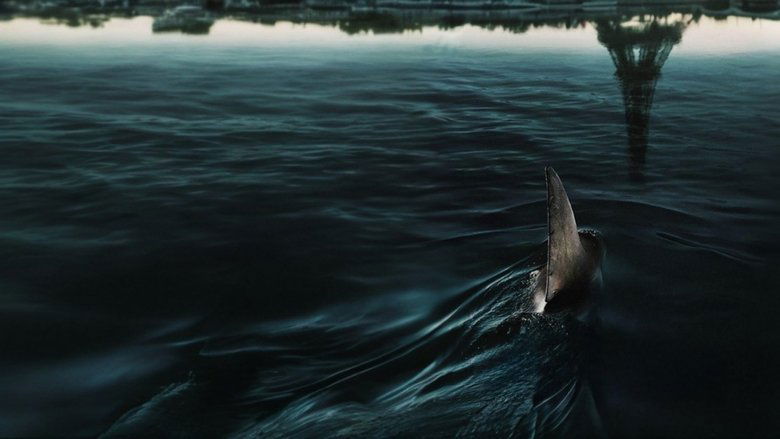
A tense eco-horror thriller where the romanticized canals of the City of Light dissolve into a murky, blood-stained abyss, reflecting nature's mutated wrath against human hubris.
Under Paris

Under Paris

Sous la Seine

04 June 2024 France 102 min 5.9 (1,439)

Director: Xavier Gens

Cast: Bérénice Bejo, Nassim Lyes, Léa Léviant, Sandra Parfait, Aksel Üstün

Action Horror Ecological Retaliation & Radical Adaptation Bureaucratic Negligence & Institutional Arrogance Trauma, Grief, and Psychological Recovery Naive Environmental Activism vs. Pragmatic Realism

Overview

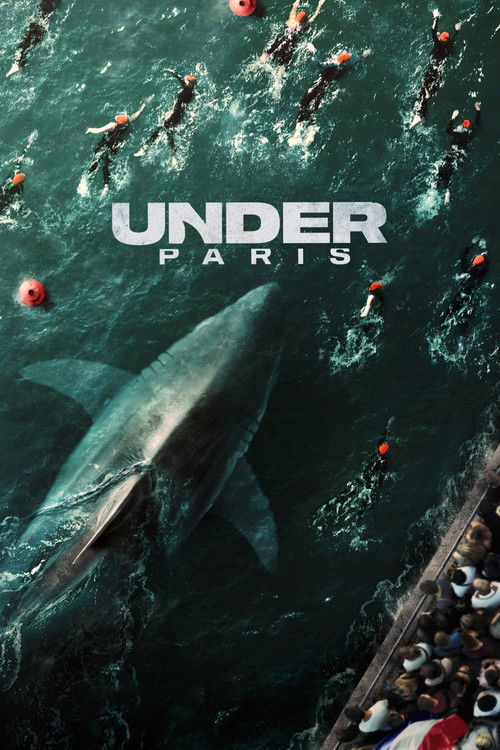
Directed by Xavier Gens, Under Paris (Sous la Seine) blends modern eco-thriller urgency with creature-feature dread. The story centers on Sophia Assalas, a marine researcher traumatized after losing her husband and oceanographic research team to an aggressive mako shark in the North Pacific Garbage Patch. Three years later in Paris, Sophia is approached by Mika, an idealistic youth environmental activist tracking a bizarre anomaly: the very same shark, nicknamed "Lilith," has migrated inland and is swimming in the freshwater of the Seine River.

As Paris prepares to host the prestigious World Triathlon Championship along the Seine—an event vital for municipal prestige—Sophia and river police sergeant Adil warn authorities of the lurking danger. However, the city's image-conscious Mayor dismisses the threat and refuses to call off the high-stakes sporting competition.

Racing against the clock, Sophia and Adil's river police brigade venture into the dark underground catacombs and subterranean waterways beneath Paris. They soon discover that Lilith has undergone radical evolutionary adaptations to survive pollution and freshwater, turning the French capital into an unprecedented hunting and breeding ground.


Core Meaning

The core thesis of the film is that humanity's relentless pollution and environmental degradation are triggering unpredictable, irreversible natural adaptations. The central creature is framed not merely as an apex predator, but as an agent of ecological retribution born from toxic oceanic waste and urban contamination. Furthermore, the film delivers a sharp satire of political complacency, corporate greenwashing, and bureaucratic vanity, illustrating how institutions prioritize public relations spectacles and economic investments over urgent environmental and public safety warnings until catastrophic collapse occurs.

Thematic DNA

Ecological Retaliation & Radical Adaptation 35%
Bureaucratic Negligence & Institutional Arrogance 25%
Trauma, Grief, and Psychological Recovery 20%
Naive Environmental Activism vs. Pragmatic Realism 20%

Ecological Retaliation & Radical Adaptation

Revealed through Lilith's biological adaptations, including freshwater survival and rapid parthenogenesis induced by ocean plastics and climate change. Nature evolves aggressively to survive anthropomorphic destruction.

Bureaucratic Negligence & Institutional Arrogance

Highlighted through the Mayor of Paris, who deliberately ignores scientific warnings and imperils human lives to safeguard political reputation and financial investments linked to the World Triathlon.

Trauma, Grief, and Psychological Recovery

Explored through Sophia confronting the creature that killed her research team and husband, and Adil managing survivor's guilt from military service. Both characters pursue redemption while managing severe emotional trauma.

Naive Environmental Activism vs. Pragmatic Realism

Contrasted through Mika's idealistic conviction that lethal apex predators can be guided purely by empathy, which tragically conflicts with Sophia's grounded scientific understanding of biological threats.

Character Analysis

Sophia Assalas

Bérénice Bejo

Archetype: The Reluctant Hero / Grieving Scientist Key Trait: Scientific rigor combined with deep emotional resilience.

Motivation

Driven to stop Lilith from killing innocent civilians and to find redemption for her past failure.

Character Arc

Starts broken, guilt-ridden, and withdrawn from active fieldwork following the death of her oceanographic team; gradually steps into leadership, facing her trauma directly to avert widespread disaster.

Adil Faez

Nassim Lyes

Archetype: The Noble Protector / Steadfast Lawman Key Trait: Tactical courage, calm discipline under pressure, and ethical integrity.

Motivation

Dedicated to protecting his police unit and ensuring the safety of Paris residents.

Character Arc

Begins as a dedicated river police officer coping with military trauma; evolves into Sophia's trusted tactical partner who chooses scientific reality over political orders.

All 4 characters and cast

Symbols & Motifs

The Great Pacific Garbage Patch

Meaning:

Represents humanity's toxic irresponsibility and the catastrophic consequences of unchecked marine pollution.

Context:

Appears in the opening sequence as the altered biological cradle where Lilith is first encountered and studied.

The Paris Catacombs & Underground Tunnels

Meaning:

Symbolizes repressed history, hidden systemic decay, and the subterranean vulnerabilities beneath modern urban civilization.

Context:

Used as the concealed nesting ground where Lilith breeds and builds her colony away from surface observation.

Unexploded World War II Ordnance

Meaning:

Represents latent human self-destruction and historical militarism lying dormant beneath everyday society.

Context:

Discovered along the riverbed of the Seine, eventually detonating when military forces fire upon the water.

The Mother Shark ("Lilith")

Meaning:

Named after the mythological primordial figure of rebellion, embodying nature reclaiming dominance without male fertilization or human interference.

Context:

Functions as the main antagonist and mutated catalyst driving the narrative and ecological threat.

The Clean Seine River Campaign

Meaning:

Serves as a satirical representation of performative municipal environmentalism and superficial cleanup initiatives masking structural neglect.

Context:

Framed as the primary public relations initiative championed by city officials to promote the international triathlon.

Memorable Quotes

Les espèces qui survivent ne sont pas les espèces les plus fortes ni les plus intelligentes, mais celles qui s'adaptent le mieux aux changements.
— Opening Epigraph (Charles Darwin quote)

Context

Displayed at the very beginning of the film before the narrative opens.

Meaning

Establishes the biological theme that survival is determined by radical adaptation to changing environments, foreshadowing Lilith's mutations.

Lilith a grandi trop vite. Elle a trouvé un moyen d'évoluer.
— Sophia Assalas

Context

Spoken by Sophia while explaining the shark's abnormal growth metrics to Adil.

Meaning

Signals to the authorities that they are dealing with an accelerated evolutionary anomaly rather than standard marine wildlife.

All 5 quotes

Philosophical Questions

Can humanity survive the evolutionary backlash of its own pollution?

The film investigates whether environmental degradation will cause simple extinction or trigger aggressive biological mutations that displace human dominance.

At what point does institutional denial become systemic murder?

Explored through the municipal government's choice to sacrifice human safety to safeguard capital investments and public relations prestige.

Can nature ever be saved without first being feared and respected?

Examined through Mika's fatal mistake of projecting sentimental anthropomorphism onto a lethal, evolving apex predator.

Alternative Interpretations

The film invites multiple thematic readings:

Full ending explanation

Cultural Impact

Released in June 2024 amid international scrutiny surrounding the environmental readiness of the Seine for the 2024 Paris Olympics, the film generated widespread social media discussion and global viewership. By combining European genre filmmaking with high-budget monster spectacle, the production demonstrated that non-English eco-horror could achieve record-breaking international streaming numbers while bypassing standard Hollywood narrative formulas with an apocalyptic conclusion.

Audience Reception

Audience and critical response highlighted several distinct elements:

  • Strengths: Praise centered on the bold apocalyptic climax, high-intensity catacomb sequences, strong visual effects during dark set pieces, and Bérénice Bejo's committed performance.
  • Weaknesses: Criticisms targeted pseudoscientific liberties regarding shark biology, rapid reproductive timelines, occasional melodramatic dialogue, and uneven daylight CGI.
  • Verdict: Recognized as an engaging, high-concept B-movie creature feature elevated by genuine ecological dread and an uncompromising disaster ending.

Interesting Facts

  • Much of the underwater footage was filmed in specialized deep-water tanks in Belgium at the Lites Water Stage and in Alicante, Spain, due to currents and poor visibility in the Seine.
  • Director Vincent Dietschy filed a legal complaint against Netflix alleging the film copied his 2011 registered project 'Silure', though French courts dismissed the immediate injunction before release.
  • The film recorded over 40 million views in its debut week, ranking among the most-watched non-English feature films on Netflix.
  • Actors Bérénice Bejo and Nassim Lyes completed extensive scuba and freediving training to perform their own underwater stunt work.
  • The production utilized physical hydrodynamic shark puppets in water tanks to allow actors to interact practically before digital CGI overlays were added.

Easter Eggs

Homage to Steven Spielberg's Jaws (1975)

The Mayor's refusal to cancel a water event due to tourism revenue closely mirrors Mayor Larry Vaughn, accompanied by classic underwater point-of-view camera framing.

Reference to Deep Blue Sea (1999)

The concept of an enclosed, hyper-adaptive shark nesting site within flooded human infrastructure pays tribute to Renny Harlin's creature feature.

Satire of the 2024 Paris Olympic Seine Clean-Up

The narrative directly parodies the high-profile €1.4 billion public expenditure campaign aimed at making the Seine swimmable for the 2024 Olympic Games.

Authentic World War II River Ordnance

The presence of unexploded munitions on the riverbed reflects the real historical reality faced by modern Paris river clearance units.

Frequently Asked Questions

Explore More About This Movie

Dive deeper into specific aspects of the movie with our detailed analysis pages

Comments (0)

Leave a comment

No comments yet. Be the first to share your thoughts!

Similar Movies