Unforgiven
A revisionist Western that bleeds with the grey ink of morality, where a grizzled past confronts a stark and unforgiving present in a downpour of violent consequence.
Unforgiven
Unforgiven

"Some legends will never be forgotten. Some wrongs can never be forgiven."

07 August 1992 United States of America 130 min ⭐ 7.9 (4,706)
Director: Clint Eastwood
Cast: Clint Eastwood, Gene Hackman, Morgan Freeman, Jaimz Woolvett, Richard Harris
Western
Deconstruction of the Western Myth The Brutal Reality and Consequences of Violence Aging and Escaping the Past Justice, Revenge, and Morality
Budget: $14,400,000
Box Office: $159,157,447

Unforgiven - Ending Explained

⚠️ Spoiler Analysis

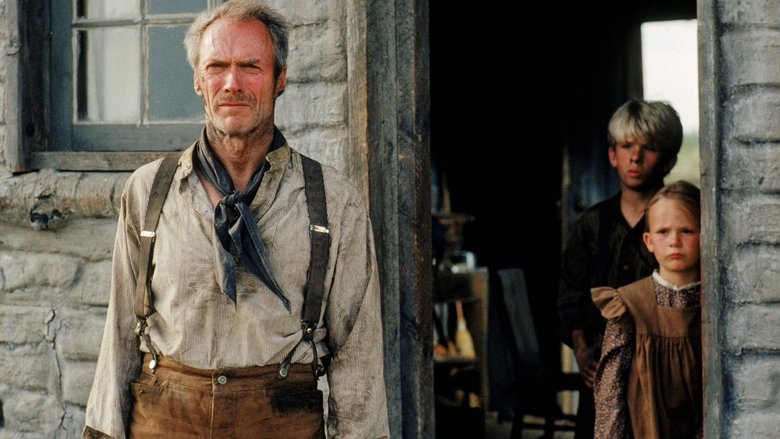
The central twist of "Unforgiven" is the complete transformation of its protagonist, William Munny. For the majority of the film, he is portrayed as an aging, regretful man who is physically inept and struggles with the ghost of his past. He can barely shoot a tin can and falls off his horse. The audience is led to believe his journey is about a final, reluctant act of violence before returning to his peaceful life. However, the true climax is a subversion of this expectation. After Sheriff Little Bill Daggett tortures and kills Munny's friend, Ned Logan, and displays his body outside the saloon, Munny is pushed past his breaking point.

He takes a drink of whiskey for the first time in over ten years, an act his wife had cured him of. This drink symbolizes the death of his reformed self and the resurrection of the cold-blooded killer he once was. He rides into Big Whiskey during a storm, walks into the saloon, and calmly executes the unarmed proprietor. He then methodically slaughters Little Bill and several of his deputies in a swift, brutal shootout. The hidden meaning is that Munny's reformation was fragile, contingent on the peace his wife brought him. Without that influence, and provoked by sufficient injustice, his true, violent nature re-emerges, more terrifying than any of the legends told about him. The film's ultimate revelation is that the monster was not dead, merely sleeping, and that the violence of the West is a corrupting force from which no one truly escapes.

Alternative Interpretations

While the ending is straightforward in its events, its meaning is open to interpretation. One perspective is that Will Munny's reversion to a killer is a tragic failure. He fails to honor his wife's memory and proves that he is incapable of escaping his violent nature, thus making him truly "unforgiven." The final text crawl stating he moved to San Francisco and prospered in dry goods could be seen as an ironic, tacked-on happy ending that feels hollow after the preceding massacre.

An alternative reading suggests that Munny's final acts, while brutal, represent a necessary and even righteous cleansing. Little Bill's tyrannical rule and the injustice done to Ned required a response that the civilized world was unable to provide. In this view, Munny isn't just reverting to a killer; he is becoming an instrument of wrathful, Old Testament-style justice. The ending, therefore, could be seen not as a personal failure but as a fulfillment of a dark destiny, reaffirming that in a lawless world, only a figure like the old Will Munny can restore a semblance of balance, however bloody. The film's title could then refer not just to Munny, but to the entire unforgiving world of the West itself.