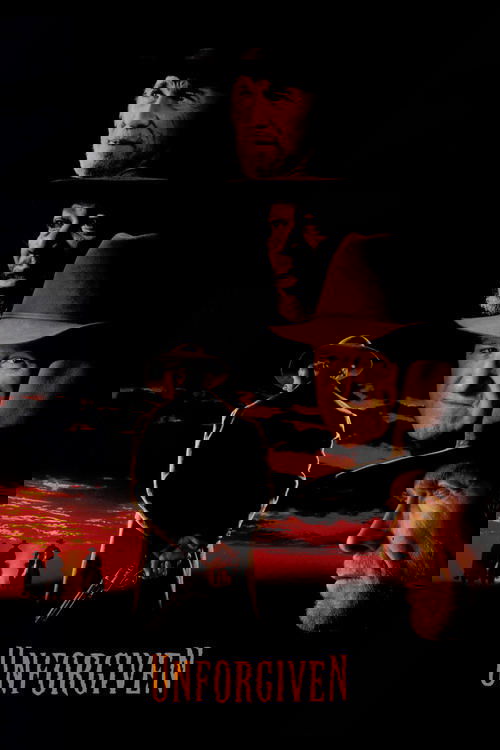
Unforgiven
"Some legends will never be forgotten. Some wrongs can never be forgiven."
Overview
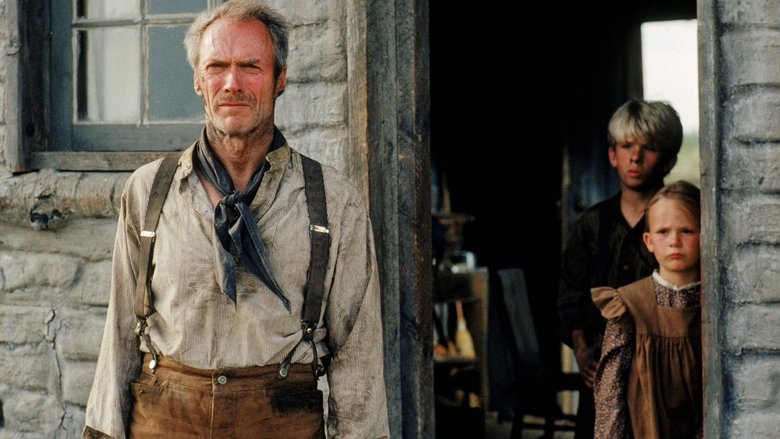
Set in 1880s Wyoming, "Unforgiven" follows William Munny, a widowed hog farmer and former notorious outlaw who has renounced his violent past. When a prostitute in the town of Big Whiskey is brutally disfigured by two cowboys, her fellow prostitutes pool their savings to offer a bounty for the cowboys' deaths. A young, brash gunslinger calling himself the "Schofield Kid" seeks out Munny to help him claim the reward, luring the aging farmer back into the life he swore to leave behind.
Munny, joined by his old partner Ned Logan, reluctantly agrees to the job, driven by the need to provide for his children. Their arrival in Big Whiskey, however, brings them into direct conflict with the town's formidable and brutal sheriff, Little Bill Daggett, a man who despises assassins and maintains a fragile peace through his own brand of ruthless justice. The film methodically dismantles the romanticized myths of the Old West, portraying violence not as heroic or glamorous, but as clumsy, brutal, and psychologically scarring for all involved.
Core Meaning
At its core, "Unforgiven" is a profound deconstruction of the Western genre and the myths of American heroism. Clint Eastwood, both as director and star, aimed to strip away the romanticism associated with the gunslinger, revealing the grim reality and moral corrosion of a life defined by violence. The film posits that violence is not a clean or righteous solution but a destructive force that leaves an indelible mark on the soul. It questions the very nature of heroism and villainy, presenting characters who are deeply flawed and morally ambiguous. The central message is that the past is inescapable, and the ghosts of one's actions, particularly violent ones, can never be fully exorcised. The title itself suggests a central theme: the characters are unforgiven for their past sins, and perhaps more importantly, they are unable to forgive themselves.
Thematic DNA
Deconstruction of the Western Myth
"Unforgiven" systematically dismantles the heroic myths of the Old West. Unlike traditional Westerns with clear heroes and villains, the film presents morally gray characters. The legendary gunfighters are shown to be frauds, like English Bob, or regretful old men like William Munny. The biographer W.W. Beauchamp represents the audience's, and the genre's, desire to "print the legend," a notion the film relentlessly subverts by showing the ugly, clumsy, and inglorious reality behind the tall tales.
The Brutal Reality and Consequences of Violence
The film portrays violence not as a glamorous or heroic act, but as a deeply traumatic and morally corrosive force. Characters who kill are not stoic heroes; they are shaken and haunted. The Schofield Kid's journey from boastful wannabe to a traumatized killer who gives up his gun exemplifies this. Will Munny's famous line, "It's a hell of a thing, killing a man. You take away all he's got and all he's ever gonna have," serves as the film's thesis on the subject, rejecting the genre's typical glorification of killing.
Aging and Escaping the Past
The main characters are old men grappling with their violent pasts. Munny and Ned Logan have attempted to reform, seeking a peaceful life, but are drawn back by financial necessity. The film explores whether true change is possible or if one's nature is immutable. Munny's struggle to care for his children and honor his late wife's memory is in constant conflict with the killer he once was. The final act suggests that while he can't erase his past, his motivations have shifted from pure wickedness to a twisted form of justice and revenge.
Justice, Revenge, and Morality
The film explores the ambiguous lines between justice, law, and revenge. The initial crime is met with a financial penalty by Sheriff Little Bill, which the prostitutes deem unjust, leading them to seek their own violent form of retribution. Little Bill enforces his own brutal, autocratic version of the law, becoming the very thing he claims to despise. Ultimately, Munny's climactic rampage is not an act of heroism, but a personal, whiskey-fueled revenge for the murder of his friend Ned, blurring the lines of morality and questioning what "deserve" truly means.
Character Analysis
William Munny
Clint Eastwood
Motivation
Initially, his motivation is purely financial—to provide a better life for his two children. However, after Little Bill murders Ned Logan, his motivation shifts to pure, unadulterated revenge.
Character Arc
Will Munny begins as a struggling hog farmer, a penitent widower trying to escape a past of legendary violence. Lured back into killing for money, he initially struggles with his age and his rusty skills. After his friend Ned is murdered, Munny sheds his reformed persona, drinks whiskey, and fully reverts to the cold-blooded killer of his youth to exact revenge, culminating in a massacre. His arc is a tragic deconstruction of redemption, suggesting one's violent nature can be suppressed but never truly erased.
Little Bill Daggett
Gene Hackman
Motivation
His primary motivation is control. He wants to create an orderly town free of gunfighters and assassins, but he achieves this through autocratic and violent means, revealing a deeper motivation to assert his own dominance and authority.
Character Arc
Little Bill presents himself as a folksy, pragmatic sheriff dedicated to maintaining peace by brutally enforcing a "no guns" rule. He deconstructs the myths of other gunslingers while hypocritically building his own legend through fear and violence. His arc reveals him to be a sadistic tyrant who enjoys his power. He shows no development, only a deepening of his cruelty, which ultimately leads to his own violent demise at the hands of the very type of man he claims to control.
Ned Logan
Morgan Freeman
Motivation
Like Munny, he is initially motivated by the money and a chance to relive his past, but his ultimate motivation becomes survival and an escape from the violence he can no longer stomach.
Character Arc
Ned Logan joins Munny for one last adventure, seemingly more capable and grounded than his old friend at the start. However, when faced with the reality of killing again, he finds he can no longer do it; his conscience has truly changed. He abandons the bounty hunt but is captured and tortured to death by Little Bill. Ned's arc serves as the moral compass of the film; he is the one who truly cannot go back to his old ways, and his tragic death is the catalyst for Munny's final descent into violence.
The Schofield Kid
Jaimz Woolvett
Motivation
His motivation is to build a reputation and prove himself as a feared and respected killer, just like the legends he's heard about.
Character Arc
The Schofield Kid starts as a boastful, arrogant young man who has bought into the myth of the gunslinger and wants to make a name for himself. He is revealed to be near-sighted and inexperienced. After clumsily killing his first man, he is utterly traumatized by the reality of his actions. His arc is a complete disillusionment; he rejects the life he sought, gives up his gun, and recognizes the horror of killing, serving as the audience's surrogate for the deconstruction of the Western myth.
Symbols & Motifs
Little Bill's House
The poorly constructed house that Sheriff Little Bill Daggett is building symbolizes the fragility of the civilization and order he is trying to impose on the West. Its leaky roof and flawed design mirror his own flawed and hypocritical character—a man who claims to bring law and order through violence and cruelty, yet is ultimately an incompetent builder of both houses and societies.
Little Bill is frequently seen working on his house by the river, complaining about the rain and the poor craftsmanship. In his final moments after being shot by Munny, his last words are, "I don't deserve this. To die like this. I was building a house." Munny's cold reply, "Deserve's got nothin' to do with it," underscores the collapse of Bill's world and his failed attempt to build a lasting, civilized legacy.
Weather (Rain and Storms)
The recurring rain and stormy weather throughout the film symbolize the bleak, unforgiving nature of the world and the inner turmoil of the characters. It reflects the moral gloom and the cleansing, yet destructive, force of the violence that unfolds. The final shootout in Big Whiskey happens during a torrential downpour, amplifying the chaos and grim finality of Munny's actions.
The film opens on a stormy night when Delilah is attacked. Will Munny suffers from a fever during a rainstorm, haunted by visions of his past. The climax of the film, where Munny rides into town for revenge, is set during a relentless storm, visually representing the storm of violence he unleashes.
The Schofield Kid's Glasses
The Schofield Kid's severe near-sightedness and his need for glasses symbolize his blindness to the reality of killing. He sees the myth of the gunslinger but not the ugly truth. His vision is metaphorical as well as literal; he can't see the true nature of the life he aspires to until he has taken a life himself, at which point he is emotionally shattered and can finally "see" clearly.
The Kid's poor eyesight is revealed early on, and it makes his boasts of being a killer seem ridiculous. After he kills his first man (in a panicked, clumsy scene in an outhouse), the reality of his actions hits him. He gives up his gun and his share of the money, telling Munny, "I guess I'd rather be blind and ragged than dead."
Memorable Quotes
It's a hell of a thing, killing a man. You take away all he's got and all he's ever gonna have.
— William Munny
Context:
Spoken to the Schofield Kid right after the Kid has killed his first man and is visibly distraught. The Kid tries to justify it by saying the man "had it coming," but Munny's reply reframes the act as an absolute, tragic finality.
Meaning:
This line is the moral center of the film. It directly counters the casual glorification of death common in the Western genre. Munny, a man who has killed dozens, articulates the profound and irreversible gravity of taking a life, stripping it of any heroism or glamour.
Deserve's got nothin' to do with it.
— William Munny
Context:
These are Munny's words to Little Bill just before he kills him. Little Bill, wounded and dying on the saloon floor, pleads, "I don't deserve this... I was building a house." Munny's response negates Bill's appeal to fairness, delivering the film's harsh verdict on justice.
Meaning:
This quote encapsulates the film's bleak and nihilistic worldview. It dismisses the idea of poetic or moral justice in favor of a universe governed by brutal, arbitrary violence. In this world, fate isn't about what one deserves, but about who is stronger or more ruthless in the moment.
We all have it comin', kid.
— William Munny
Context:
This is Munny's somber reply after the Schofield Kid tries to rationalize a killing by saying, "Well, I guess they had it coming." Munny universalizes the sentiment, implying that death is a fate that awaits everyone.
Meaning:
A fatalistic statement that serves as a corollary to the film's views on death and violence. Munny suggests that mortality is the great equalizer and that no one, regardless of their actions, can escape their eventual end. It speaks to the cycle of violence and the inevitability of death in the harsh world they inhabit.
Any man I see out there, I'm gonna shoot him. Any son of a bitch takes a shot at me, I'm not only gonna kill him, but I'm gonna kill his wife, all his friends, and burn his damn house down.
— William Munny
Context:
Munny shouts this from inside the saloon to the terrified townspeople outside after he has killed Little Bill and his deputies. It is his final, terrifying statement before he rides out of Big Whiskey, cementing his return to the darkness he tried to leave behind.
Meaning:
This chilling declaration signifies Munny's complete reversion to the monstrous killer of his past. The methodical and all-encompassing threat showcases a man utterly consumed by rage and vengeance, far beyond any notion of justice. It's the moment the myth of William Munny becomes a terrifying reality.
Philosophical Questions
Can a person truly change their fundamental nature?
The film's central conflict revolves around William Munny's struggle with his past. He has spent a decade as a peaceful farmer, reformed by his late wife. However, the pull of violence and the need for money draw him back in. The film meticulously charts his slow regression, culminating in the explosive final act where he fully embraces his former identity as a cold-blooded killer. This raises the question of whether his decade of peace was a true transformation or merely a temporary suppression of his innate character. The story suggests that while people can strive for redemption, their core nature may be inescapable when provoked by extreme circumstances.
What is the relationship between myth and reality in the creation of heroes?
"Unforgiven" constantly juxtaposes the romanticized legends of the West with its brutal reality. The character of W.W. Beauchamp, a writer of dime novels, seeks out heroes like English Bob and Little Bill, only to find their legends are built on lies, exaggeration, and cruelty. The film demonstrates how myths are constructed to sanitize violence and create heroes out of killers. William Munny himself is a subject of these myths, but the film shows the pathetic, unheroic reality of the man for most of the runtime, only to have him embody the terrifying truth of the legend at the very end.
Does violence ever lead to justice?
The film begins with an act of violence and an official form of justice (a fine of horses) that feels inadequate, prompting a quest for vigilante justice (the bounty). This ignites a cycle of escalating violence. Sheriff Little Bill uses brutal violence to maintain "peace," but his actions are unjust and self-serving. Munny's final rampage is an act of revenge, not justice, and while it eliminates a tyrant, it does so through a horrific massacre that leaves the town in fear. The film offers no easy answers, suggesting that violence begets more violence, and the line between justice and revenge is often nonexistent.
Alternative Interpretations
While the ending is straightforward in its events, its meaning is open to interpretation. One perspective is that Will Munny's reversion to a killer is a tragic failure. He fails to honor his wife's memory and proves that he is incapable of escaping his violent nature, thus making him truly "unforgiven." The final text crawl stating he moved to San Francisco and prospered in dry goods could be seen as an ironic, tacked-on happy ending that feels hollow after the preceding massacre.
An alternative reading suggests that Munny's final acts, while brutal, represent a necessary and even righteous cleansing. Little Bill's tyrannical rule and the injustice done to Ned required a response that the civilized world was unable to provide. In this view, Munny isn't just reverting to a killer; he is becoming an instrument of wrathful, Old Testament-style justice. The ending, therefore, could be seen not as a personal failure but as a fulfillment of a dark destiny, reaffirming that in a lawless world, only a figure like the old Will Munny can restore a semblance of balance, however bloody. The film's title could then refer not just to Munny, but to the entire unforgiving world of the West itself.
Cultural Impact
"Unforgiven" was released in 1992, a time when the Western genre was considered largely dormant. The film's critical and commercial success, culminating in Academy Awards for Best Picture and Best Director, sparked a major revival and re-evaluation of the genre. It is considered a landmark of the "Revisionist Western," a subgenre that challenges and subverts the traditional, heroic myths of the Old West. By presenting violence as brutal and psychologically damaging, and its hero as a haunted, morally ambiguous figure, the film provided a darker, more complex alternative to the classic Western narrative.
Its influence can be seen in numerous films and television shows that followed, which adopted a more cynical and realistic portrayal of the West, such as "The Assassination of Jesse James by the Coward Robert Ford" and the series "Deadwood." The film also marked a turning point in Clint Eastwood's career, solidifying his status as a major A-list director. It's often viewed as Eastwood's commentary on his own cinematic legacy, deconstructing the very gun-slinging persona that made him famous. The film is preserved in the U.S. National Film Registry for being "culturally, historically, or aesthetically significant."
Audience Reception
Audiences and critics alike widely praised "Unforgiven." On Rotten Tomatoes, it holds a 96% approval rating, with the consensus being that it's a profound meditation on the Western genre. Viewers lauded the film's deliberate pacing, complex characters, and its unflinching deconstruction of violence. Gene Hackman's performance as Little Bill Daggett was singled out for universal acclaim, earning him an Academy Award. Many fans consider it a masterpiece and one of the greatest Westerns ever made, appreciating its mature themes and how it functions as a somber farewell to the genre for Eastwood. The main points of criticism, though minor and infrequent, were directed at the film's slow pace and the character of English Bob, with some viewers feeling his subplot could have been removed without affecting the main narrative. Overall, the verdict from audiences is that it is a powerful, thought-provoking, and expertly crafted film that transcends its genre.
Interesting Facts
- The screenplay, originally titled "The Cut-Whore Killings" and later "The William Munny Killings", was written by David Webb Peoples in the 1970s.
- Clint Eastwood bought the rights to the script in the early 1980s but waited nearly a decade to make the film, wanting to be old enough to convincingly play the aging William Munny.
- Director Francis Ford Coppola initially optioned the script in the early 1980s but couldn't secure financing to make it.
- Gene Hackman initially turned down the role of Little Bill Daggett, uncomfortable with the script's violence. Eastwood convinced him by explaining the film was an anti-violence statement. Hackman won the Oscar for Best Supporting Actor for his performance.
- The entire town of Big Whiskey was built from scratch in Alberta, Canada, in just 32 days by production designer Henry Bumstead, a longtime Eastwood collaborator.
- The film is dedicated to directors and Eastwood's mentors, Sergio Leone and Don Siegel, in the end credits.
- Despite a career spanning decades, "Unforgiven" was the first film for which Clint Eastwood won Academy Awards for Best Director and Best Picture.
- Gene Hackman reportedly based elements of his performance as the authoritarian Little Bill on the controversial LAPD chief Daryl Gates, particularly in the scene where Ned Logan is tortured.
- The film was shot almost entirely in sequence, a rare practice that allowed the actors to age emotionally with the story, contributing to the weary and authentic feel of the performances.
Easter Eggs
The film's final credits include the dedication "For Sergio and Don."
This is a direct and heartfelt tribute to Clint Eastwood's two most significant mentors: Sergio Leone and Don Siegel. Leone directed Eastwood in the "Dollars" trilogy, which made him an international star and defined the Spaghetti Western. Siegel directed him in five films, including "Dirty Harry," and heavily influenced Eastwood's own efficient, raw directorial style. "Unforgiven" serves as a thematic culmination and deconstruction of the archetypes he played for both directors.
⚠️ Spoiler Analysis
Click to reveal detailed analysis with spoilers
Frequently Asked Questions
Explore More About This Movie
Dive deeper into specific aspects of the movie with our detailed analysis pages
Comments (0)
No comments yet. Be the first to share your thoughts!