Skip to content
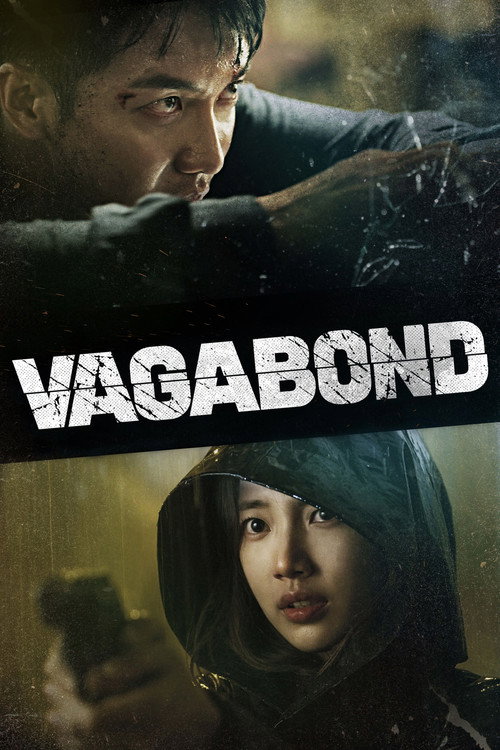
Vagabond
A high-octane espionage action thriller dripping with visceral grief and paranoia, where a lone uncle's relentless crusade for truth cuts like a rusted blade through a glittering maze of state betrayal.
Vagabond

Vagabond

배가본드

"Wheels turn on their axis…"

20 September 2019 — 23 November 2019 Morocco 1 season 16 episode Ended 8.3 (514)

Cast: Lee Seung-gi, Suzy, Shin Sung-rok, Moon Jeong-hee, Baek Yoon-sik

Drama Action & Adventure Mystery Systemic Corruption and Political Betrayal Grief as an Unyielding Catalyst for Justice Duty vs. Moral Integrity Paranoia and Shadow Warfare The Powerlessness of the Individual (David vs. Goliath)

Overview

Vagabond begins with an agonizing personal tragedy: Cha Dal-gun, a struggling stuntman raising his orphaned nephew Cha Hoon, suffers an unimaginable loss when Flight B357 carrying a youth Taekwondo demonstration team crashes en route to Morocco. While attending a collective memorial in North Africa, Dal-gun spots a man whom his nephew had recorded alive inside the cabin just before takeoff. Fueled by grief and outrage, Dal-gun launches a dangerous solo chase across Morocco, proving to himself that the crash was no tragic mechanical failure, but a deliberate act of mass terrorism.

His path intersects with Go Hae-ri, a covert National Intelligence Service (NIS) operative stationed at the South Korean embassy in Morocco. Though initially dismissive, Hae-ri uncovers damning evidence validating Dal-gun’s claims. Together, they unearth a shadow web connecting international defense contractors, high-ranking intelligence chiefs, news outlets, and the highest halls of executive government.

As the investigation shifts from Morocco back to Seoul, the duo faces relentless assassination attempts, institutional cover-ups, and shifting alliances. Vagabond chronicles a battle for justice, illustrating how far ordinary citizens and compromised agents must go to challenge an all-powerful, invisible syndicate.
Core Meaning

The central thesis of Vagabond is an indictment of systemic corruption and state-sanctioned greed. The creators expose how vulnerable ordinary civilians become when military-industrial complexes, private corporations, and political elites prioritize defense acquisition funds and election polls over human life. The series demonstrates that when official institutions fail, grief can transform powerless individuals into unstoppable forces for truth, while cautioning that fighting an unethical system often forces righteous people into dark moral compromises.

Thematic DNA

Systemic Corruption and Political Betrayal 30%
Grief as an Unyielding Catalyst for Justice 25%
Duty vs. Moral Integrity 20%
Paranoia and Shadow Warfare 15%
The Powerlessness of the Individual (David vs. Goliath) 10%

Systemic Corruption and Political Betrayal

Explores how corporate defense giants (John & Mark, Dynamic Systems) and top government officials manipulate national security, buy law enforcement, and sacrifice innocent civilian lives for multi-trillion-won defense contracts.

Grief as an Unyielding Catalyst for Justice

Cha Dal-gun's unbearable pain over his nephew's murder fuels an indestructible resolve. Unlike passive victims, his raw grief pushes him to challenge state apparatuses that want to sweep the tragedy under the rug.

Duty vs. Moral Integrity

Revealed through NIS operatives like Go Hae-ri and Gi Tae-ung, who are trapped between following state orders and pursuing ethical truth. It examines how state institutions pressure good people to become complicit in cover-ups.

Paranoia and Shadow Warfare

Highlighting a world where trust is lethal; allies turn out to be puppets, benevolent mentors hide sinister agendas, and the true enemy operates beyond legal reach.

The Powerlessness of the Individual (David vs. Goliath)

Illustrates the vast structural inequality between ordinary citizens and ultra-wealthy political oligarchs who control the media, judiciary, and police forces.

Character Analysis

Cha Dal-gun

Lee Seung-gi

Archetype: The Ordinary Hero / Avenger Key Trait: Indestructible physical resilience and relentless tenacity.

Motivation

Seeking justice for his murdered nephew; evolves from personal vengeance to taking down a global corporate syndicate.

Character Arc

Transforms from a struggling, hot-headed stuntman into an unyielding vigilante, eventually faking his death to join an elite mercenary group ("Black Sun") to fight corruption from the shadows.

Go Hae-ri

Bae Suzy

Archetype: The Emerging Operative / Reluctant Heroine Key Trait: Quick adaptability under fire and hidden moral courage.

Motivation

Honoring her late father's heroic legacy; evolves from preserving her job to sacrificing her reputation for moral truth.

Character Arc

Begins as an inexperienced, low-level covert NIS agent doing clerical work at an embassy to support her family. She evolves into a tactical field agent, and eventually an undercover defense lobbyist operating within criminal circles.

All 5 characters and cast

Symbols & Motifs

The Cloud / Flight B357 Phone Video

Meaning:

Symbolizes unvarnished truth, painful memory, and the physical catalyst that initiates Dal-gun's crusade.

Context:

Cha Hoon's final video message sent before takeoff.

Stuntman Bruises / Body Armor

Meaning:

Symbolizes his physical endurance, habit of taking hits for others, and how working-class citizens are treated as disposable by political power players.

Context:

Dal-gun's background as a stunt performer.

The Sniper Rifle Scope

Meaning:

Symbolizes cold detachment, the burden of mercenary survival, and the tragic intersection where justice forces loved ones into opposing crosshairs.

Context:

Present in the bookending North African sequence.

Fried Eggs / Home-Cooked Meals

Meaning:

Symbolizes warmth, human connection, and the ordinary life they are fighting to defend amid global corruption.

Context:

A recurring domestic motif between Dal-gun and Hae-ri.

The Codename "Samael"

Meaning:

Symbolizes the omnipresent, invisible mastermind operating above national laws and pulling political puppets.

Context:

Derived from the angel of death/fall.

Memorable Quotes

고마워. 훈이 기억해줘서. 나한테 고해리가 최고 요원이야. 내가 본 사람 중에 제일 용감했고, 제일 정의로웠어.
— Cha Dal-gun

Context

Spoken to Hae-ri during an emotional moment of quiet vulnerability (Episode 14).

Meaning

Validates her bravery when she felt doubted by her superiors at the NIS.

내가 왜 스턴트맨을 그만뒀는지 알아? 안 죽으려고... 훈이 혼자 남겨두지 않으려고.
— Cha Dal-gun

Context

Dal-gun expresses remorse to Hae-ri after Hoon's death (Episode 3).

Meaning

Expresses crushing remorse to Hae-ri after Hoon's death, highlighting the cruel irony that his entire life was dedicated to keeping his nephew safe.

All 4 quotes

Episode Highlights

Flight B357

S1E1

Establishes the core tragedy—the bombing of Flight B357.

Significance:

Features the flash-forward opening scene in North Africa (Kiria) where Dal-gun aims a sniper rifle at Hae-ri, establishing the mystery.

The Morocco Chase

S1E2

Dal-gun spots Jerome (the bomber) in Tangier and engages in a rooftop chase.

Significance:

Proves to Dal-gun that the crash was deliberate terrorism and forces Hae-ri to take his claims seriously.

Ambush in Morocco

S1E8

NIS agents track down copilot Kim Woo-gi in Morocco.

Significance:

The team survives a bloody ambush by mercenaries and corrupt police, cementing their alliance to bring the witness to Korea alive.

The Courtroom Sprint

S1E12

The heroes land at Incheon with Kim Woo-gi under heavy sniper fire from corrupt NIS elements.

Significance:

Dal-gun executes a bullet-riddled motorcade sprint across Seoul to deliver the witness to court before the deadline.

The Courtroom Testimony

S1E13

Kim Woo-gi testifies that John & Mark paid him to crash the plane.

Significance:

Jessica Lee is publicly arrested, marking a legal triumph for the families, though deeper political co-conspirators remain hidden.

The Mastermind Revealed

S1E15

Dal-gun discovers that Edward Park is "Samael," the true mastermind behind the operation.

Significance:

Dal-gun is trapped in a warehouse explosion, presumed dead, and forced to go underground.

Full Circle

S1E16

Dal-gun joins "Black Sun" mercenaries to hunt Edward, while Hae-ri becomes an undercover lobbyist with Jessica.

Significance:

The episode catches up to Episode 1's opening scene in Kiria, ending on an open cliffhanger as Dal-gun protects Hae-ri from his scope.

Philosophical Questions

Does the end justify the means when fighting systemic evil?

Explores whether moral citizens must abandon legal ethics to overcome untouchable political syndicates.

What constitutes true national interest?

Contrasts Chief Min's stance ("patriotism is obeying authority and preserving state secrets") with Director Gang's view ("patriotism is protecting truth and innocent lives").

Is justice possible within a privatized defense industry?

Examines whether human lives will always be treated as collateral damage when state defense acquisitions are driven by corporate profit.

Alternative Interpretations

  • The Hero's Moral Corruption: Dal-gun and Hae-ri begin as law-abiding seekers of truth. By Episode 16, realizing the official justice system is impotent against Edward Park, they adopt the tools of their enemies—Dal-gun becoming a mercenary killer and Hae-ri a manipulative lobbyist.
  • The Endless Cycle of Stateless Capital: Edward Park ("Samael") represents stateless financial power. Unseating one president or arresting one CEO (Jessica) accomplishes nothing because the global military-industrial complex simply creates new puppets.
  • Cynical Realism: Rather than a narrative flaw, some critics interpret the open ending as a commentary on global corruption: ordinary citizens never receive a neat, Hollywood-style resolution when challenging political oligarchs.

Full ending explanation

Cultural Impact

Vagabond was released in late 2019 during Netflix's rapid expansion into Korean content. It marked a shift toward blockbuster-budget, Western-style spy thrillers in South Korea, demonstrating that Korean studios could execute Hollywood-caliber gunfights, car chases, and international plotting.

The show was a domestic hit (peaking over 13% viewership) and achieved international popularity on Netflix. It swept key awards at the 2019 SBS Drama Awards, including Best Actor (Lee Seung-gi), Best Actress (Bae Suzy), and Best Couple. However, its unresolved finale sparked significant frustration among fans worldwide.

Audience Reception

  • Praised Aspects: High-octane action sequences, impressive international cinematography (Morocco), electric chemistry between Lee Seung-gi and Bae Suzy, and tight suspense during the mid-season courtroom trial arc.
  • Main Points of Criticism: Over-convoluted political schemes towards the end, unrealistic survival by Dal-gun given his stuntman background, intrusive product placement, and most heavily, the cliffhanger ending.
  • The Ending Controversy: The final episode left major plot points open and stopped right where the lead characters met on opposite sides, leaving audiences frustrated due to the absence of a confirmed Season 2.
  • Overall Verdict: Regarded as an exhilarating action thriller held back primarily by its abrupt non-ending.

Interesting Facts

  • Vagabond was one of the most expensive K-dramas produced at the time, with a budget of approximately ₩25 billion (~$20 million USD), co-funded by Celltrion Entertainment and distributed globally by Netflix.
  • Reunited Lee Seung-gi and Bae Suzy six years after their hit 2013 historical fantasy drama Gu Family Book.
  • Filmed major action set-pieces in Tangier and the Sahara Desert in Morocco, as well as locations in Lisbon, Portugal, spending over four months filming abroad.
  • Filming began in June 2018 and wrapped in May 2019, making it a fully pre-produced series to ensure high-grade action choreography and CGI.
  • Lee Seung-gi attended action school for months and performed nearly all of his own physical stunts, including leaping off high buildings and clinging to moving cars.
  • The show was delayed twice—originally slated for late 2018, pushed to May 2019, and finally broadcast in September 2019 due to Netflix licensing arrangements and extensive post-production editing.

Easter Eggs

Temporal Bookend Structure

The opening scene of Episode 1 in Kiria was a direct flash-forward to Episode 16, creating a narrative loop.

Prominent Product Placements (PPL)

Viewers widely noted that despite being stranded in desert hideouts, surviving violent ambushes, or hiding in safehouses, characters repeatedly used Lancôme cosmetics and ate Subway sandwiches, sparking memes on social media.

Real-World Political Scandals

The plot draws inspiration from real-life South Korean defense procurement controversies (such as the FX fighter jet procurement program) and government tragedy cover-ups, striking a resonant chord with domestic audiences.

Frequently Asked Questions

Explore More About This Movie

Dive deeper into specific aspects of the movie with our detailed analysis pages

Comments (0)

Leave a comment

No comments yet. Be the first to share your thoughts!

Similar Movies