Skip to content
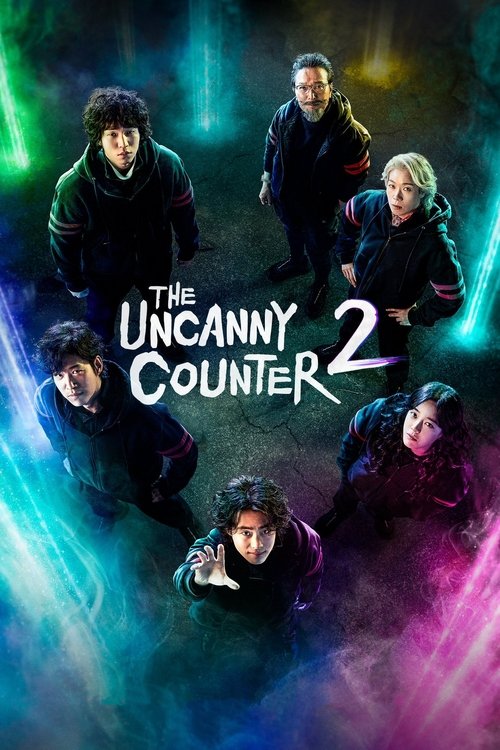
The Uncanny Counter
Through a dark supernatural thriller bathed in tender human warmth, raw grief transforms into electrifying fury as neon-lit shadows crash against crimson flames, forging an unbreakable sanctuary of redemption.
The Uncanny Counter

The Uncanny Counter

경이로운 소문

"We sell noodles and catch evil spirits!"

28 November 2020 — 03 September 2023 South Korea 2 season 28 episode Ended 8.3 (445)

Cast: Cho Byeong-kyu, Yu Jun-sang, Kim Se-jeong, Yeom Hye-ran, Ahn Suk-hwan

Drama Action & Adventure Mystery Grief, Trauma, and Healing Systemic Corruption vs. Vigilante Justice Found Family and Solidarity Power, Responsibility, and Moral Restraint Sacredness of the Soul and Afterlife Balance

Overview

The Uncanny Counter (경이로운 소문) is a South Korean supernatural action-fantasy series spanning two seasons and 28 episodes, adapted from the popular webtoon Amazing Rumor by Jang Yi. The narrative centers on the "Counters"—a group of demon hunters appointed by Yung, the boundary realm between heaven and Earth. To hide their identity, the Counters run a wildly popular noodle shop called Eonni's Noodles while secretly tracking down malevolent spirits that escape from the afterlife to possess humans and feed on their worst impulses. The overarching arc begins when So Mun, a high school student left physically disabled by a tragic car crash that killed his parents, is unexpectedly chosen to become the youngest Counter.

Across both seasons, the narrative evolves from a localized struggle against corporate corruption and street-level evil spirits into an international fight against formidable, power-absorbing entity threats. In Season 1, the team battles corrupt politicians, real estate developers, and a ruthless Level 4 evil spirit whose crimes are directly linked to So Mun’s past trauma and the loss of his family. In Season 2 (Counter Punch), the stakes escalate as demonic forces from abroad absorb the supernatural abilities of fallen Counters, forcing the Korean team to upgrade their powers, recruit new members, and confront tragic moral dilemmas where innocent human hosts become trapped within monsterized entities.

Core Meaning

At its core, The Uncanny Counter explores the transformative power of empathy, human connection, and found family in overcoming deep trauma. Through its supernatural premise, the creators present a poignant thesis: while immense pain, grief, and societal injustice can twist human hearts into monstrous, self-destructive forces, genuine care and solidarity can redeem even the most shattered lives.

The show contrasts the destructive greed of evil spirits—who consume souls for immortal existence—with the selfless sacrifice of the Counters, who risk their lives for strangers despite having no obligation to do so. Ultimately, the series asserts that physical strength and supernatural gifts are meaningless without moral integrity, and that true power lies in protecting the vulnerable rather than seeking vengeance.

Thematic DNA

Grief, Trauma, and Healing 30%
Systemic Corruption vs. Vigilante Justice 25%
Found Family and Solidarity 20%
Power, Responsibility, and Moral Restraint 15%
Sacredness of the Soul and Afterlife Balance 10%

Grief, Trauma, and Healing

Revealed as the primary psychological driver for every Counter. Each member has survived near-death experiences or devastating personal loss. In Season 1, So Mun's journey revolves around processing survivor's guilt and finding closure regarding his parents. In Season 2, this theme deepens through tragic antagonists like Ma Ju-seok, demonstrating how unresolved grief can metastasize into evil if left unsanctioned by community support.

Systemic Corruption vs. Vigilante Justice

Explores how institutional greed in politics, police departments, and corporations enables real-world evil. Season 1 highlights political scandals and corporate murder in Jungjin City, while Season 2 tackles predatory housing fraud and scam syndicates. The Counters operate outside official legal frameworks to deliver cathartic justice where human law fails.

Found Family and Solidarity

Evolves from professional camaraderie into an inseparable family unit. The noodle shop serves as a physical home where generational boundaries disappear. The series continuously emphasizes that no Counter can survive alone; their ultimate victories depend entirely on emotional trust and synchronized teamwork.

Power, Responsibility, and Moral Restraint

Examines the thin line between justice and vengeance. So Mun's raw power is frequently tested by anger, threatening to turn him into the very monsters he fights. The Yung council enforces strict rules to prevent Counters from abusing their abilities for personal revenge.

Sacredness of the Soul and Afterlife Balance

Underpins the series' supernatural mythology. The act of "summoning" evil spirits is presented not as murder, but as liberation for trapped innocent souls seeking ascension to heaven.

Character Analysis

So Mun

Cho Byeong-kyu

Archetype: The Chosen One / Young Hero Key Trait: Unyielding empathy and explosive latent strength

Motivation

Reconnecting with his deceased parents and protecting his surrogate noodle-shop family.

Character Arc

Starts as a bullied, traumatized high school student living with his grandparents. After acquiring Counter abilities, he transforms into an ace fighter capable of summoning Yung territory at will. Across Season 2, he matures into a compassionate leader who learns to balance immense power with moral restraint, refusing to execute corrupted souls when salvation remains possible.

Ga Mo-tak

Yoo Jun-sang

Archetype: The Powerhouse / Veteran Mentor Key Trait: Raw physical force combined with fiercely loyal street smarts

Motivation

Seeking justice against systemic crime and shielding his younger teammates.

Character Arc

Wakes up from a seven-year coma with complete amnesia, possessing incredible physical strength. In Season 1, he uncovers his past identity as an honest police detective investigating corporate murder. By Season 2, he balances his active duty as a police officer with his Counter duties, providing tactical wisdom and comic relief.

All 5 characters and cast

Symbols & Motifs

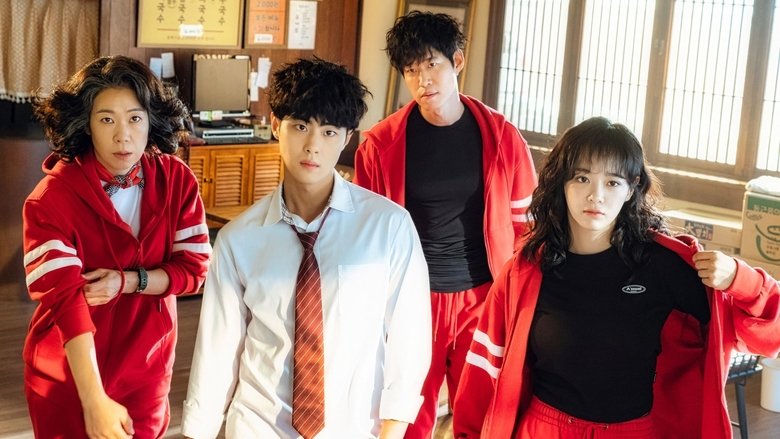
Red Tracksuits (붉은 트레이닝복)

Meaning:

Symbolizes humble, accessible, working-class heroism that rejects traditional cape-and-armor tropes. It visually unites the team regardless of age or background.

Context:

The signature uniform worn by the Counters during hunts.

Eonni's Noodle Shop & Warm Broth (언니네 국수)

Meaning:

Symbolizes sanctuary, earthly warmth, and nourishment. It grounds the high-stakes supernatural narrative in everyday domestic comfort and human community.

Context:

Serves as the team's operational hideout and restaurant base.

Yung Territory / Iridescent Light Beams (융의 땅)

Meaning:

Symbolizes divine blessing and spiritual synchronization; standing within the territory triplicates a Counter's power and enables telekinesis.

Context:

Columns of glowing rainbow energy flowing from the afterlife onto Earth during battles.

So Mun's Walking Cane

Meaning:

Appears prominently in Season 1 as a symbol of physical vulnerability, childhood trauma, and disability. Discarding it upon receiving Counter powers marks his initial transformation, while losing his powers temporarily returns his limp, reflecting his internal state.

Context:

Used by So Mun prior to receiving his Counter abilities and when his powers are revoked.

Unruly Curly Hair

Meaning:

A physical indicator of host connection to a Yung spirit. When a Counter receives power, their hair turns naturally curly; if powers are stripped or lost, it turns straight, symbolizing power alignment.

Context:

Appears on living human hosts connected to Yung spirits.

Psychometric Touch / Memory Reading

Meaning:

Symbolizes empathy as both a blessing and a curse—bearing witness to another person's horrific secrets and grief to uncover truth.

Context:

Used primarily by Do Ha-na through physical touch.

Memorable Quotes

강하다고 사과하지 마. 잘못을 한 사람한테 사과해야지.
— So Mun

Context

Season 1, Episode 2; So Mun confronts high school bullies threatening his friends.

Meaning

Establishes So Mun's core ethos early on—power must be used strictly for moral accountability and protection, never for dominance.

국숫집 문 닫아라. 악귀 잡으러 가자.
— Chu Mae-ok

Context

Recurring catchphrase across Seasons 1 and 2 whenever a Level 2+ spirit is detected.

Meaning

The iconic operational battle cry transition from everyday restaurant workers to supernatural protectors.

All 5 quotes

Episode Highlights

The Awakening of So Mun

S1E1

A senior Counter (Cheol-jung) is killed by a Level 3 spirit, causing his Yung partner Wi-gen to possess So Mun. So Mun's limp is miraculously cured, introducing him to the hidden world of Counters.

Significance:

Sets the entire series premise, establishing the rules of Yung and human spirit possession.

Unleashing the Territory

S1E4

Driven by intense anger while protecting his friends from severe school bullying, So Mun unconsciously summons the Yung territory for the first time.

Significance:

Signals So Mun's anomalous latent power and alerts both Yung and evil spirits to his special nature.

Stripped of Powers

S1E10

Due to So Mun's reckless emotional outbursts and dangerous fight with Ji Cheong-sin, the Yung council revokes his Counter status. His hair straightens, his limp returns, and his memory is slated for erasure.

Significance:

Serves as the darkest emotional valley for the protagonist, forcing him and the team to examine why they fight beyond raw emotion.

Summoning at Will & The Pivot

S1E13

So Mun overcomes his psychological blocks and summons the Yung territory consciously to save his team. Off-screen, this episode marked the abrupt departure of original head writer Yeo Ji-na due to storyline disputes.

Significance:

The plot transitions into high-octane climax mode, setting up the political downfall of Mayor Shin.

Reunion in Yung

S1E16

The Counters defeat the Level 4 spirit inhabiting Mayor Shin. So Mun summons his parents' trapped souls to Yung, where they have a weeping reunion before ascending to heaven.

Significance:

Provides profound emotional closure for Season 1's main narrative arc, breaking channel viewership records.

The Global Evil Spirit Threat

S2E1

Introduces Hwang Pil-gwang, Gelly, and Wong, who murder Chinese Counters and absorb their supernatural powers before arriving in Korea.

Significance:

Dramatically elevates the power scaling, introducing enemies who possess telekinesis and memory manipulation.

Journey into the Subconscious

S2E9

So Mun enters a deep coma after Gelly severs his connection with Wi-gen. Ha-na uses psychometry to enter his subconscious mind ("White Ground") and rescue his spirit from self-loathing.

Significance:

Reaffirms the deep emotional bond between Mun and Ha-na while restoring his Counter abilities.

The Complete Evil Spirit & Global Legacy

S2E12

Pil-gwang possesses Ma Ju-seok's body to form the "Complete Evil Spirit". So Mun reaches Ju-seok's inner human soul to grant him redemption, banishing Pil-gwang to hell.

Significance:

Concludes the series arc, showing the Counters embarking on global missions alongside international allies.

Philosophical Questions

Can justice exist without empathy?

The series repeatedly demonstrates that treating criminals or evil spirits purely with retributive violence leads to moral degradation. True redemption requires understanding the human pain that allowed evil to take root.

Is human nature inherently good or evil?

Explored through the stark contrast between human hosts and malevolent spirits. The show suggests that external trauma and corrupt environments push people toward evil, but the capacity for good remains locked deep within until reignited by compassion.

Alternative Interpretations

Sociopolitical Allegory of Class Struggle: Evil spirits are depicted as parasites that gain power by exploiting human greed, corrupt real estate moguls, and corrupt politicians. The Counters represent the working-class collective standing up against predatory systemic abuse.Psychological Manifestation of Grief & PTSD: Demon possession can be interpreted as a metaphor for unresolved psychological t...

Full ending explanation

Cultural Impact

When The Uncanny Counter debuted in late 2020, South Korean television was undergoing a massive boom in webtoon adaptations (Itaewon Class, Sweet Home). The show stood out by subverting western superhero tropes: instead of caped vigilantes or billionaire tech moguls, it presented everyday working-class individuals operating out of a humble noodle shop, wearing matching red tracksuits.

Season 1 was universally praised by critics and audiences for its cathartic storytelling, tight pacing, and heart-wrenching emotional performances. It tapped deeply into public frustration with real-world corporate corruption and political scandals. However, Season 2 (Counter Punch) received a more mixed critical reaction. While viewers lauded the elevated production values, CGI effects, and Kang Ki-young's villainous performance, critics noted that the narrative felt more formulaic, with repetitive fight sequences and underutilized new characters. Despite this, the franchise retains a massive global cult following on Netflix.

Audience Reception

Season 1 Reception: Overwhelmingly positive (Ratings: ~9.0/10). Audiences praised the emotional chemistry of the noodle shop family, cathartic action scenes, and So Mun's compelling origin story. The only noticeable criticism was a minor narrative pacing dip in Episodes 13–14 following the writer change.

Season 2 Reception: Moderate / Mixed (Ratings: ~6.5–7.5/10).

  • Praised Aspects: Upgraded CGI effects, thrilling wirework choreography, Kang Ki-young's charismatic villain performance, and tender emotional moments between Mun and Ha-na.
  • Criticisms: Over-reliance on superhero clichés, power nerfing/inconsistencies, excessive focus on So Mun at the expense of team dynamics, and underutilization of new recruit Na Jeok-bong.

Interesting Facts

  • OCN All-Time Viewership Record: Season 1 made history by becoming the first drama in OCN channel history to achieve double-digit ratings, peaking at 10.6%. This massive success prompted the network move to tvN for Season 2.
  • Sudden Writer Resignation: Head screenwriter Yeo Ji-na resigned after Episode 12 of Season 1 due to irreconcilable creative differences with the production team regarding the ending. Director Yoo Seon-dong personally wrote Episode 13, and movie screenwriter Kim Sae-bom was brought in to write Episodes 14–16 and the entirety of Season 2.
  • Real Filming Location: The exterior of Eonni's Noodles was filmed at a Japanese-style coffee shop called Haenggung Mansion in Suwon, Gyeonggi Province. It became a major tourist spot during the show's broadcast.
  • Extreme Physical Transformation: Actor Yoo Jun-sang (playing Ga Mo-tak) underwent grueling fitness training to reduce his body fat to just 3% at age 51 to authentically portray a superhuman ex-detective.
  • Webtoon Creator Approval: Webtoon author Jang Yi publicly praised the drama adaptation, stating that the cast's emotional chemistry and physical stunt execution exceeded his original comic drawings.
  • Kim Se-jeong’s OST Contribution: Multi-talented lead actress Kim Se-jeong personally wrote, composed, and sang the emotional OST track titled "Meet Again" (재회) for Season 1 Part 2 soundtrack.

Easter Eggs

Sohn Ho-jun's Cameo (Season 1, Ep 15)

Star actor Sohn Ho-jun made a memorable guest appearance as Oh Jeong-gu, a free-spirited Counter with healing abilities. His tragic sacrifice passes his Yung spirit to Mae-ok, providing a vital power boost before the final battle.

Korean Title Wordplay

The Korean title Gyeong-iroun Somun (경이로운 소문) contains clever wordplay. "Somun" is the name of the protagonist, but literally translates to "Rumor" in Korean. Thus, the title simultaneously means "Uncanny So Mun" and "Amazing Rumor".

Nod to Marvel's X-Men / Men in Black

In Season 2 Episode 1, international Counters operating under various restaurant covers across the globe are introduced, establishing a secret global network similar to Men in Black or the X-Men.

Frequently Asked Questions

Explore More About This Movie

Dive deeper into specific aspects of the movie with our detailed analysis pages

Comments (0)

Leave a comment

No comments yet. Be the first to share your thoughts!

Similar Movies