Skip to content
Alice in Borderland
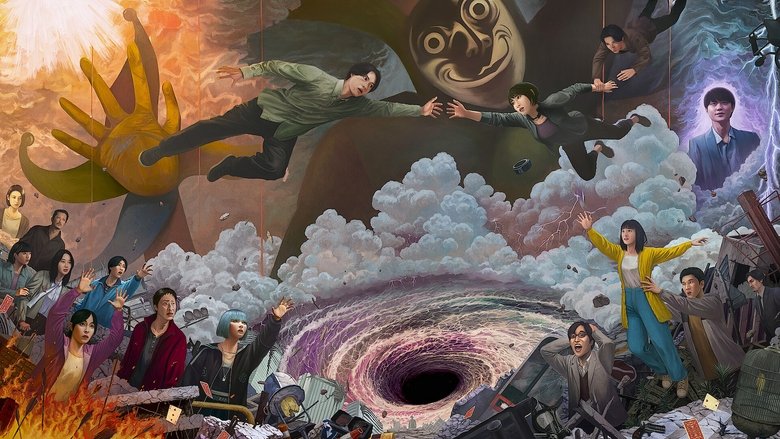
A pulse-pounding sci-fi thriller steeped in oppressive existential dread, where an eerie, deserted Tokyo becomes a brutal chessboard of survival, mirroring humanity's desperate fight for purpose against absolute mortality.
Alice in Borderland

Alice in Borderland

今際の国のアリス

"Life is a game, you should enjoy it more."

10 December 2020 — 25 September 2025 Japan 3 season 22 episode Ended 8.1 (2,781)

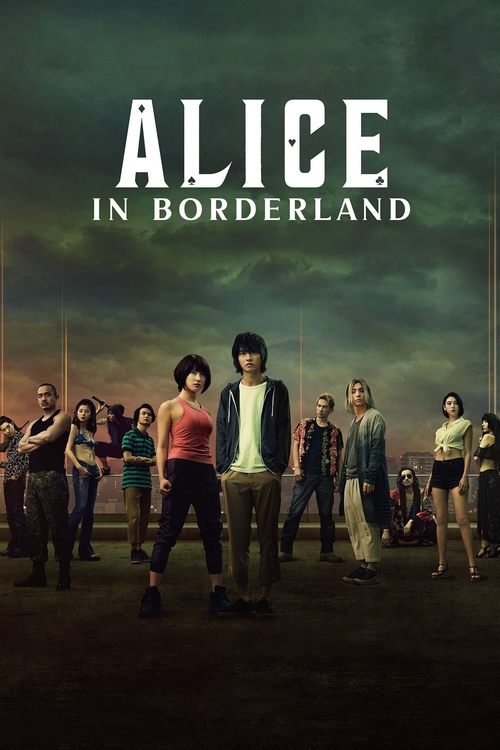
Cast: Kento Yamazaki, Tao Tsuchiya, Nijiro Murakami, Aya Asahina, Ayaka Miyoshi

Drama Action & Adventure Mystery Existentialism & Purpose vs. Apathy The Will to Survive & Human Resilience Morality, Ethics, and Human Nature Under Pressure Connection, Trauma, and Sacrifice Reality, Illusion, and Purgatory

Overview

Alice in Borderland (Imawa no Kuni no Arisu) is a Japanese sci-fi thriller drama directed by Shinsuke Sato and based on the manga by Haro Aso. The narrative follows Ryōhei Arisu, an aimless, unemployed gamer who, along with his closest friends, suddenly finds himself in an eerie, completely deserted version of Tokyo. To survive in this desolate realm known as the "Borderland," inhabitants are forced to participate in dangerous, life-or-death games. Each game's difficulty and nature are denoted by standard playing cards, where winning extends a player's temporary "visa" and failure results in instant execution by sky lasers.

As the narrative unfolds across three seasons, the scope expands from frantic individual survival to a grander exploration of human nature, ethics, and destiny. The characters progress through increasingly lethal tiers of competition, advancing from numbered suit games to battles against high-ranking "Face Card" masters. Along the way, Arisu forms an irreplaceable bond with mountain climber Yuzuha Usagi, while crossing paths with an eclectic cast of allies and antagonists who each cope with the psychological toll of the Borderland in distinct ways.

Throughout its multi-season run, the series balances high-concept death games with character-driven drama. It constantly shifts focus between physical endurance, logic puzzles, and intense psychological trials, forcing both the characters and the audience to question what it truly means to be alive and why one chooses to keep fighting in a world filled with suffering.


Core Meaning

The ultimate thesis of Alice in Borderland is an existential exploration of the will to live and the conscious creation of personal purpose. Through the crucible of high-stakes death games, the series confronts modern societal apathy, isolation, and trauma. The creators illustrate that life's value is neither pre-determined nor granted by external authorities; rather, meaning is actively forged through human connection, empathy, and the conscious decision to survive despite overwhelming grief and existential despair.

Thematic DNA

Existentialism & Purpose vs. Apathy 30%
The Will to Survive & Human Resilience 25%
Morality, Ethics, and Human Nature Under Pressure 20%
Connection, Trauma, and Sacrifice 15%
Reality, Illusion, and Purgatory 10%

Existentialism & Purpose vs. Apathy

Begins with Arisu as an unemployed, directionless young man escaping reality through video games. As he faces death in the Borderland, his perspective shifts from passive nihilism to an urgent, active search for why he should live. The theme evolves as characters confront their past regrets and choose to construct their own meaning.

The Will to Survive & Human Resilience

Initially presented as basic instinctual fear, survival evolves into a profound moral choice. Across seasons, the show examines how willpower sustains individuals through catastrophic physical and emotional trauma.

Morality, Ethics, and Human Nature Under Pressure

Moves from simple team cooperation to complex ethical debates. Games like the "Seven of Hearts" and "King of Diamonds" force characters to choose between utilitarian self-interest, radical self-sacrifice, and abstract ideals of equality.

Connection, Trauma, and Sacrifice

Explores how shared grief and mutual trust can heal deep psychological wounds. Arisu's bond with Usagi and the sacrifices of friends like Karube and Chota serve as the emotional foundation that keeps players grounded.

Reality, Illusion, and Purgatory

Questioning the true nature of the Borderland environment. The show continually blurs the line between physical reality, collective unconsciousness, and near-death limbo.

Character Analysis

Ryōhei Arisu

Kento Yamazaki

Archetype: Reluctant Hero / Master Strategist Key Trait: High spatial awareness and game-logic perception

Motivation

Initially surviving out of guilt over his friends' deaths; later, saving Usagi and understanding the truth of the world.

Character Arc

Transforms from an aimless, depressed NEET (Not in Employment, Education, or Training) into a compassionate, determined leader who fights to protect others and finds true value in living.

Yuzuha Usagi

Tao Tsuchiya

Archetype: Mountain Climber / Emotional Anchor Key Trait: Exceptional physical agility and instinctual empathy

Motivation

Honoring her father's memory and supporting Arisu through their shared trauma.

Character Arc

Evolves from a solitary, grieving survivor burdened by her father's tragic death into a fiercely loyal partner who rediscovered her desire to belong.

All 5 characters and cast

Symbols & Motifs

Playing Card Suits & Numbers

Meaning:

Spades represent physical strength; Diamonds represent intellect and logic; Clubs represent balance and teamwork; Hearts represent psychological betrayal and trust. Card numbers dictate difficulty.

Context:

Used throughout the Borderland to dictate the difficulty and required skill set of every survival game.

Empty, Overgrown Tokyo / Shibuya Scramble

Meaning:

Represents modern urban alienation, the vacancy of modern societal life, and a clean slate for souls suspended between life and death.

Context:

Serves as the central atmospheric setting where suspended souls navigate the death games.

Sky Lasers

Meaning:

Represent absolute, impartial mortality and the inescapable deadline of human existence when a player's visa expires.

Context:

Fired from the sky to execute players instantly upon visa expiration or rule violation.

The Joker Card

Meaning:

Represents the ultimate enigma, the boundary/ferryman between life and death, and the lingering ambiguity of human destiny.

Context:

Appears as the ultimate boundary between realms and as a physical card in the climax.

Usagi’s Mountain Climbing Gear & Father's Legacy

Meaning:

Grounded physical strength, vertical ascent out of psychological grief, and the preservation of personal integrity.

Context:

Worn and utilized by Usagi throughout her physical and emotional journey in the Borderland.

Memorable Quotes

生きていく理由は、誰かに与えられるもんじゃねぇ
— Daikichi Karube / Ryōhei Arisu

Context

Spoken in Season 1, Episode 3 and Season 2, Episode 8.

Meaning

Encapsulates the central existential theme of the series, emphasizing that the reason to live is not given by others but actively created.

頭がいいんだもん
— Shuntarō Chishiya

Context

Spoken during Season 2, Episode 7 in a confrontation with Niragi.

Meaning

Iconic line highlighting Chishiya's unyielding confidence and sharp intellect in the face of violent threats.

All 5 quotes

Episode Highlights

Episode 1

S1E1

Establishes the sudden, eerie emptying of Tokyo and introduces the life-or-death rules of the Borderland via the "Three of Clubs" game.

Significance:

Sets the premise, tension, and high stakes of the entire series.

Episode 3

S1E3

Features the infamous "Seven of Hearts" hide-and-seek game in the botanical garden, where Karube and Chota sacrifice their lives so Arisu can survive.

Significance:

The ultimate emotional turning point; instills profound guilt and moral purpose in Arisu.

Episode 8

S1E8

Climax of the "Ten of Hearts" Beach Witch Hunt game. Exposes human cruelty, reveals the destruction of "The Beach," and transitions the story to the Face Card phase.

Significance:

Clears out secondary antagonists and establishes the true scale of the game masters.

Episode 3

S2E3

The conclusion of the "King of Clubs" (Osmosis) game against Ginji Kyūma.

Significance:

Kyūma's nudist, philosophical approach to life deeply reshapes Arisu's worldview, while Tatta's sacrifice emphasizes true teamwork.

Episode 6

S2E6

The "King of Diamonds" game featuring Chishiya and Keiichi Kuzuryū in an intellectual math puzzle regarding human worth.

Significance:

Highlights philosophical debates on justice and human equality, sparking major character development for Chishiya.

Episode 8

S2E8

The "Queen of Hearts" croquet match with Mira Kanō. Features psychological manipulation, revealing the Shibuya meteorite catastrophe.

Significance:

Concludes the main manga storyline; offers players the choice to return to real life or remain as Borderland citizens.

Episode 6

S3E6

The series finale; Arisu's ultimate confrontation within the mysterious Joker realm to save Usagi.

Significance:

Permanently resolves the connection between life, death, and memory, bringing complete closure to Arisu and Usagi's shared destiny.

Philosophical Questions

What determines the value of a human life?

Examined in the "King of Diamonds" game, where Kuzuryū and Chishiya debate whether life value is equal, merit-based, or contextual.

Is life inherently meaningful, or must meaning be actively constructed?

Explored through Arisu's evolution from a directionless NEET to an active agent of his own fate, concluding that purpose must be created by the individual.

Can human empathy survive when self-preservation is at stake?

Tested in the "Seven of Hearts" and "Ten of Hearts" games, demonstrating both the depths of human betrayal and the heights of self-sacrifice.

Is a comfortable illusion preferable to a painful reality?

Raised by Mira Kanō in the series finale, forcing players to choose between remaining in the controlled simulation of Borderland or returning to real-world pain and uncertainty.

Alternative Interpretations

1. The Purgatory / Near-Death Limbo Reading: The Borderland is literally an intermediate realm (equivalent to Purgatory or the Sanzu River in Japanese Buddhist tradition). The death games represent the physical fight occurring in the victims' bodies as doctors attempt to revive their hearts in real-world operating rooms.

Full ending explanation

Cultural Impact

Premiering in late 2020 amidst global COVID-19 pandemic lockdowns, the show's imagery of a completely empty Tokyo resonated deeply with international audiences experiencing urban isolation.

Alongside Squid Game (2021), Alice in Borderland spearheaded a global revival of Japanese death-game adaptations and Asian survival thrillers on international streaming platforms.

Audience Reception

Praise: Audiences and critics consistently applaud the creative game design, high production values, stunning cinematography of desolate Tokyo, and standout performances (particularly Kento Yamazaki, Tao Tsuchiya, and Nijiro Murakami). Logic-focused games (like the "Jack of Hearts" and "King of Diamonds") are frequently cited as highlights.

Criticism: Common criticisms include occasional pacing dips during extended non-game dialogue, exaggerated action-movie durability ("plot armor") for certain characters taking heavy injuries, and a polarized reception toward Season 3's original storyline departures.

Overall Verdict: Widely regarded as one of the best and most faithful live-action manga adaptations ever produced, serving as a landmark title for Japanese television on global streaming services.

Interesting Facts

  • The famous Shibuya Scramble Crossing in Episode 1 was not shot on location in Shibuya. It was filmed on a massive open-air set built in Ashikaga, Tochigi Prefecture, co-constructed alongside the production of the film Detective Chinatown 3.
  • Unlike most streaming television series that rotate directors, Shinsuke Sato directed every single episode of the series, treating each season as one continuous feature film to ensure visual and tonal consistency.
  • Manga creator Haro Aso stated that the main characters were based on his own personality traits: Arisu was based on his aimless self at age 20, while Usagi represented his independent nature.
  • For the CGI black panther in Season 1, Episode 4, the visual effects team visited real zoos to analyze big-cat movements, muscle dynamics, and fur reactions to lighting.
  • Following its premiere on December 10, 2020, Netflix renewed Alice in Borderland for Season 2 just two weeks later due to global viewership metrics.
  • Cinematographer Taro Kawazu utilized THETA Z1 360-degree cameras to capture ambient light reflection data at real locations, allowing seamless CG compositing of empty Tokyo streets.

Easter Eggs

Lewis Carroll's Alice in Wonderland Character Parallels

Arisu represents Alice; Usagi means Rabbit (White Rabbit); Chishiya represents the Cheshire Cat; Kuina represents the Caterpillar (holding an unlit fake cigarette/lollipop and undergoing metamorphosis); Hatter represents the Mad Hatter; Mira Kanō represents the Red Queen / Queen of Hearts; Ann represents the White Queen.

Foreshadowing in the Opening Scene

In Season 1, Episode 1, before Tokyo suddenly empties, Usagi is briefly visible in the background crowd while Arisu and his friends lean against a street sign at Shibuya Crossing.

Cross-Game Character Cameos

In Season 2, Episode 6, a flashback of Kuzuryū participating in a previous game shows him receiving assistance from a stranger, who is the injured man Arisu rescued inside the bus during the "Four of Clubs" game in Season 1, Episode 4.

The Physical Joker Card

The final shot of Season 2 shows a physical Joker playing card sitting on a hospital table, hinting that the line between illusion and reality remains thin.

Frequently Asked Questions

Explore More About This Movie

Dive deeper into specific aspects of the movie with our detailed analysis pages

Comments (0)

Leave a comment

No comments yet. Be the first to share your thoughts!

Similar Movies