Full spoilers follow.
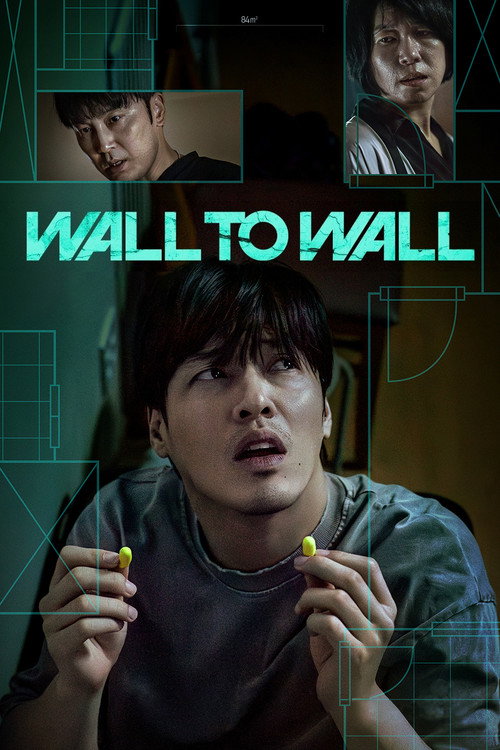
The film's structure is a bait-and-switch. For an hour it behaves like a social-realist drama about a man losing his mind to inter-floor noise: Woo-seong bought his 84-square-meter unit in April 2021 for 1.1 billion won, watched it fall into the 800-million range by August 2024, lost his fiancée, took on more than 700 million won of debt, doubled up on night delivery work, and sank money into a crypto bet that went badly. The noise is the last straw on a life already structurally broken.
Then the film reveals that the noise is not a haunting or a simple nuisance — it is entangled with the building's residents and their concealed business, documented in a ledger. Once that object enters the story, the neighbors stop being an irritation and become participants in something worth killing over.
The climax. Woo-seong severs the gas line and puts the ledger into the microwave along with his apartment papers, triggering an explosion while he retreats to safety. Destroying the ledger and the deed in the same appliance is the film's thesis compressed into one image: the evidence of others' guilt and the evidence of his own ownership are the same category of paper, and both have to burn. A three-way survival fight follows. Jin-ho is fatally wounded. Eun-hwa, who has been steering Woo-seong throughout, attempts to kill him using the ledger concealed inside a stack of magazines — the lure that finally exposes her — and the injured Jin-ho stabs her to death before dying himself. The two antagonists annihilate each other; Woo-seong survives more or less by attrition.
The fire that isn't. As Woo-seong walks out, he pictures the entire building consumed by flames. It is not true. The tower does not burn down. The vision is pure wish-fulfilment — what he wants is the total erasure of the place, so that the noise can never reach him again — and the film's refusal to grant it is the single most important choice in the ending. The structure survives everyone who died inside it.
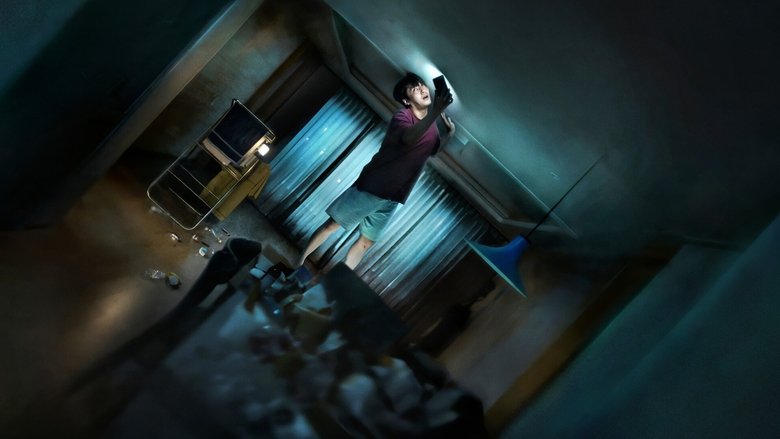
The final scene. Woo-seong chooses to return to Seoul. He stands in his empty apartment. And the inter-floor noise starts again — with Jin-ho and Eun-hwa both dead, with no conspiracy left to blame. He laughs.
What it means. The laugh retroactively reframes the whole film. The noise was never a mystery with a culprit; it is the sound of the arrangement itself — hundreds of indebted households stacked in a concrete grid, each one's existence audible to the others, none of them able to leave. Woo-seong killed his way to the source and found that there is no source. He won the fight and remains exactly where he started, in the same 84 square meters, listening to the same sound. The horror is not that someone was after him. The horror is that nobody had to be.