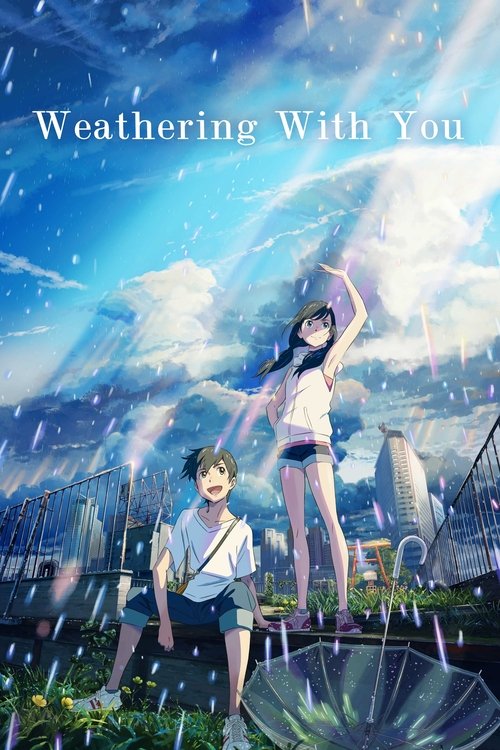
Weathering with You
A poignant, rain-soaked fantasy where a runaway boy finds a girl who can command the sun, forcing them to weigh personal love against the world's ecological balance.
Weathering with You
Weathering with You

天気の子

"A story about the secret of this world that only I and she know."

19 June 2019 Japan 112 min ⭐ 8.0 (2,479)
Director: Makoto Shinkai
Cast: Kotaro Daigo, Nana Mori, Tsubasa Honda, Sakura Kiryu, Sei Hiraizumi
Drama Animation Fantasy Romance
Love vs. Sacrifice Climate Change and Nature's Indifference Youth Alienation and Finding Belonging Individual Choice vs. Collective Good
Box Office: $186,965,409

Weathering with You - Ending Explained

⚠️ Spoiler Analysis

The central twist of "Weathering with You" is the true nature of Hina's power as a "Sunshine Girl." She is not merely a girl with a gift but a modern-day "Weather Maiden," a human sacrifice destined to connect to the sky and disappear to restore the weather's balance. Every time she prays for sun, a part of her body becomes more translucent and ephemeral, slowly turning into water. Hina initially accepts this fate and willingly sacrifices herself, vanishing into the sky and causing the relentless rain to stop.

The film's climax subverts the traditional sacrificial hero narrative. Driven by his love, Hodaka fights his way past the police and travels through the rooftop shrine's Torii gate, entering a spiritual world in the clouds where Hina is fading away. He convinces her that she should live for herself, declaring he wants her more than any blue sky. He brings her back to Earth, an act which saves her life but permanently disrupts the weather, causing the rain to resume and never stop. The epilogue takes place three years later, revealing that large parts of Tokyo have been permanently submerged by the endless rain. Hodaka, after finishing his probation back home, returns to the flooded city and reunites with Hina. His final internal monologue reveals that he doesn't regret his choice, concluding that they deliberately chose this changed world in order to be together.

Alternative Interpretations

The film's ending is the primary source of alternative interpretations. One perspective is that Hodaka's choice is a deeply selfish act, dooming millions in Tokyo to a perpetually flooded existence for the sake of one person. This reading criticizes the film for romanticizing a decision with catastrophic consequences.

Another interpretation views the ending not as a climate change allegory, but as a purely metaphorical and personal one. In this light, the 'rain' is the oppressive nature of society and fate, and Hodaka's choice is a defiant cry for individual freedom and the right to prioritize one's own happiness and loved ones above all else. The flooded Tokyo isn't a literal disaster but a changed world that the characters must learn to live in, symbolizing that personal choices create a new reality one must adapt to.

A third view suggests the film critiques societal pressure on younger generations to fix problems created by their predecessors. Hina, as the sacrifice, represents the youth burdened with solving the world's crises. Hodaka's rejection of her sacrifice is a refusal to play by the rules of a broken system, arguing that the young should not have to give up their lives and happiness to pay for the mistakes of the past.