Skip to content
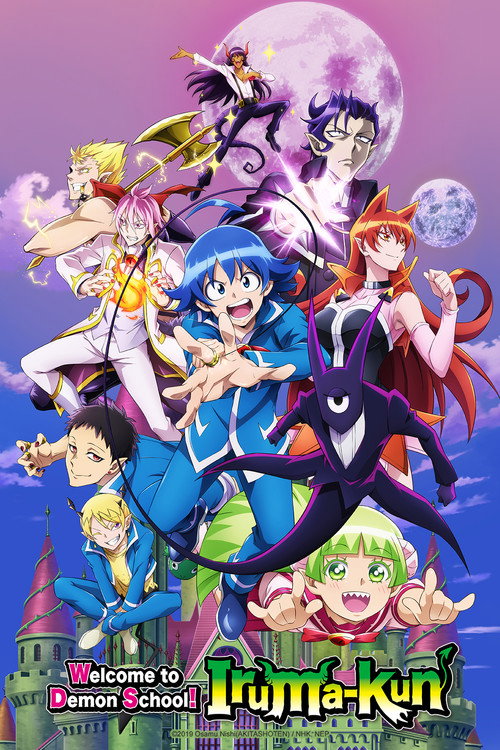
Welcome to Demon School! Iruma-kun
A neon-soaked whimsical fantasy overflowing with joyful exuberance, where soft human warmth ignites like a starry flare against a chaotic twilight realm of horn-rimmed tricksters and infernal heart.
Welcome to Demon School! Iruma-kun

魔入りました!入間くん

05 October 2019 — 25 July 2026 Japan 4 season 89 episode Returning Series 8.3 (301)

Cast: Ayumu Murase, Ryohei Kimura, Ayaka Asai, Daisuke Ono, Saori Hayami

Animation Sci-Fi & Fantasy Comedy Found Family and Belonging The Power of Desires and Ambition Empathy and Inclusivity as Leadership Self-Determination vs. Nature Order vs. Chaos / Civility vs. Primordial Instinct

Welcome to Demon School! Iruma-kun — Ending Explained

⚠️ Spoiler Analysis

Kirio Amy’s True Nature (Season 1): Initially appearing as a gentle, weak-magical senior in the New Magic Apparatus Battler, Kirio is revealed to be a sadistic fanatic who derives pleasure from watching despair. He is connected to Lord Baal's underground movement.

Iruma’s Wicked Phase (Season 2): Ali-san intentionally alters Iruma's emotional state to simulate a demon's "Evil Cycle". Instead of becoming destructive, Iruma turns into a suave, decisive leader who unites the Misfit Class to claim Delkira’s Royal One classroom.

The "Return to Origins" Conspiracy (Seasons 3–4): Lord Baal and the Six Fingers seek to overthrow the current orderly demon society by destroying the peace established by Sullivan. Their ultimate goal is to force all demons back into primal, bloodthirsty beasts.

Iruma’s True Ambition: Though Iruma initially hid his human identity to survive, his experiences lead him to deliberately aim for the Demon King's seat. His goal is not political domination, but creating a Netherworld where humans and demons can peacefully coexist.

Alternative Interpretations

The Educational/Sociological Reading: Babyls Academy can be interpreted as a critique of traditional rigid school systems. The "Misfit Class" demonstrates that children labeled as difficult or abnormal thrive when given tailored mentorship and collaborative freedom.

The Trauma Recovery Allegory: Iruma’s hyper-evasive reflexes and inability to refuse requests reflect responses to childhood neglect. His time in the Netherworld represents a psychological healing journey where he learns to set personal boundaries and express genuine desire.

Subversion of the "Demon King" Mythos: Rather than a conqueror who subjugates others through fear, the narrative suggests the true Demon King is someone who unifies disparate voices and creates an environment where everyone can flourish.

Explore More About This Movie

Dive deeper into specific aspects of the movie with our detailed analysis pages

Similar Movies