Skip to content
Welcome to Demon School! Iruma-kun
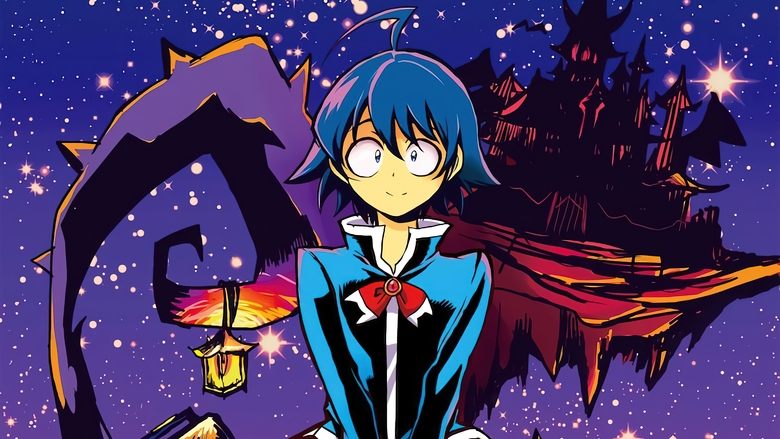
A neon-soaked whimsical fantasy overflowing with joyful exuberance, where soft human warmth ignites like a starry flare against a chaotic twilight realm of horn-rimmed tricksters and infernal heart.
Welcome to Demon School! Iruma-kun

Welcome to Demon School! Iruma-kun

魔入りました!入間くん

05 October 2019 — 25 July 2026 Japan 4 season 89 episode Returning Series 8.3 (301)

Cast: Ayumu Murase, Ryohei Kimura, Ayaka Asai, Daisuke Ono, Saori Hayami

Animation Sci-Fi & Fantasy Comedy Found Family and Belonging The Power of Desires and Ambition Empathy and Inclusivity as Leadership Self-Determination vs. Nature Order vs. Chaos / Civility vs. Primordial Instinct

Overview

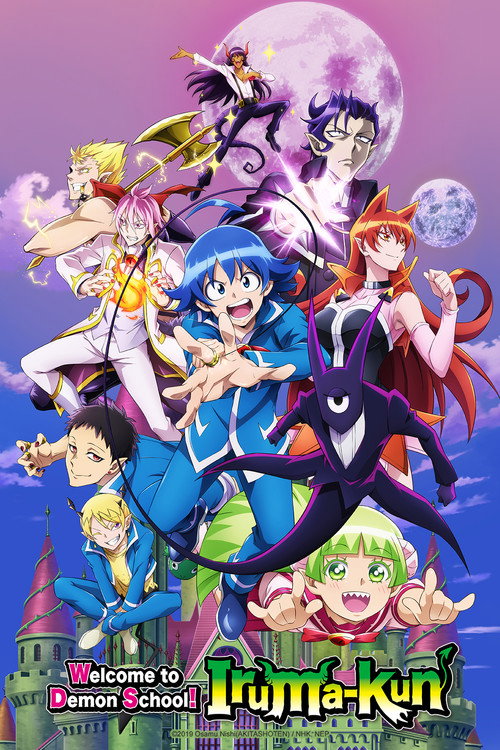
Welcome to Demon School! Iruma-kun (Mairimashita! Iruma-kun) is an anime series adapted from Osamu Nishi’s manga by Bandai Namco Pictures. The narrative follows 14-year-old Suzuki Iruma, a chronically passive human boy sold by his irresponsible parents to the powerful demon Lord Sullivan. Instead of being harmed, Iruma is adopted as Sullivan’s cherished grandson and enrolled in Babyls Demon Academy. Forced to conceal his human identity—lest his monstrous classmates discover his nature—Iruma attempts to blend into the background, only for his self-preservation instincts, empathy, and sheer luck to repeatedly drag him into the spotlight.

Across four seasons spanning 89 episodes, the overall story arc shifts from episodic comedy and school-life misadventures to a grand coming-of-age journey. What begins as Iruma’s survival mechanism evolves into a genuine quest for self-actualization alongside his classmates in the infamous "Misfit Class" (Class 1-E). As Iruma advances through demon hierarchy ranks, he unites his peers, learns demonic magic, masters archery, and navigates large-scale academy events such as the Cannonball Execution, the Royal Classroom restoration, the Harvest Festival, and the Music Festival.

Simultaneously, a dark undertone develops behind the scenes. A faction of radical demons led by Baal and the terrorist organisation Six Fingers seeks to dismantle the peaceful, civilized demon society and return it to its ancestral "Evil Phase" of primal violence. Unknowingly positioned at the center of prophecies regarding the next Demon King, Iruma’s gentle soul becomes the anchor that gradually reshapes the Netherworld's future.

Core Meaning

The central thesis of Welcome to Demon School! Iruma-kun is that empathy, vulnerability, and genuine desire are far greater sources of strength than conquest or dominance. In a demon world built around strength, ranks, and innate impulses, Iruma represents an anomaly: an individual who grew up with nothing, yet possesses an infinite capacity to care for others. The creators use Iruma's journey to argue that true leadership is not born from terrifying authority, but from uplifting those around you and helping them discover their own authentic desires. Furthermore, the show reframes "desire" (yoku)—often portrayed as demonic or sinful—as an essential human and emotional catalyst for growth and creative fulfillment.

Thematic DNA

Found Family and Belonging 30%
The Power of Desires and Ambition 25%
Empathy and Inclusivity as Leadership 20%
Self-Determination vs. Nature 15%
Order vs. Chaos / Civility vs. Primordial Instinct 10%

Found Family and Belonging

In the human world, Iruma was neglected and exploited by his biological parents. Upon entering the Netherworld, he finds unconditional love from a doting grandfather (Sullivan), a protective guardian (Opera), and unwavering loyalty from his friends. Throughout the seasons, the Misfit Class expands this theme, transforming from an outcast group into a tight-knit family that protects one another.

The Power of Desires and Ambition

Demons thrive on desire, but Iruma initially lacks any goals due to a life spent surviving. The narrative tracks his gradual discovery of personal ambition—from merely wanting to avoid attention, to wanting to stay with his friends, to declaring his intent to claim the Demon King's throne for his class's sake. The series emphasizes that having a personal goal gives life meaning.

Empathy and Inclusivity as Leadership

Rather than overpowering rivals, Iruma converts opponents into companions through listening, kindness, and understanding. His inability to say "no" evolves into an active willingness to help. This theme contrasts Iruma's gentle influence with the destructive, selfish vision of villains who view demons as beasts.

Self-Determination vs. Nature

The series continuously questions whether individuals are defined by their species, bloodline, or rank. Though Iruma is a fragile human surrounded by predators, his spirit and actions prove that one's environment and choices determine one's destiny. Similarly, demons like Sabnock and Asmodeus re-examine their family expectations to forge their own paths.

Order vs. Chaos / Civility vs. Primordial Instinct

The Netherworld exists in a delicate balance between modern civilized demon law (championed by Sullivan and the 13 Crowns) and the ancestral drive toward chaotic destruction (the "Return to Origins" faction). This macro-political conflict tests the institution of Babyls and the strength of the new generation.

Character Analysis

Iruma Suzuki

Ayumu Murase

Archetype: Reluctant Hero / Catalyst Hero Key Trait: Absolute selflessness combined with unbeatable dodge capability and endless appetite

Motivation

Initially to survive without drawing attention; evolves into a desire to protect his new home and friends.

Character Arc

Begins as an anxious, selfless push-over whose survival instinct made him hyper-evasive. Over four seasons, he develops authentic self-worth, masters magical archery under Barbatos Bachiko, and steps up as a leader worthy of the Demon King’s title.

Asmodeus Alice ("Azz-kun")

Ryohei Kimura

Archetype: Devoted Knight / Noble Rival Key Trait: Fierce loyalty and elegant battle power

Motivation

To serve as Iruma’s right hand and elevate him to the pinnacle of the demon world.

Character Arc

Starts as an arrogant, aristocratic fire-magic prodigy who loses to Iruma on day one. He vows absolute loyalty to Iruma, learning humility, emotional openness, and how to harness his mother’s bloodline magic (seduction) alongside his flames.

All 5 characters and cast

Symbols & Motifs

The Ring of Gluttony (Gluttonous Feeder Ring)

Meaning:

Symbolizes Iruma’s latent potential, hunger for growth, and his bond with Arikado (Ali-san).

Context:

It consumes magic to safeguard him and adapts alongside Iruma’s rank progression.

Royal One (The Demon King’s Classroom)

Meaning:

Symbolizes dignity, unified purpose, and legacy.

Context:

Formerly the personal room of the missing Demon King Delkira, reclaiming it in Season 2 serves as the Misfit Class’s collective rite of passage into greatness.

The Cherry Blossom Tree (Legend Leaf)

Meaning:

Symbolizes human magic, hope, and bringing beauty to seemingly desolate environments.

Context:

Introduced during the Season 3 Harvest Festival when Iruma makes it bloom.

The Bow and Arrow (Barbatos Archery)

Meaning:

Symbolizes singular focus, unwavering intent, and self-expression.

Context:

Because demons lack patience for long-range weaponry, Iruma’s archery highlights his unique human perseverance.

The Babyls School Anthem

Meaning:

Instills genuine institutional pride and unity among the students while humorously reversing typical moral codes.

Context:

A recurring musical motif praising destruction, eating humans, and chaos.

Memorable Quotes

ぼ、僕を食べないでくだサーイ!
— Iruma Suzuki

Context

Season 1, Episode 1. Spoken internally and aloud when Iruma is brought to the demon world.

Meaning

Establishes Iruma's terror and comedic desperation upon entering the demon realm.

悪魔学校バビルス~ 魂をささげて~
— Babyls Student Body

Context

Season 1, Episode 1. The opening line of the Babyls school anthem.

Meaning

Sets up the show's dark comedic premise through the school anthem.

All 5 quotes

Episode Highlights

Iruma-kun from Demon School

S1E1

Establishes the premise, Iruma’s adoption by Sullivan, his accidental summoning of Kalego as a familiar, and his defeat of Asmodeus.

Significance:

Launches the main narrative, establishing Iruma's presence in the demon world and key relationships.

The Misfit Class

S1E13

Assembles Class 1-E and introduces the full ensemble of quirky outcasts.

Significance:

Establishes the Misfit Class, which becomes the central emotional core and primary group dynamic of the series.

Royal One's Opening

S1E22

Introduces the mystery of former Demon King Delkira.

Significance:

Seeds Iruma’s connection to the throne and the overarching lore of the Demon King.

The Exact Opposite of Iruma

S2E5

Ali-san casts a spell causing Iruma’s "Evil/Wicked Phase," transforming him into a charismatic, assertive leader.

Significance:

Catalyzes Iruma's development into an active leader and initiates the campaign for Royal One.

Clara's House / Royal One Unlocked

S2E8

The Misfit Class secures approval from all teachers to claim Delkira’s old classroom.

Significance:

Serves as the culmination of the Royal Class arc, proving the unity and capability of the Misfits.

Master Bachiko

S3E2

Iruma begins his brutal tutor training under Barbatos Bachiko, learning to harness his human limitations through archery.

Significance:

Marks a crucial turning point in Iruma's combat abilities and personal resolve.

My Own Bow / The Legend Leaf Blooms

S3E18

Iruma and Lead bloom the Legend Leaf using human magic and perseverance.

Significance:

Serves as the emotional peak of the Harvest Festival, earning Iruma and Lead the rank of Daleth.

Lilith's Carpet

S4E7

Initiates the Music Festival arc, highlighting the Misfit Class’s artistic expression and the introduction of 13th student Purson Soi.

Significance:

Expands secondary character development and focuses on collective artistic creation.

Philosophical Questions

Is human/demonic nature inherently fixed, or defined by individual choice?

The show reveals that demons are not inherently evil; their culture simply values raw instinct, which can be channeled into art, protection, and community.

What is the true distinction between destructive greed and healthy ambition?

Contrast is drawn between Baal’s destructive desire to dominate others and Iruma’s desire to protect his friends and create a shared future.

Can non-violent pacifism survive in a world governed by hierarchy and strength?

Iruma repeatedly shows that gentle deflections, emotional intelligence, and collaborative problem-solving can disarm threats more effectively than raw force.

Alternative Interpretations

The Educational/Sociological Reading: Babyls Academy can be interpreted as a critique of traditional rigid school systems. The "Misfit Class" demonstrates that children labeled as difficult or abnormal thrive when given tailored mentorship and collaborative freedom.

Full ending explanation

Cultural Impact

Welcome to Demon School! Iruma-kun arrived during a wave of popular "Isekai" and demon-themed fantasy shows in the late 2010s. However, while contemporary peers leaned heavily into dark violence or overpowered self-insert tropes, Iruma-kun gained widespread acclaim by subverting expectations: it presented a warm, wholesome coming-of-age story wrapped in colorful demon aesthetic.

Critics praised the show's ability to maintain high comedic momentum while building genuine emotional stakes. Season 1 was embraced as a cozy comfort show, Season 2 elevated its popularity through the "Evil Phase" arc, and Seasons 3 and 4 solidified its status as a top-tier shonen ensemble series. Broadcast on NHK E-Tele, it bridged generational gaps, becoming a hit among children, teenagers, and adult anime fans alike.

Audience Reception

Season 1 was highly praised for its bright visual aesthetic, catchy soundtrack, and comforting humor, though minor criticisms noted the episodic nature of early chapters. Season 2 was widely acclaimed for introducing "Wicked/Evil Phase Iruma," proving the series could deliver dramatic character shifts and higher narrative stakes. Season 3 was lauded for the Harvest Festival arc's action and emotional depth, particularly Iruma’s archery training under Bachiko, despite slight pacing lulls. Season 4 was celebrated for expanding character development to secondary Misfit Class members (such as Purson Soi) during the Music Festival arc. Overall, it is frequently cited as one of the most consistently entertaining and heartwarming modern fantasy-comedy anime, boasting strong user ratings across platforms (7.6+ on IMDb, 8.0+ on MyAnimeList).

Interesting Facts

  • Manga author Osamu Nishi personally assisted with the world-building details and lyric drafting for key anime songs, including the 'Babyls Anthem'.
  • Produced by Bandai Namco Pictures (BN Pictures), a spinoff of Sunrise famous for managing high-energy comedy (Gintama) and idol musical timing (Aikatsu!).
  • Broadcast on NHK Educational TV (NHK E-Tele) during late-afternoon weekend slots, requiring the staff to balance subversively edgy demon lore with broad, family-friendly accessibility.
  • Lead voice actor Ayumu Murase used his vocal range to voice innocent Iruma, suave Wicked Phase Iruma, and 'Irumi' (Iruma's crossdressing idol persona) without digital pitch manipulation.
  • Japanese pop group DA PUMP performed the energetic theme songs 'Magical Babyrinth' (S1) and 'No! No! Satisfaction!' (S2), which inspired viral dance challenges across Japanese social media.
  • Makoto Moriwaki directed Seasons 1 through 3, establishing the show's comedic timing, before handing co-directorial responsibilities to Ayaka Tsujihashi for Season 4.

Easter Eggs

Purson Soi’s Background Invisibility

Long before Purson Soi's official spotlight arc in Season 4, his character model is quietly drawn into background crowds, class seating charts, and group shots starting in Season 1, Episode 1.

First Love Memories (Hatsukoi Memory)

The romance manga Iruma reads to Ameri parodies classic 1970s–80s shojo manga tropes, featuring melodramatic inner monologues and dramatic rose backgrounds.

Ars Goetia Naming Conventions

Almost every demon character is named after entities from the 17th-century grimoire The Lesser Key of Solomon (Asmodeus, Sabnock, Barbatos, Valac, Allocer, Crocell, Naberius).

Pop Culture Homages

Dynamic battle sequences frequently feature exaggerated aura lines and dramatic poses referencing JoJo's Bizarre Adventure and Dragon Ball Z.

Opera's Ambiguous Identity

In homage to Osamu Nishi's original manga design, the anime preserves Opera’s non-binary gender representation, keeping their formal titles and attire neutral.

Frequently Asked Questions

Explore More About This Movie

Dive deeper into specific aspects of the movie with our detailed analysis pages

Comments (0)

Leave a comment

No comments yet. Be the first to share your thoughts!

Similar Movies