Werckmeister Harmonies
A stark, hypnotic descent into societal collapse, where cosmic disharmony manifests as a town's chilling surrender to chaos, captured in breathtakingly long takes.
Werckmeister Harmonies

Werckmeister harmóniák

01 February 2001 France 139 min ⭐ 7.9 (352)
Director: Béla Tarr
Cast: Lars Rudolph, Peter Fitz, Hanna Schygulla, Alfréd Járai, Gyula Pauer
Drama
The Collapse of Order and the Rise of Chaos Power, Manipulation, and Political Opportunism Loss of Faith and Existential Despair The Fragility of Reason and Innocence
Box Office: $64,974

Werckmeister Harmonies - Ending Explained

⚠️ Spoiler Analysis

The simmering tension in Werckmeister Harmonies culminates in a horrifying and pivotal sequence of mob violence. Goaded by the unseen Prince, the large crowd that has gathered in the town square marches silently and purposefully towards a hospital. In a long, terrifying single take, the mob systematically ransacks the building, brutally beating patients and destroying everything in their path. The violence is rendered more chilling by its near-total silence, devoid of shouting or music, creating a sense of inhuman, methodical destruction.

The rampage comes to an abrupt and shocking halt when the rioters break into a bathroom and confront the image of a frail, naked, and vulnerable old man standing in a shower. The sight of this defenseless human being shatters their collective fury. One by one, the men turn and leave in shame and silence, the spell of their violent hysteria broken by an overwhelming manifestation of human fragility. This moment reveals that their destructive impulse was not aimed at a specific enemy but was a blind rage that could not sustain itself when confronted with a pure, undeniable image of helpless humanity.

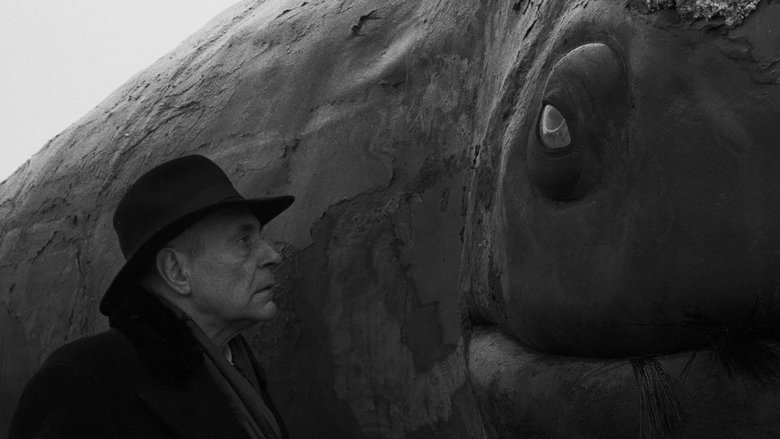
In the aftermath, the new order, orchestrated by Tünde, swiftly takes control. The military arrives to restore a brutal form of 'cleanliness'. János, who witnessed the riot, is found and committed to a mental institution, his mind shattered by the horror he has seen. In the film's closing scenes, György Eszter visits the now catatonic János and reveals his own defeat: he has been evicted from his house and has retuned his piano to the standard Werckmeister harmonies, abandoning his lifelong philosophical resistance. The final shot shows György walking through the now-empty town square, past the desecrated and abandoned whale, a final, bleak image of the utter devastation of both the town's physical landscape and its soul.

Alternative Interpretations

While often read as a political allegory about the failure of ideologies and the rise of fascism, Werckmeister Harmonies invites several alternative interpretations due to its ambiguous and symbolic nature.

A Metaphysical and Religious Parable: One interpretation views the film through a religious or metaphysical lens. The giant, dead whale can be seen as the carcass of God or a fallen idol, its arrival signifying a spiritual apocalypse. The townspeople, lost without a divine order, descend into nihilistic chaos. János, in this reading, is a Christ-like figure of innocence whose purity is ultimately sacrificed in a world that has lost its faith. The final shot of the ruined whale in the empty square becomes a symbol of this spiritual void.

A Psychological Drama: The film can also be interpreted as an exploration of collective psychology. The town is a closed system, and the arrival of the circus acts as an external stimulus that triggers a mass hysteria. The "Prince" is not a political leader but a projection of the crowd's latent anger and desire for destruction. The violence is not ideologically motivated but is a primal, irrational outburst against the perceived constraints of civilization itself. The riot in the hospital, which halts abruptly at the sight of a frail, naked old man, suggests a sudden, shocking confrontation with humanity's own vulnerability, momentarily breaking the spell of collective rage.

An Artistic Manifesto: On a meta-level, the film can be seen as Tarr's commentary on art and representation. György Eszter's quest to reject the "false" harmonies of Werckmeister for a more "natural" tuning reflects the filmmaker's own rejection of conventional cinematic storytelling (e.g., fast editing, clear plot points) in favor of a more immersive, temporal reality. The film's long takes force the viewer to experience time and space in a way that conventional cinema does not, attempting to create a "purer" or more authentic cinematic experience, much like the musical harmony Eszter seeks. The bleak ending could symbolize the ultimate failure or impossibility of achieving such pure artistic expression in a compromised world.