
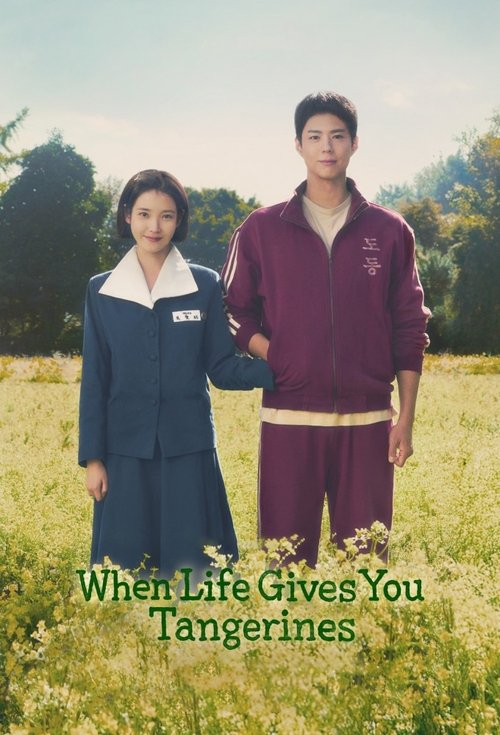
When Life Gives You Tangerines
A heart-aching, multi-generational Korean saga of enduring love, painted with the vibrant hues of Jeju Island's seasons and the bittersweet taste of tangerines.
When Life Gives You Tangerines

폭싹 속았수다

"Dedicated to you. Still blooming, always dreaming."

07 March 2025 — 28 March 2025 South Korea 1 season 16 episode Ended ⭐ 8.8 (399)
Cast: IU, Park Bo-gum, Moon So-ri, Park Hae-joon, Yeom Hye-ran
Drama
Enduring Love and Sacrifice Generational Divides and Reconciliation Dreams vs. Reality The Scars of History

When Life Gives You Tangerines - Ending Explained

⚠️ Spoiler Analysis

The series finale brings the decades-long story to a poignant close. A major reveal is that Gwan-sik is diagnosed with multiple myeloma, a type of blood cancer, which he learns was caused by his long-neglected rheumatoid arthritis. This illness frames the final arc of their lives together.

The question of who the daughter, Geum-myeong (also played by IU), marries is resolved. After being laid off during the IMF crisis, she has a fateful reunion with her former love interest, Chung-seob (played by Kim Seon-ho). He pursues her earnestly, and they eventually marry with her parents' blessing. Geum-myeong goes on to become a successful CEO of an online lecture company.

The most significant and heartbreaking moment of the finale is the fulfillment of Gwan-sik's lifelong promise to Ae-sun. Before he passes away, he ensures that a collection of her poems, which she had written throughout her life, is published. This ultimate act of love solidifies the central theme of his unwavering devotion. He dies having enabled her to finally achieve her childhood dream, proving his entire life was a testament to his love for her. The series ends by affirming that their enduring love story, forged through immense hardship, is their greatest legacy.

Alternative Interpretations

While the dominant interpretation of the series celebrates the beauty of Gwan-sik's selfless, lifelong devotion to Ae-sun, some viewers have offered a more critical perspective. This alternative reading questions whether Gwan-sik's complete sacrifice of his own ambitions for Ae-sun's is truly romantic or a depiction of a life unlived. This interpretation suggests the story could also be seen as a bittersweet tragedy, highlighting how societal expectations and relentless hardship can force individuals into lives of quiet desperation, even when rooted in love. Furthermore, some audience discussions have focused on the characterization of the children, particularly Geum-myeong, interpreting her initial attitude not as youthful ignorance but as a realistic portrayal of the generational disconnect felt by those raised in relative comfort by parents who endured extreme poverty.