
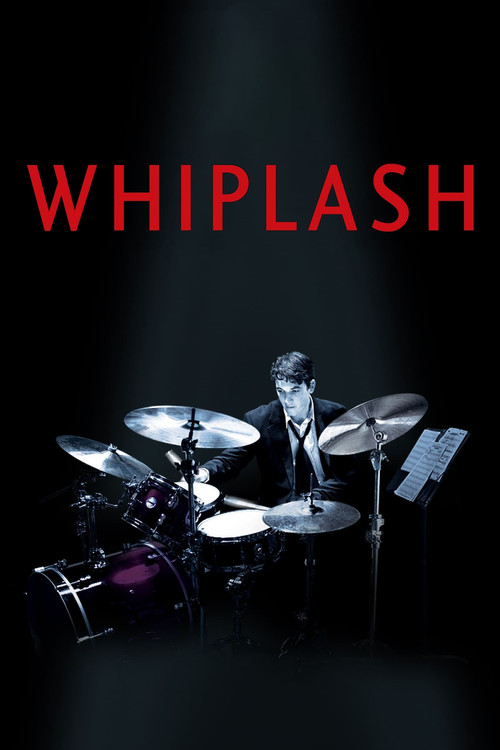
"The road to greatness can take you to the edge."
Director: Damien Chazelle
Cast: Miles Teller, J.K. Simmons, Paul Reiser, Melissa Benoist, Austin Stowell
Whiplash — Movie Quotes
Memorable Quotes
There are no two words in the English language more harmful than 'good job'.
Context
Fletcher says this to Andrew during their conversation at a jazz club after Fletcher has been fired from Shaffer. He is explaining and defending his abusive teaching style, arguing that it is a necessary evil to push students beyond what is expected of them.
Meaning
This line encapsulates Fletcher's entire philosophy. He believes that praise breeds complacency and mediocrity. For him, the path to greatness is paved with dissatisfaction and relentless self-critique, and any form of encouragement is a roadblock on that path. It's the core justification for his cruel methods.
Not quite my tempo.
Context
This is a recurring line throughout the film, used in various rehearsals. Most notably, it's used in the scene where Fletcher repeatedly stops the band and terrorizes Andrew, throwing a chair and slapping him in an effort to get him to play the correct tempo for the song "Whiplash."
Meaning
This seemingly simple phrase becomes Fletcher's most potent psychological weapon. It is a cold, dismissive, and constant reminder of his impossible standards. The line represents his absolute control and his ability to crush a student's confidence with just four words, symbolizing the constant, unattainable perfection that Andrew is chasing.
I'd rather die drunk, broke at 34 and have people at a dinner table talk about me than live to be rich and sober at 90 and nobody remembered who I was.
Context
Andrew says this during a family dinner when his relatives are praising his cousins for their modest achievements in sports and academics while dismissing his dedication to drumming. It is his passionate defense of his life's purpose and a rejection of his family's conventional values.
Meaning
This quote reveals the depth of Andrew's ambition and his profound fear of an ordinary, forgotten life. It shows that he values legacy above all else—including happiness, stability, and longevity. This mindset allows him to justify the immense suffering he endures and inflicts upon himself.
Were you rushing or were you dragging?
Context
Fletcher asks this of Andrew during an early, intense rehearsal of the piece "Whiplash." When Andrew is unable to answer correctly, Fletcher explodes in rage, eventually hurling a chair at his head. The line is iconic for its simmering menace and the violent outburst that follows.
Meaning
This question is not a genuine inquiry but a trap. It's a classic example of Fletcher's manipulative tactics, designed to corner and humiliate his students. There is no correct answer; any response gives Fletcher an opening to launch into a tirade. It demonstrates that his goal is not to teach, but to establish dominance and break the student's will.
Explore More About This Movie
Dive deeper into specific aspects of the movie with our detailed analysis pages