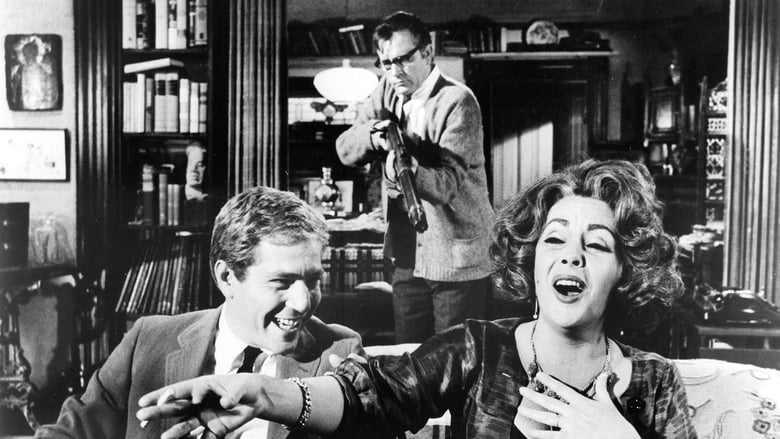
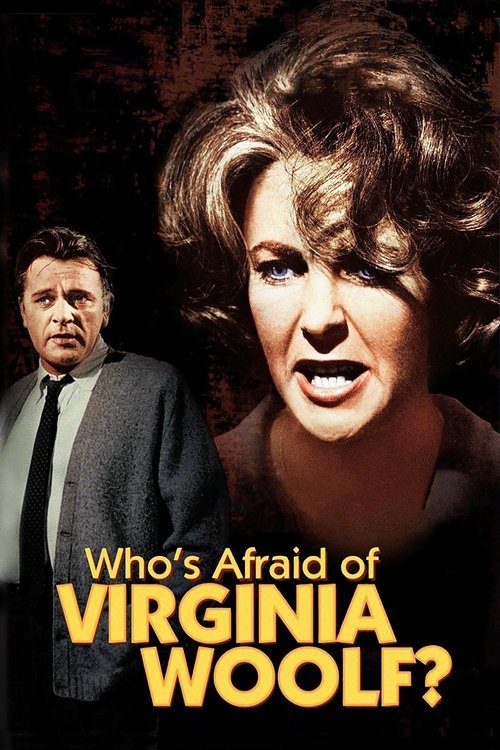
"You are cordially invited to George and Martha's for an evening of fun and games"
Who's Afraid of Virginia Woolf? - Symbolism & Philosophy
Symbols & Motifs
The Imaginary Son
Represents the shared delusion that binds George and Martha. He is the symbol of their creation, their hope, and their ultimate failure to produce anything 'real' together.
Discussed reverently by Martha, used as a weapon, and finally 'killed' by George in the film's climax.
New Carthage
The fictional college town name references the ancient city destroyed by Rome (and salted to be barren), symbolizing the spiritual and emotional sterility of the characters' environment.
The setting of the film, constantly referred to as a place of confinement and stagnation.
Alcohol
A truth serum and a numbing agent. It strips away social veneers, fueling the 'games' while simultaneously allowing the characters to endure their pain.
Consumed incessantly throughout the film; the characters are rarely seen without a glass, marking the progression of their descent.
Snapdragons
Symbolize 'flowers for the dead' and the warding off of evil. They foreshadow the 'death' of the son and the exorcism of the illusion.
George throws them at Martha and Nick in a manic display while reciting a Latin requiem mass.
Philosophical Questions
Is a comforting lie better than a harsh truth?
The film relentlessly asks if humans can survive without illusion. George's destruction of the fantasy suggests that while truth is necessary for sanity, it leaves us 'afraid' and vulnerable in the cold light of reality.
What defines a 'real' relationship?
Despite their hatred and abuse, George and Martha have a deep, twisted bond. The film challenges the notion of a 'happy' marriage, suggesting that their shared battle is a form of profound, albeit toxic, intimacy that the superficial Nick and Honey lack.
Core Meaning
At its heart, the film is a brutal examination of the human necessity for illusion to survive the pain of reality. It posits that truth, while purifying, can be destructive. The director explores whether love can exist without the protective lies couples construct, suggesting that stripping away these fabrications—the "exorcism"—is a terrifying but necessary act to reach genuine connection, even if that connection is born of shared despair.