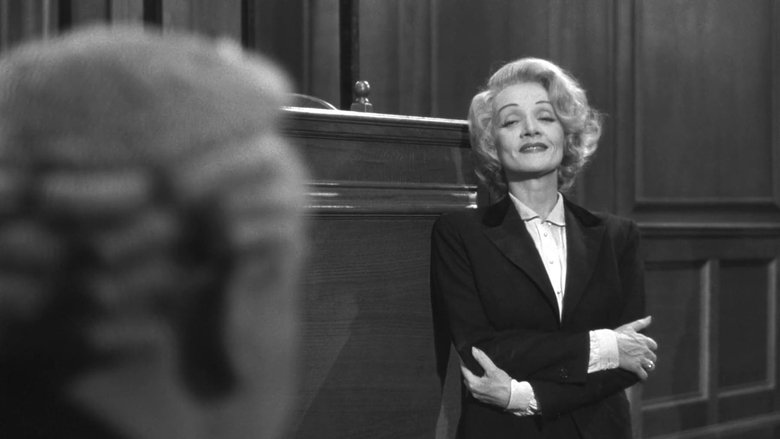
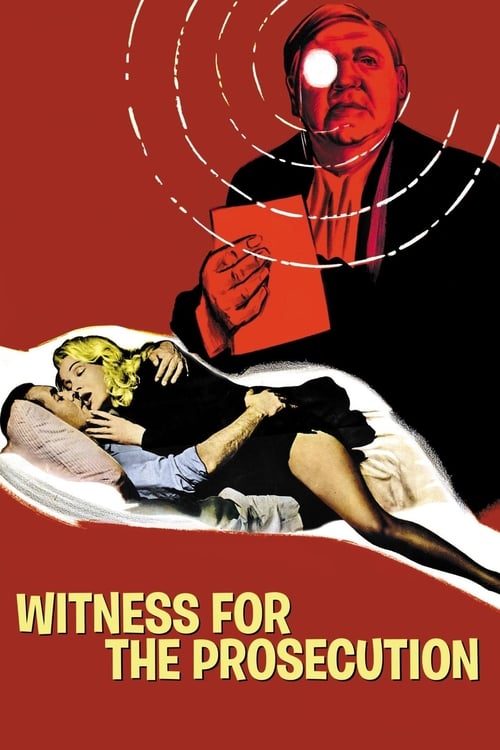
The entire plot of "Witness for the Prosecution" is a meticulously constructed deception orchestrated by Christine Vole to free her husband, Leonard. The first major twist comes after Christine gives a cold, damning testimony against Leonard, claiming he confessed the murder to her. Later, Sir Wilfrid is contacted by a mysterious Cockney woman who, for a price, provides him with love letters written by Christine to a secret lover named Max. In these letters, she confesses her hatred for Leonard and reveals her plan to lie in court to get him convicted so she can be with Max.
Sir Wilfrid uses these letters in court to destroy Christine's credibility. He portrays her as a vengeful, perjuring wife, leading the jury to disregard her testimony. Leonard Vole is subsequently acquitted. This is the first climax and apparent victory.
However, the true, stunning twist follows immediately. Alone in the now-empty courtroom, Christine confesses to Sir Wilfrid that the entire scheme was her invention. There is no lover named Max; she wrote the letters herself. She knew that simply providing an alibi as a loving wife would be dismissed, so she created a scenario where she would appear as a hateful, discredited witness. By having her own testimony impeached through the 'discovered' letters, she ensured Leonard's acquittal. She even played the part of the Cockney woman herself in disguise.
As Sir Wilfrid marvels at her brilliance, the final, most shocking twist unfolds. A smug Leonard Vole confirms to Christine that he did, in fact, murder Mrs. French. He then callously reveals he is leaving her for a younger woman. Heartbroken and betrayed, Christine grabs a knife (which had been exhibit A) and fatally stabs Leonard in the courtroom. Stunned but invigorated, Sir Wilfrid cancels his vacation plans, announcing he will take on Christine's defense. This ending reveals that the 'innocent' man was guilty, the 'hateful' wife was devoted, and the brilliant lawyer was a pawn, with true justice only being served extralegally in the film's final moments.