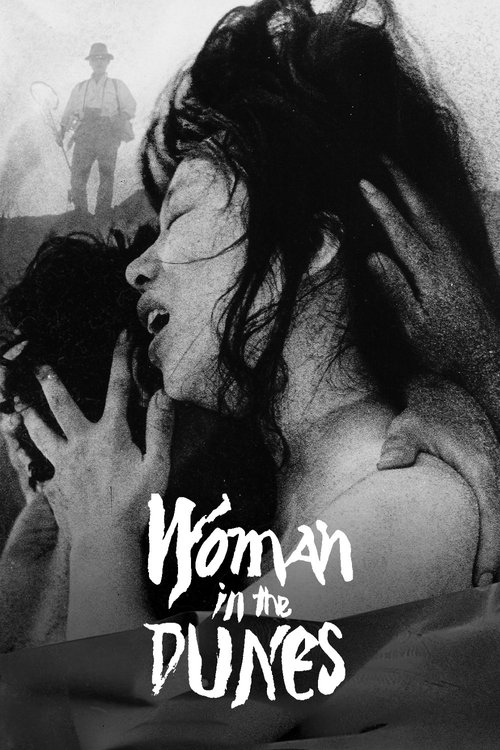
砂の女
"Haunting. Erotic. Unforgettable."
Director: Hiroshi Teshigahara
Cast: Eiji Okada, Kyôko Kishida, Hiroko Itō, Kōji Mitsui
Woman in the Dunes — Movie Quotes
Memorable Quotes
Are you shoveling to survive, or surviving to shovel?
Context
This is said during one of Junpei's early periods of frustration and rebellion, as he tries to make the woman see the futility of her unquestioning acceptance of their fate. He cannot yet understand her resignation and is desperately trying to cling to the idea that life must have a purpose beyond endless, seemingly pointless toil.
Meaning
This question encapsulates the central existential crisis of the film. Junpei poses it to the woman, challenging the seeming meaninglessness of their repetitive labor. It probes the difference between work as a means to an end (survival) and work becoming the end itself, a cyclical, absurd existence. It is the question every person in a monotonous, modern society might ask themselves.
If you were to give up a fixed position and abandon yourself to the movement of the sands, competition would soon stop.
Context
This realization occurs late in the narrative, after Junpei has stopped fighting his circumstances. It signifies his intellectual and spiritual surrender to his environment, a move from resistance to adaptation. He begins to see the sand not just as an enemy but as a force with its own laws, which one can live with rather than against.
Meaning
This quote, more explicit in the novel, reflects Junpei's ultimate philosophical shift. It suggests that struggle, anxiety, and conflict arise from clinging to a fixed identity and resisting the inevitable flow of life (symbolized by the sand). By accepting fluidity and change, one can find a form of peace and escape the 'competition' of a goal-oriented, conventional life.
Without the threat of punishment, there is no joy in flight.
Context
This thought comes to Junpei as he contemplates his situation. It foreshadows his eventual indifference to escape. When the ladder is finally available and there is no one to stop him, the 'flight' has lost its meaning. The joy was in the struggle against his captors, not in the simple act of leaving.
Meaning
This quote explores the paradoxical nature of freedom. It implies that the desire to escape is defined and given value by the very existence of captivity. Freedom is not an absolute state but is rendered meaningful by its opposite. Once the possibility of punishment or failure is removed, the act of escaping loses its thrill and, perhaps, its purpose.
Explore More About This Movie
Dive deeper into specific aspects of the movie with our detailed analysis pages