
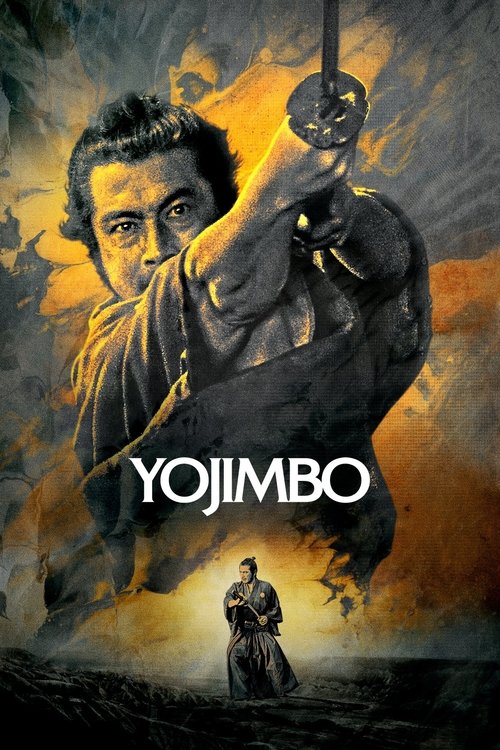
用心棒
"Kill one or a hundred... you only hang once"
Director: Akira Kurosawa
Cast: Toshirō Mifune, Tatsuya Nakadai, Yōko Tsukasa, Isuzu Yamada, Daisuke Katō
Yojimbo — Movie Quotes
Memorable Quotes
Cooper. Two coffins... No, maybe three.
Context
After initially being mocked by a group of Seibei's gangsters, Sanjuro demonstrates his skill by killing two of them and severing the arm of a third. He then turns to the stunned coffin maker and places his grimly comic order, cementing his reputation in the town.
Meaning
This iconic line, delivered calmly after Sanjuro swiftly cuts down several gangsters, perfectly encapsulates his cool detachment, confidence, and the dark humor that pervades the film. It establishes his deadly efficiency and his cynical acceptance of the violence that defines the town.
I'll get paid for killing, and this town is full of people who deserve to die.
Context
Sanjuro says this to the tavern keeper Gonji, explaining his decision to get involved in the town's gang war. It reveals his cynical worldview and sets up his morally ambiguous plan to pit the two factions against each other.
Meaning
This quote bluntly states Sanjuro's initial, mercenary justification for staying in the corrupt town. It highlights his anti-hero status; he is not a noble hero on a quest for justice, but a pragmatist who sees an opportunity to profit from cleansing a town of its evil.
Kill one or a hundred. You only hang once.
Context
Orin says this to her husband Seibei while they are plotting, urging him to be decisive and ruthless in his actions against Ushitora. It shows that she is one of the driving forces behind the conflict.
Meaning
Spoken by Seibei's ambitious and ruthless wife, this line reveals the absolute moral bankruptcy of the town's leaders. It's a pragmatic and chilling expression of the idea that once a line has been crossed, the scale of the crime becomes irrelevant.
Now we'll have some peace and quiet in this town.
Context
After the final showdown where he eliminates Ushitora, Unosuke, and the rest of their gang, Sanjuro surveys the carnage. Before departing, he utters this line to the terrified but surviving townspeople, leaving them with a brutally clean slate.
Meaning
This is Sanjuro's final assessment of his handiwork, delivered with heavy irony as he stands in a street littered with the corpses of the gangsters he has just killed. It underscores the film's cynical take on peace, suggesting that sometimes the only way to achieve it is through total annihilation of the corrupt elements.
Explore More About This Movie
Dive deeper into specific aspects of the movie with our detailed analysis pages