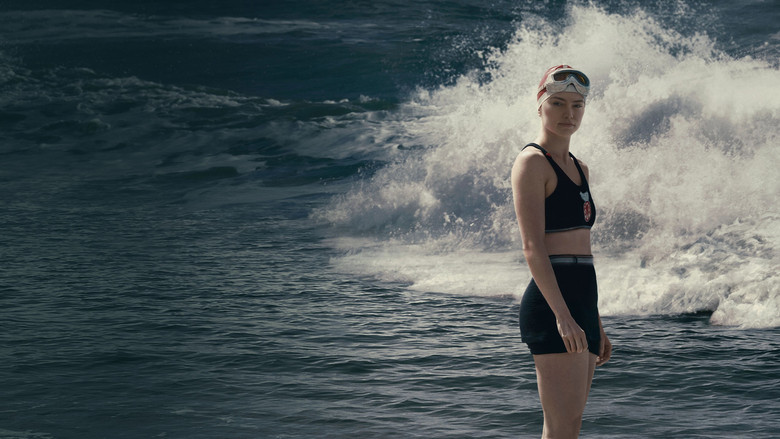
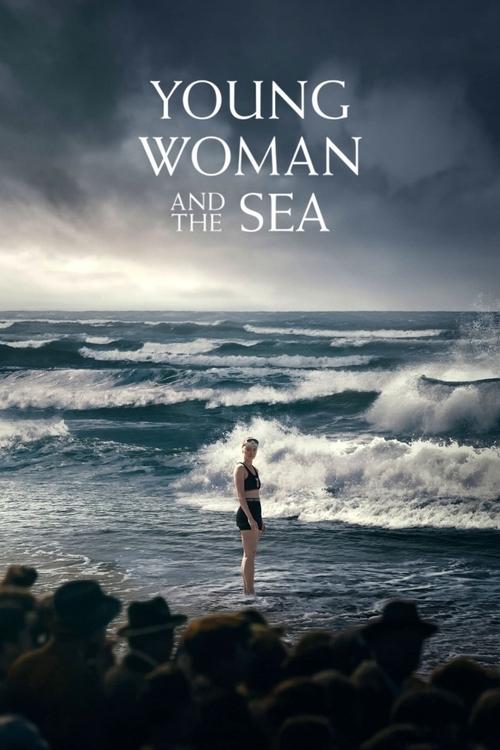
"Young Woman and the Sea" culminates in Trudy Ederle's successful crossing of the English Channel, a triumphant moment that solidifies her place in history. The film builds to this climax by detailing her two attempts. Her first try is maliciously sabotaged by her own coach, Jabez Wolffe. Jealous of her potential and resentful of a woman attempting such a feat, he drugs her tea with seasick pills, causing her to become disoriented and forcing her to be pulled from the water.
Devastated but not defeated, Trudy rejects the order to return to America. In a dramatic moment, she jumps from the porthole of the ship meant to take her home to join her new coach, Bill Burgess, her father, and her sister, who are waiting in a boat. This sets up her second, successful attempt just a few weeks later. The final swim is depicted as an arduous and perilous journey. She battles not only extreme fatigue and the freezing water but also a swarm of jellyfish that leave her body covered in stings and the terrifying darkness of the shallows where her guide boat cannot follow. Guided by bonfires lit on the English coast, she finally reaches the shore, becoming the first woman to cross the Channel and beating the men's record by two hours. The film concludes with archival footage of the massive ticker-tape parade held in her honor in New York, revealing she went on to teach swimming to deaf children after losing her hearing completely, and passed away in 2003 at the age of 98.
A key hidden meaning that becomes clear is that Trudy's swim was never just about athletics. It was a symbolic victory against a society that sought to limit her. Each stroke was an act of defiance, and her success becomes a resounding statement on the capabilities of women, forever changing the landscape of women's sports.