Zoids: Chaotic Century
A sprawling sci-fi odyssey where the bond between pilot and living machine weathers the storm of continental war, painting a vibrant, mechanically animated world with strokes of adventure and hope.
Zoids: Chaotic Century

Zoids: Chaotic Century

ゾイド

04 September 1999 — 23 December 2000 Japan 1 season 67 episode Ended ⭐ 8.6 (352)
Cast: Daisuke Kishio, Makiko Ohmoto, Mitsuki Saiga, Takuma Suzuki, Gara Takashima
Animation Sci-Fi & Fantasy Action & Adventure Comedy
The Horrors and Futility of War The Bond Between Humans and Zoids Discovery of the Past Rivalry and Redemption

Overview

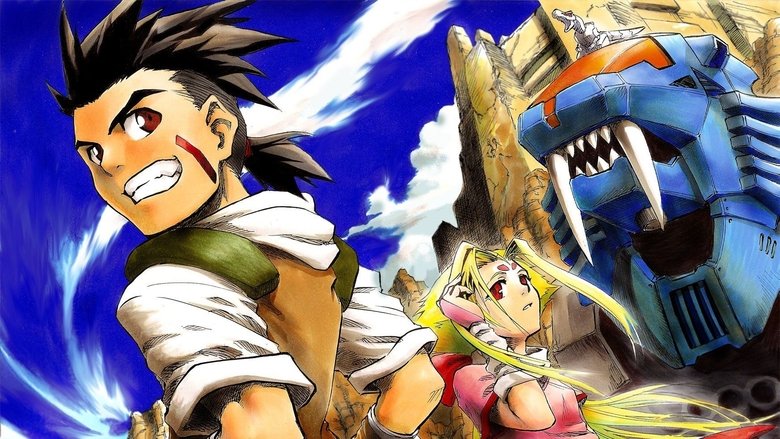
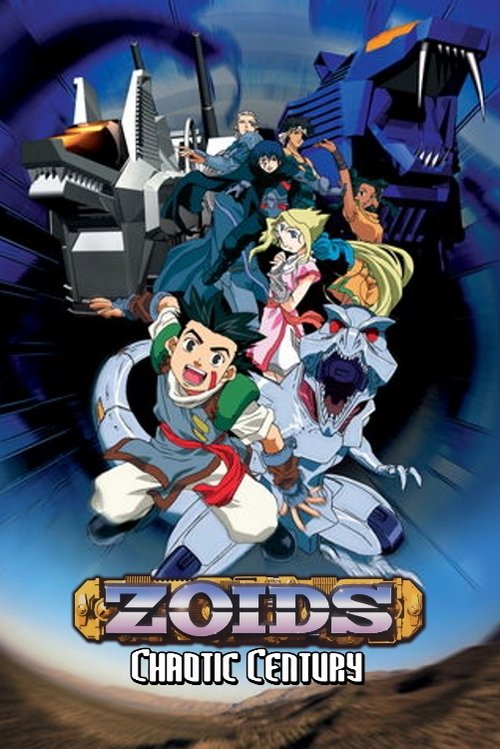
Zoids: Chaotic Century is set on the distant planet Zi, where metallic lifeforms known as Zoids are utilized as weapons of war by the rival Helic Republic and Guylos Empire. The story is split into two major arcs. The first, 'Chaotic Century', follows a young villager named Van Flyheight who discovers a small, powerful Zoid called an Organoid, which he names Zeke, and an amnesiac girl named Fiona in ancient ruins. Together, with the help of a transporter named Moonbay and a mercenary, Irvine, they embark on a journey to uncover Fiona's past and the location of the mysterious 'Zoid Eve'. Their personal quest soon becomes entangled in the escalating war between the Republic and the Empire, masterminded by the ambitious Imperial Regent Prozen, who seeks the power of the legendary and destructive Death Saurer.

The second arc, known as 'Guardian Force', takes place two years after the defeat of the Death Saurer. A fragile peace has been established, and a joint Republic-Empire task force, the Guardian Force, is created to maintain it. Van and Fiona, now older and more experienced, join this force alongside new allies like the Imperial pilot Thomas Schubaltz. They must contend with new, mysterious threats, including two ancient Zoidians, Hiltz and Reese, who possess their own Organoids and seek to revive an even greater menace, the Death Stinger, to fulfill their own apocalyptic goals tied to the secrets of Zoid Eve and the planet's ancient history.
Core Meaning

The core meaning of Zoids: Chaotic Century revolves around the corrupting nature of war and the redemptive power of bonds and understanding. The series consistently argues against the use of Zoids—living creatures—as mere tools of destruction, highlighting the personal connections the protagonists form with their partners. It explores how ambition and a lust for power, personified by villains like Prozen and Hiltz, can lead to catastrophic consequences, nearly destroying the world. Ultimately, the narrative champions cooperation over conflict, as former enemies from the Republic and Empire must unite to face greater threats. The search for 'Zoid Eve' serves as a driving metaphor for finding a path back to a more natural, peaceful existence, emphasizing that true strength lies not in superior firepower, but in trust, friendship, and respecting life in all its forms.

Thematic DNA

The Horrors and Futility of War 35%
The Bond Between Humans and Zoids 30%
Discovery of the Past 20%
Rivalry and Redemption 15%

The Horrors and Futility of War

The series opens in the aftermath of a brutal war and quickly depicts the slide back into a new conflict. It consistently portrays war not as glorious, but as a destructive force that scars landscapes and lives. Characters like Van and Irvine are directly affected by past conflicts, shaping their initial motivations. The primary antagonist of the first arc, Prozen, embodies the political ambition that fuels war, manipulating events to seize power and restart hostilities for his own gain. The second arc expands on this by showing that even in peacetime, remnants of conflict and extremist ideologies (represented by Hiltz) can threaten to plunge the world back into chaos, suggesting that peace is a fragile state requiring constant vigilance and cooperation.

The Bond Between Humans and Zoids

A central tenet of the series is that Zoids are living beings, not just machines. Van's relationship with Zeke and his Shield Liger is presented as a partnership built on mutual trust and respect. This contrasts sharply with antagonists like Raven, who initially treats his Zoids as disposable tools, a perspective he must overcome. The Organoids, especially Zeke, are the ultimate symbol of this theme, acting as a bridge that unlocks a Zoid's true potential through a symbiotic fusion, rather than forced control. This theme suggests that true strength comes from understanding and cooperation with nature, not its domination.

Discovery of the Past

Fiona's amnesia and the search for Zoid Eve are the main drivers of the plot. Her journey is one of rediscovering a forgotten history of the Ancient Zoidians, a civilization that faced a catastrophe due to its own creations—the Death Saurer. This theme is explored through the discovery of ancient ruins, cryptic messages, and the gradual return of Fiona's memories. It serves as a cautionary tale, showing how the mistakes of the past can resurface and threaten the present, and that understanding history is crucial to avoiding its repetition. The very existence of powerful, forgotten Zoids like the Death Saurer and Death Stinger underscores this danger.

Rivalry and Redemption

The dynamic between Van and his rival, Raven, is a cornerstone of the character development. Raven is introduced as a cold, immensely skilled, and ruthless pilot who serves as a dark mirror to Van's more compassionate approach. Their recurring battles push Van to grow stronger. Over the series, particularly in the Guardian Force arc, Raven's backstory is explored, revealing the trauma that shaped him. His arc is one of gradual redemption, moving from a nihilistic antagonist to a reluctant ally who ultimately fights alongside Van to save the world, demonstrating that even the most hardened individuals can change.

Character Analysis

Van Flyheight

Daisuke Kishio

Archetype: The Hero
Key Trait: Optimistic and Empathetic

Motivation

Initially, his motivation is a mix of youthful adventure and a promise to help Fiona find her memories and the mysterious Zoid Eve. As he becomes embroiled in the war, his motivation shifts to protecting his friends and the innocent from the conflict's devastation. In the second half of the series, his goal evolves into a broader desire to maintain the fragile peace he helped achieve and prevent a planetary-scale catastrophe, showing his growth from personal quests to global responsibility.

Character Arc

Van begins as a spirited but naive boy from a remote village, dreaming of becoming a Zoid pilot like his late father. His discovery of Zeke and Fiona thrusts him into a world of adventure and war. Initially, he is driven by a simple desire to help Fiona and protect his friends, but he struggles against more experienced pilots like Raven. Across the first arc, he matures through battle and hardship, learning the weight of his actions and solidifying his belief in treating Zoids as partners. By the Guardian Force arc, he has become a skilled and confident ace pilot in the military, yet retains his core compassion. His journey culminates in him becoming the primary defender of Planet Zi, leading the charge against the revived Death Saurer and fully realizing his father's legacy.

Fiona (Fine)

Makiko Ohmoto

Archetype: The Mystic
Key Trait: Inquisitive and Mysterious

Motivation

Her primary motivation is to recover her lost memories and understand her purpose, a quest encapsulated by her singular focus on finding 'Zoid Eve'. This personal journey aligns with the main plot, as her past holds the key to the series' greatest mysteries and threats. Over time, her motivation becomes less about her own past and more about using her unique knowledge to protect the future and the bond between people and Zoids, especially her deep connection to Van.

Character Arc

Fiona is introduced as a classic amnesiac, a blank slate with a mysterious connection to the name 'Zoid Eve'. Her arc is one of self-discovery. Initially passive and dependent on Van, she gradually gains confidence and knowledge as her memories slowly return. She is revealed to be an Ancient Zoidian, placed in stasis to survive a past apocalypse. In the first arc, she helps revive the Blade Liger and understands the danger of the Death Saurer. By the Guardian Force arc, she has become a brilliant and proactive researcher, actively deciphering ancient secrets. Her journey is completed when she regains her full memories and understands her role in stopping the destruction of Planet Zi, transforming from a girl without a past into a key figure holding the planet's future.

Raven

Mitsuki Saiga

Archetype: The Rival/Anti-Hero
Key Trait: Intense and Traumatized

Motivation

Raven is initially motivated by a simple, brutal desire to be the strongest and to prove his superiority, a goal fueled by his traumatic past and Prozen's manipulation. He seeks power to overcome the helplessness he felt as a child. His motivation evolves as he begins to question his purpose beyond just fighting. The desire to protect Reese and his grudging respect for Van eventually supplant his nihilistic drive, leading him to find a new reason to fight: not for power, but for a future he can be a part of.

Character Arc

Raven is introduced as a prodigious but cruel and emotionally detached Zoid pilot, viewing his Organoid, Shadow, and his Zoids as mere tools for victory. He serves as Van's primary rival, consistently defeating him and forcing him to grow. His past is revealed to be tragic; his parents were killed by Zoids, and he was raised by Prozen to be a weapon, instilling in him a deep-seated hatred and nihilism. His bond with Shadow is a twisted reflection of Van's with Zeke. Throughout the series, particularly after Prozen's defeat, Raven begins a slow path to redemption. He is forced to confront his past and his methods, and through his continued rivalry with Van and his interactions with Reese, he slowly rediscovers his humanity. In the final battle against the Death Saurer, he chooses to fight alongside Van, completing his transformation from a vengeful antagonist to a complex anti-hero who fights to protect the world.

Irvine

Keiji Fujiwara

Archetype: The Loner
Key Trait: Cynical but Loyal

Motivation

His initial motivation is purely selfish: to capture Zeke for fame and fortune. This quickly proves to be a superficial goal. His deeper motivation is revealed to be a desire to find a purpose and perhaps atone for his mercenary past. By joining Van, he finds a cause worth fighting for that goes beyond personal gain, eventually dedicating himself to protecting his friends and ensuring a peaceful future.

Character Arc

Irvine starts as a cynical, sharp-tongued mercenary whose sole interest is capturing the rare Organoid, Zeke, for himself, putting him in direct conflict with Van. He is portrayed as tough and self-reliant, keeping others at arm's length. However, after traveling with Van's group, his hardened exterior begins to crack. He reveals a more caring side, particularly in his loyalty to his sister and his growing protectiveness of the group. He transitions from an antagonist to a steadfast ally and a mentor figure to Van. His arc involves letting go of his solitary path and embracing the camaraderie of his new friends, becoming a crucial member of the team whose experience often guides them through danger.

Symbols & Motifs

Organoids

Meaning:

Organoids symbolize the ultimate potential and innate life force of Zoids. They represent a deeper, almost mystical connection between a pilot and their Zoid, capable of healing, resurrecting, and even evolving their partners into more powerful forms. They also serve as living repositories of ancient Zoidian memories, linking the present to the distant past.

Context:

They are central to the entire series. Van's discovery of Zeke kickstarts his journey. The four main Organoids—Zeke (silver), Shadow (black), Ambient (red), and Specula (blue)—are partnered with the series' most significant pilots (Van, Raven, Hiltz, and Reese), with their color often reflecting their pilot's disposition. Their ability to fuse with Zoids is a recurring and critical plot device in major battles.

Zoid Eve

Meaning:

Zoid Eve symbolizes the source of all Zoid life on Planet Zi. It represents a powerful, primordial force of creation and nature. The quest for it is a quest for knowledge, memory, and ultimately, a way to restore balance to the world. It is a double-edged sword: a source of immense life-giving energy, but also a power that villains seek to control or destroy for their apocalyptic ambitions.

Context:

The search for Zoid Eve is Fiona's primary motivation throughout the series. It is initially a complete mystery, but as her memories return, it is revealed to be a powerful entity/location that the Ancient Zoidians sealed away to protect it and contain the Death Saurer. The final confrontation of the series takes place at its location, Evopolis, where the fate of all Zoids is decided.

The Death Saurer

Meaning:

The Death Saurer is the ultimate symbol of unchecked ambition and the catastrophic potential of using living beings as weapons of mass destruction. It is a force of pure annihilation, an apocalyptic beast created by the Ancient Zoidians to end wars, which instead threatened to destroy everything. Its revival represents the culmination of the villains' desire for ultimate power and the greatest threat to Planet Zi.

Context:

Prozen's primary goal in the first arc is to clone and revive the Death Saurer. The fight against his imperfect clone forms the climax of the 'Chaotic Century' arc. In the 'Guardian Force' arc, the original Death Saurer's core becomes the catalyst for the series' final antagonist, merging with Hiltz and the Death Stinger to be reborn, forcing a final, desperate battle by all the main characters to prevent the end of the world.

Episode Highlights

The Boy from Planet Zi

S1E1

The inaugural episode introduces the protagonist, Van Flyheight, and the world of Planet Zi. While fleeing bandits, he discovers the Organoid Zeke and the abandoned Shield Liger. This episode sets the entire series in motion, establishing the fundamental bond between a pilot, an Organoid, and a Zoid that defines the show.

Significance:

It lays the groundwork for the entire narrative: Van's destiny as a pilot, the unique power of Organoids, and the beginning of the quest that leads him to Fiona and the central conflict. The revival of the Shield Liger is the series' first iconic moment.

The Mysterious Fiona

S1E2

Van returns to the ruins and discovers the second pod containing Fiona, a girl with no memories. This episode establishes the core mystery of the series—Fiona's identity and her connection to 'Zoid Eve'—and solidifies Van's decision to leave his village and embark on his adventure.

Significance:

Fiona's introduction provides the central plot driver for the entire 67-episode run. It shifts Van's journey from a simple dream of being a pilot to a quest filled with purpose and mystery.

The Demon of the Abyss

S1E21

Van's Shield Liger is destroyed in a devastating battle against Raven's new and overwhelmingly powerful Geno Saurer. This marks Van's most significant defeat and a major turning point in his development, forcing him to confront his own limitations.

Significance:

This episode is crucial as it leads directly to the birth of the series' most iconic Zoid. The destruction of the Shield Liger paves the way for Zeke and Fiona to resurrect it as the much stronger Blade Liger, symbolizing Van's growth and giving him the power needed to challenge Raven.

The Capital Collapses

S1E33

Prozen's plan comes to fruition as he unleashes the cloned Death Saurer upon the Imperial Capital, Guygalos. The combined forces of the Empire and the Republic are powerless against its rampage. Van and his newly evolved Blade Liger must face the monster in a climactic showdown.

Significance:

This is the finale of the first major story arc. Van's victory over the Death Saurer marks his transition into a true hero and brings a temporary end to the war, setting the stage for the 'Guardian Force' era.

The Secret Mission

S2E35

Taking place two years after the war, this episode reintroduces an older, more mature Van as a member of the Helic army. It establishes the new status quo of peace and the formation of the Guardian Force, while also bringing Van and Fiona back together to resume their search for Zoid Eve.

Significance:

This episode effectively launches the 'Guardian Force' arc, introducing new characters like Thomas Schubaltz and setting up the new central conflict against mysterious ancient forces that threaten the newfound peace.

The Awful Organoid

S2E56

The main antagonist of the second arc, Hiltz, reveals his ultimate creation: the Death Stinger. This terrifying Zoid is born from the fusion of two scorpion-type Zoids that were guardians of the Death Saurer. Its overwhelming power is demonstrated as it easily defeats multiple opponents.

Significance:

The introduction of the Death Stinger establishes the new primary threat, a Zoid even more dangerous and versatile than the Geno Breaker. It raises the stakes for the final act of the series, requiring the heroes to find a new level of power to combat it.

The Dragon of Destruction

S2E64

The heroes confront the Death Stinger with their ultimate weapon, the massive Ultrasaurus and its Gravity Cannon. The episode is a massive-scale battle showcasing the full power of the Guardian Force and their allies against Hiltz's devastating Zoid.

Significance:

This episode represents the height of the military conflict in the second arc. The use of the Gravity Cannon is a pivotal moment, but Hiltz's survival and subsequent fusion with the Death Saurer's core sets the stage for the true final battle.

The Final Battle

S2E67

In the series finale, Hiltz merges with the original Death Saurer core, resurrecting the apocalyptic Zoid in its true form. Van, in his Blade Liger, must fight the ultimate battle for the fate of Planet Zi. In a climactic moment, he is joined by his rival Raven, and they fight together to stop the monster.

Significance:

This episode concludes the entire saga. It resolves the series-long threat of the Death Saurer, completes the character arcs for Van and Raven, and provides a definitive, hopeful ending to the story, with peace restored to Planet Zi.

Philosophical Questions

What is the nature of the relationship between a soldier and their weapon?

The series explores this question by defining Zoids as living beings rather than inanimate machines. Van Flyheight's core philosophy is that his Zoid is a partner, a friend to be trusted and respected. This contrasts with the initial viewpoint of his rival Raven and the military empires, who see Zoids as expendable tools of war. The Organoids, which fuse with Zoids based on a pilot's will and bond, are the ultimate expression of this philosophical divide. The show consistently argues that treating one's 'weapon' with empathy and as an extension of oneself leads to greater strength and a more moral outcome, questioning the dehumanizing nature of warfare where tools are meant to be used and discarded.

Can the mistakes of a technologically advanced past be overcome?

This question is central to the plot surrounding the Ancient Zoidians. They were a highly advanced civilization that created the ultimate weapon, the Death Saurer, which led to their own downfall. The protagonists of the present are constantly dealing with the fallout of this ancient mistake—unearthing forgotten superweapons and facing descendants of the past (Hiltz, Reese, Fiona) who are driven by its legacy. The series suggests that the past is never truly dead and that technological hubris creates dangers that can echo for millennia. The only way to overcome these mistakes is through cooperation and a conscious choice to not repeat them, as seen when the modern Republic and Empire must unite to defeat the very weapon their predecessors created and feared.

Alternative Interpretations

One alternative interpretation focuses on the nature of Zoids as a critique of technological advancement and warfare. In this view, the Zoids are not just creatures but represent the planet's natural resources (metallic life) being exploited and perverted by humanity's warring factions. The Death Saurer, created by the highly advanced Ancient Zoidians to end war, becomes the ultimate symbol of a technological solution causing a problem far worse than the one it was meant to solve—a classic Frankenstein's monster allegory. The series finale, where Fiona contemplates shutting down Zoid Eve to stop the Death Saurer at the cost of all Zoid life, can be read as a difficult choice between de-escalating a technological threat by 'pulling the plug' on the very energy source that powers society, or risking annihilation.

Another perspective views the conflict between Van and Raven not just as a personal rivalry, but as a clash of philosophies. Van represents a cooperative, symbiotic relationship with technology/nature (his Zoid), believing in partnership. Raven, scarred by his past, embodies a philosophy of domination and control, forcing his Zoid to obey through sheer will and power. His eventual alliance with Van isn't just a truce, but a concession that the path of domination is ultimately self-destructive and that a form of coexistence is necessary to overcome existential threats.

Cultural Impact

Zoids: Chaotic Century played a significant role in the wave of anime that gained popularity in the West during the late 1990s and early 2000s, particularly through its broadcast on Cartoon Network's Toonami block. It stood out in the mecha genre by featuring animal- and dinosaur-based robots, distinguishing it from the predominantly humanoid mechs of franchises like Gundam. The show's innovative use of cel-shaded CGI for the Zoids was pioneering for a TV series of its time, helping to popularize the technique which would become more common in the following years.

The series was a successful multimedia franchise venture, effectively boosting sales of the Tomy model kits it was based on and spawning video games and manga. While perhaps not as philosophically deep as some of its mecha contemporaries, its themes of war's futility, environmentalism, and the bond between living beings resonated with its audience. For many Western viewers, it was an accessible entry point into the wider world of mecha anime. Its legacy is that of a beloved '90s classic that successfully blended an engaging shonen adventure story with a unique mechanical aesthetic, maintaining a dedicated fanbase that remembers it fondly for its compelling characters, epic-scale battles, and iconic Zoid designs like the Blade Liger.

Audience Reception

Zoids: Chaotic Century is generally well-regarded by audiences, particularly by those who watched it during its original run on Toonami in the early 2000s, where it became a nostalgic favorite. The series is often praised for its compelling story that matures from a simple adventure into an epic war drama with significant political intrigue and character development. Van's journey from an inexperienced kid to a war hero and the complex, dark backstory of his rival Raven are frequently highlighted as strong points.

The first arc ('Chaotic Century') is often lauded for its world-building and focused plot. The second arc ('Guardian Force') receives a more mixed, though still generally positive, reception; some viewers find its initial episodes to be more 'filler'-like compared to the driving plot of the first half, but praise its high-stakes conclusion and the epic scale of the final battles against the Death Stinger and the revived Death Saurer. Points of criticism sometimes focus on the animation, specifically the occasionally jarring blend of 2D characters and 3D Zoids, though many now view it as charming and ambitious for its time. Overall, it is considered by many fans to be the definitive Zoids anime, balancing character-driven storytelling with exciting mecha action.

Interesting Facts

  • The Zoids franchise originated not as an anime, but as a line of motorized model kits from the toy company Tomy in the early 1980s, first called Mechabonica.
  • In Japan, the series is simply titled "Zoids". The 67 episodes are considered two separate series: the first 34 episodes are "Chaotic Century" and the remaining 33 are "Guardian Force". In the West, they were broadcast as a single, continuous series.
  • The series was animated by the studio Xebec, which was notable at the time for its early and ambitious use of cel-shaded 3D CG for the Zoids themselves, blending it with traditional 2D animation for the characters and environments.
  • The director of *Zoids: Chaotic Century*, Takao Kato, also directed the follow-up series *Zoids: New Century*, which is set in the same universe but features a completely different cast and a tournament-based plot.
  • The English dub of the series, which aired on Cartoon Network's Toonami block, featured notable censorship, cutting or altering scenes of violence, death, and alcohol references to be more suitable for a younger audience.
  • The creator of the Zoids franchise is listed as Tomy, the toy company that developed the model kits. The anime itself was directed by Takao Kato and written by Katsuyuki Sumisawa.

⚠️ Spoiler Analysis

Click to reveal detailed analysis with spoilers

Frequently Asked Questions

Explore More About This Movie

Dive deeper into specific aspects of the movie with our detailed analysis pages

Comments (0)

Leave a comment

No comments yet. Be the first to share your thoughts!