Skip to content
2012
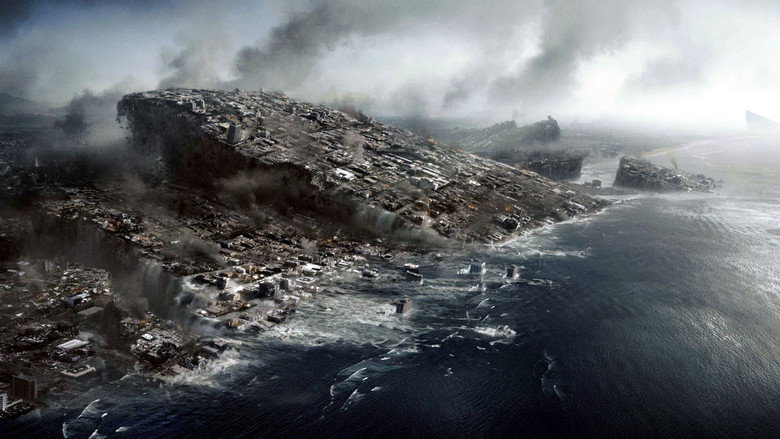
An apocalyptic science-fiction epic of raw planetary fury, hurtling through terror and awe as the cradle of civilization crumbles beneath an unstoppable sea of fire and water.
2012

2012

"We were warned."

10 October 2009 United States of America 158 min 5.9 (12,966)

Director: Roland Emmerich

Cast: John Cusack, Amanda Peet, Chiwetel Ejiofor, Thandiwe Newton, Oliver Platt

Action Adventure Science Fiction Class Privilege vs. Universal Survival Family Reconciliation and Redemption Science, Truth, and Institutional Secrecy Nature’s Primacy vs. Human Hubris Faith, Morality, and Fatalism
Budget: $200,000,000
Box Office: $791,217,826

Overview

Set against the backdrop of ancient eschatological lore and modern geophysical discovery, 2012 begins in 2009 when American geologist Dr. Adrian Helmsley learns from astrophysicist Dr. Satnam Tsurutani in India that an intense solar flare has caused neutrinos to mutate, heating Earth’s inner core like a colossal microwave. Recognizing that crustal displacement is inevitable, global superpowers quietly initiate a secretive project in the Himalayas to ensure human survival while the world remains blissfully unaware of the impending doom.

By 2012, Jackson Curtis, a struggling science fiction author working as a Los Angeles limousine driver, takes his estranged children camping in Yellowstone National Park. There, he encounters eccentric conspiracy theorist Charlie Frost, who broadcasts doomsday warnings about the Mayan calendar and government-built evacuation ships. When tectonic instability triggers catastrophic seismic activity, Jackson is forced into a desperate race against time to rescue his ex-wife Kate, her partner Gordon, and their children.

As continents shatter, mega-faults rupture, and super-volcanoes erupt across the globe, the survival of humanity hinges on reaching the secret evacuation sites before cataclysmic megatsunamis swallow the planet whole.
Core Meaning

The core message posits that physical survival is hollow if stripped of empathy, solidarity, and basic humanity. By contrasting bureaucratic pragmatism—which reduces human lives to economic commodities and survival quotas—with individual acts of selflessness, the film asserts that civilization is defined not by technological engineering or immense wealth, but by our refusal to abandon one another in the face of annihilation.

Thematic DNA

Class Privilege vs. Universal Survival 30%
Family Reconciliation and Redemption 25%
Science, Truth, and Institutional Secrecy 20%
Nature’s Primacy vs. Human Hubris 15%
Faith, Morality, and Fatalism 10%

Class Privilege vs. Universal Survival

The film lays bare structural inequality: the global elite sell ark tickets for €1 billion per seat, transforming survival into a luxury commodity while leaving billions of ordinary citizens in the dark. This tension culminates at the boarding gates in Tibet, forcing humanity to confront whether an elitist society deserves to restart civilization.

Family Reconciliation and Redemption

Jackson Curtis’s personal journey mirrors the fight for survival. A fractured nuclear family learns to rebuild trust, heal past grievances, and demonstrate parental devotion under extreme existential pressure.

Science, Truth, and Institutional Secrecy

The moral dilemma of withholding apocalyptic truths from the public to prevent mass panic is contrasted with Dr. Helmsley's scientific integrity and Charlie Frost's guerrilla truth-telling.

Nature’s Primacy vs. Human Hubris

The film showcases the fragility of human constructs—skyscrapers, monumental architecture, state-of-the-art supercarriers—all obliterated effortlessly when the Earth’s natural order resets.

Faith, Morality, and Fatalism

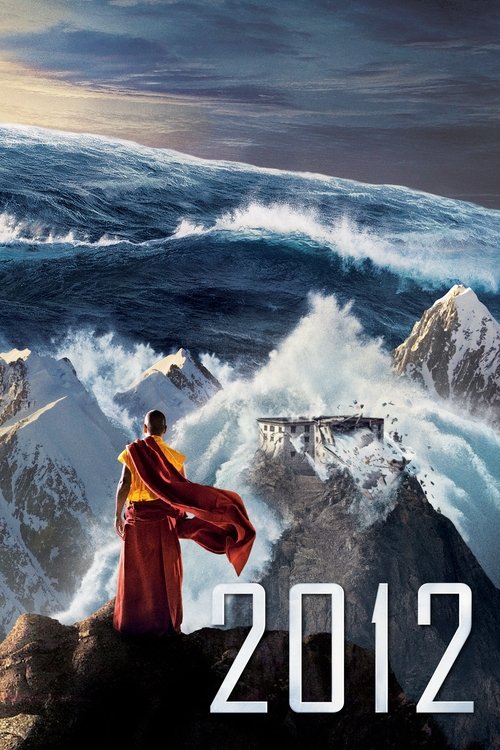
Characters grapple with religious fatalism, spiritual peace, and ethical duties, embodied by world leaders staying behind to pray and Buddhist monks confronting the incoming deluge with serene acceptance.

Character Analysis

Jackson Curtis

John Cusack

Archetype: The Everyman Hero Key Trait: Tenacity and unyielding optimism in crisis.

Motivation

Keep his ex-wife and children alive through the global cataclysm.

Character Arc

Transitions from a distant, underachieving father into a resourceful, sacrificial protector of his family.

Dr. Adrian Helmsley

Chiwetel Ejiofor

Archetype: The Moral Mentor / Conscience Key Trait: Empathy, scientific clarity, and moral courage.

Motivation

Preserve the ethical core of humanity alongside biological life.

Character Arc

Evolves from an advisory researcher into the moral compass of the global survival effort.

All 6 characters and cast

Symbols & Motifs

The Arks (Modern Noah’s Arks)

Meaning:

Symbolizes human technological ingenuity coupled with moral complicity—initially a monument to selective survival and class division, but ultimately transformed into an emblem of inclusive humanity.

Context:

Colossal, hermetically sealed vessels built in the secret evacuation site in the Cho Ming valley of Tibet.

Jackson’s Book (Farewell Atlantis)

Meaning:

Represents unheeded warnings, overlooked creativity, and the intellectual bridge between science and the human spirit.

Context:

Jackson's commercially unsuccessful novel that sold only 500 copies, which Adrian Helmsley happens to have read and admired.

The Collapsing Monuments

Meaning:

Demonstrates the absolute indifference of nature toward human institutions, ideologies, and imperial power.

Context:

The cinematic destruction of global religious and political symbols, such as Christ the Redeemer, St. Peter’s Basilica, and The White House.

The Tsunami Wave & The Monks' Bell

Meaning:

Represents ancient spiritual calm and serene acceptance in the face of cosmic inevitability.

Context:

Featured in the opening teaser and climax as a solitary Buddhist monk rings a monastery bell high in the Himalayas as a wall of water eclipses the mountain peak.

The Cellular Phone Calls

Meaning:

Serves as a recurrent motif of human connection bridging insurmountable distances during final moments.

Context:

Used by characters making final calls across continents, such as Adrian Helmsley calling his father on a cruise ship and President Wilson addressing the public.

Memorable Quotes

When they tell you not to panic... that's when you run!
— Charlie Frost

Context

Broadcasted on his pirate radio station at Yellowstone National Park.

Meaning

Encapsulates the film's pervasive skepticism toward institutional authorities and government reassurances.

The moment we stop fighting for each other, that's the moment we lose our humanity.
— Dr. Adrian Helmsley

Context

Delivered during his impassioned plea via satellite to the G8 leaders aboard Ark 4.

Meaning

Forms the moral thesis of the film, arguing against leaving thousands of stranded workers outside the survival gates.

All 4 quotes

Philosophical Questions

Who Decides Who Lives When Space is Limited?

The film explores the utilitarian triage of saving geneticists, engineers, and world leaders versus the democratic and moral imperative of equal human worth.

Does the End Justify the Means in Existential Crises?

Through Carl Anheuser’s character, the film asks whether cold deception and ruthless sacrifice are necessary evils to preserve civilization.

What Constitutes the Essence of Civilization?

As articulated by Dr. Helmsley, the narrative questions whether civilization is defined by scientific knowledge and physical preservation, or by empathy, solidarity, and justice.

Alternative Interpretations

The film can be analyzed through several distinct lenses:

Full ending explanation

Cultural Impact

Released in late 2009, 2012 capitalized on widespread global fascination with the Mesoamerican Long Count calendar and speculative apocalypse theories. It represents the historical zenith of the CGI disaster genre popularized in the 1990s and 2000s, pushing digital destruction to such an extreme scale that subsequent disaster films pivoted toward smaller-scale, character-driven, or post-apocalyptic formats.

The film was a massive international hit grossing over $791 million, though it was banned in North Korea because 2012 coincided with the 100th anniversary of founding leader Kim Il Sung's birth, making a fictional depiction of disaster during that year politically sensitive.

Audience Reception

2012 received a polarizing reception from critics and audiences alike:

  • Praised Elements: Groundbreaking, visually arresting CGI destruction sequences (the Los Angeles collapse, Yellowstone eruption, and megatsunamis), charismatic supporting performances (particularly Chiwetel Ejiofor and Woody Harrelson), and relentless popcorn spectacle entertainment value.
  • Main Criticisms: Sensory fatigue stemming from an overlong 158-minute runtime, formulaic dialogue, reliance on disaster clichés, and repeated, scientifically absurd 'narrow escapes.'
  • Controversial Moments: The casual on-screen death of Kate’s partner Gordon Silberman, framed largely as narrative convenience to allow Jackson and Kate to reunite as a nuclear family.

Overall, the film is regarded as a landmark blockbuster of high-budget disaster cinema—lauded as a triumph of spectacle while dismissed by screenwriting purists for its tropes.

Interesting Facts

  • The film was budgeted at approximately $200 million and went on to gross over $791.2 million worldwide, ranking as the fifth highest-grossing film of 2009.
  • Although originally planned to film extensively across Los Angeles, principal photography took place primarily in Vancouver, British Columbia, commencing in August 2008 and wrapping in October 2008.
  • Emmerich’s production team built large-scale hydraulic shake stages to realistically jostle vehicles and actors during earthquake and flight sequences, blending practical mechanical rigs with expansive green-screen backdrops.
  • The film was lensed by Academy Award-winning cinematographer Dean Semler (Dances with Wolves) and featured an orchestral score composed jointly by Harald Kloser and Thomas Wander.
  • Sony Pictures launched an elaborate viral marketing campaign centered on the fictitious 'Institute for Human Continuity' (IHC), which proved so convincing that NASA received numerous terrified inquiries, eventually leading scientists to publicly debunk the 2012 apocalyptic predictions.

Easter Eggs

Reference to Independence Day & Emmerich Tropes

Roland Emmerich inserts his signature visual motif of global landmarks being obliterated—most notably an aircraft carrier (the USS John F. Kennedy) riding a massive wave to crush the White House, mirroring the direct targeting of the White House in Independence Day.

Mayan Calendar Alignment Detail

Charlie Frost's mobile animation sequence displays the alignment of the galactic center and planetary bodies precisely according to contemporary pseudo-scientific 2012 pop mythology.

The Mona Lisa and Cultural Evacuation

A subtle museum evacuation sequence depicts Leonardo da Vinci's Mona Lisa being secretly packed away and replaced with a high-fidelity replica, hinting at the elite's preservation priorities long before the public is alerted.

The 'Olympic' & Supercar Humor

Yuri Karpov’s luxury Bentley responding only to vocal activation creates a running comedic gag amidst tension, emphasizing the absurdity of ultra-luxury commodities when physical infrastructure has completely dissolved.

Frequently Asked Questions

Explore More About This Movie

Dive deeper into specific aspects of the movie with our detailed analysis pages

Comments (0)

Leave a comment

No comments yet. Be the first to share your thoughts!

Similar Movies