Skip to content
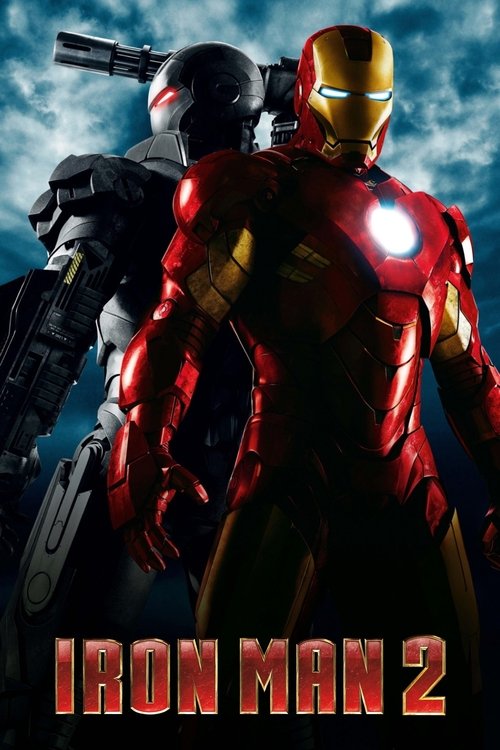
Iron Man 2
An electric sci-fi spectacle wrapped in existential dread, Iron Man 2 mirrors the flickering hum of a fractured heart, where blazing crimson titanium struggles to outrun the venom of its own poisoned core.
Iron Man 2

Iron Man 2

"It's not the armor that makes the hero, but the man inside."

28 April 2010 United States of America 124 min 6.9 (22,718)

Director: Jon Favreau

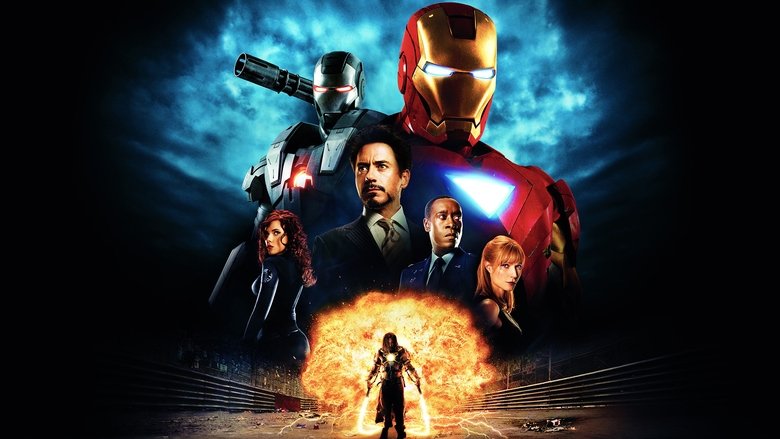
Cast: Robert Downey Jr., Gwyneth Paltrow, Don Cheadle, Scarlett Johansson, Sam Rockwell

Action Adventure Science Fiction Legacy and Inherited Sins Mortality vs. Invincibility Privatization of Defense and the Military-Industrial Complex Ego vs. Partnership
Budget: $200,000,000
Box Office: $623,933,331

Overview

Following the global revelation of his superhero identity, billionaire inventor Tony Stark finds himself at the volatile intersection of celebrity and vulnerability. While basked in the adulation of the public and relentlessly defending his private ownership of the Iron Man armor against aggressive congressional scrutiny, Stark harbors a fatal secret: the palladium core powering his life-saving arc reactor is slowly poisoning his bloodstream. As his health declines, his erratic behavior strains relationships with his confidante Pepper Potts and close friend Lt. Col. James Rhodes.

The technological monopoly Stark proudly proclaims is shattered when Ivan Vanko, the vengeful son of a disgraced Soviet physicist connected to the Stark family's past, constructs his own arc reactor-powered weapon. Vanko's public assault exposes Stark’s technological vulnerability, catching the attention of Justin Hammer, a rival defense contractor eager to manufacture automated military drones.

Simultaneously, the enigmatic intelligence organization S.H.I.E.L.D., led by Nick Fury and field agent Natasha Romanoff, infiltrates Stark’s inner circle. Caught between encroaching mortality, corporate espionage, and the burdens of his father's legacy, Tony must confront his own hubris before his unresolved past tears the future apart.
Core Meaning

The central thesis of Iron Man 2 explores whether an individual can outrun their inherited sins and mortality through ego and technological supremacy. Director Jon Favreau and screenwriter Justin Theroux construct a narrative centered on accountability and reconciliation. The film argues that true strength is found not in self-aggrandizing individualism or impenetrable armor, but in vulnerability, collaboration, and making peace with paternal shadows.

Thematic DNA

Legacy and Inherited Sins 30%
Mortality vs. Invincibility 25%
Privatization of Defense and the Military-Industrial Complex 25%
Ego vs. Partnership 20%

Legacy and Inherited Sins

The central conflict stems entirely from the sins of the fathers. Tony Stark and Ivan Vanko represent two sides of Howard Stark and Anton Vanko’s fractured partnership. Tony must move past his childhood resentment to uncover his father's true intentions, while Ivan is entirely consumed by generational bitterness.

Mortality vs. Invincibility

The very mechanism that preserves Tony's life (the palladium arc reactor) is also killing him. This physical paradox forces Tony to confront his finite nature, driving him toward self-destructive nihilism before pushing him toward genuine self-reinvention.

Privatization of Defense and the Military-Industrial Complex

The film critiques corporate greed and state control through the contrast between Stark’s individualist defense and Justin Hammer’s commodification of warfare. It exposes how easily unchecked weapons proliferation leads to automated destruction.

Ego vs. Partnership

Tony initially insists on working alone ("I don't want to join your super-secret boy band"). His arc centers on recognizing the necessity of trust and teamwork—surrendering corporate leadership to Pepper and fighting shoulder-to-shoulder with Rhodes.

Character Analysis

Tony Stark / Iron Man

Robert Downey Jr.

Archetype: The Flawed Hero / Tragic Narcissist Key Trait: Hyper-intellectual wit masking existential dread.

Motivation

To survive blood poisoning while preserving his autonomy and global peace.

Character Arc

Moves from a self-destructive, egotistical isolationist facing imminent death to an interconnected hero willing to trust others and build upon his father's foundation.

Ivan Vanko / Whiplash

Mickey Rourke

Archetype: The Shadow / Vengeful Nemesis Key Trait: Methodical, brooding ruthlessness.

Motivation

To ruin the Stark name and prove that the "god" of modern technology can bleed.

Character Arc

Starts as an impoverished Russian engineer fueled by grief, collaborates pragmatically with Hammer, and dies attempting an all-consuming act of mutual destruction.

All 5 characters and cast

Symbols & Motifs

The Palladium Arc Reactor / Blood Toxicity Meter

Meaning:

Symbolizes the double-edged sword of genius and self-reliance. The glowing chest piece represents both Tony's life force and his internal poison, tracking his physical and psychological decay.

Context:

Embedded in Tony Stark's chest and displayed through the digital blood toxicity monitors tracking his declining health.

The Diorama / Stark Expo Model

Meaning:

Serves as a bridge across generations. It is a physical cipher that turns a father's seemingly cold corporate blueprint into an intimate blueprint for his son's survival.

Context:

Howard Stark’s 1974 Stark Expo architectural model left behind for Tony to discover the atomic structure of a new element.

Whips (Whiplash’s Energy Cords)

Meaning:

Represent entanglement with the past and the lingering pain of the Cold War era. They visually slash through the clean, polished veneer of Western billionaire decadence.

Context:

Wielded by Ivan Vanko during the Monaco Grand Prix attack and subsequent battles.

The Donut (Randy’s Donuts)

Meaning:

A visual symbol of Tony’s detachment and absurdity. Sitting inside a giant roadside donut in full armor eating pastry illustrates how high-tech omnipotence has descended into bizarre, nihilistic escapism.

Context:

Tony lounging inside the giant Randy's Donuts sign in full Iron Man armor while meeting Nick Fury.

Memorable Quotes

I have successfully privatized world peace.
— Tony Stark

Context

Speaking to the Senate Armed Services Committee while refusing to surrender his armor.

Meaning

Captures the peak of Tony's hubris and his belief that his private power supersedes governmental institutions.

If you could make God bleed, people would cease to believe in Him. There will be blood in the water, and the sharks will come.
— Ivan Vanko

Context

Spoken to Tony in a Monaco holding cell after the racetrack attack.

Meaning

Encapsulates Vanko’s philosophy—exposing Tony's vulnerability to the world to break his technological monopoly.

All 5 quotes

Philosophical Questions

Can individual autonomy coexist with global security?

The film explores the conflict over whether weapons of immense power can responsibly remain in private hands rather than under state or multilateral control.

Is technological advancement inherently tied to destructive escalation?

Explores the dilemma of how creating an ultimate defense deterrent inevitably inspires adversaries to build counters and weapons of automated warfare.

Can a person truly separate their self-worth from their creations?

Focuses on Tony's psychological confusion over whether he is valued as a human being or merely celebrated as the Iron Man armor.

Alternative Interpretations

Substance Abuse Allegory (The "Demon in a Bottle" Metaphor): Many critics and psychologists view the palladium toxicity not merely as a sci-fi plot device, but as an allegory for substance abuse. Tony's downward spiral—drinking heavily, acting reckless at his birthday party, and alienating loved ones—closely mirrors the classic comic arc "Demon in a Bottle."

Full ending explanation

Cultural Impact

Released in May 2010, Iron Man 2 arrived during the early stages of cinematic universe building. As the third entry in the MCU, it bore the burden of proving that a shared cinematic universe could sustain momentum between standalone stories and overarching team-ups.

Financially, it was a massive success, grossing over $623 million worldwide. Culturally, it codified Robert Downey Jr.'s improvisational tone as the definitive signature style for modern superhero cinema. It marked the debut of Scarlett Johansson’s Natasha Romanoff/Black Widow, who would become one of modern action cinema’s most prominent female heroes.

Audience Reception

Praise:

  • Robert Downey Jr.'s charismatic and layered performance.
  • Sam Rockwell’s entertaining portrayal of Justin Hammer.
  • High-octane action choreography, particularly the Monaco Grand Prix fight and the Japanese garden drone battle.
  • Scarlett Johansson's Black Widow hallway fight scene.

Criticism:

  • Overstuffed plotting and excessive universe world-building that occasionally derailed narrative momentum.
  • Mickey Rourke’s Ivan Vanko being underutilized and sidelined during the second act.
  • An anticlimactic final boss confrontation.

Overall Verdict: Viewed as a flawed yet highly entertaining and pivotal chapter that successfully expanded the MCU while dealing with the classic "sequel bloat".

Interesting Facts

  • Mickey Rourke insisted on visiting Moscow's Butyrka prison to research Russian prison culture and spent his own money on Ivan Vanko’s gold teeth, tattoos, and cockatoo pet.
  • Don Cheadle replaced Terrence Howard as James Rhodes within a strict window, famously being offered the role at his child’s birthday party with only a few hours to decide.
  • Screenwriter Justin Theroux was hired on the recommendation of Robert Downey Jr. following their collaboration on Tropic Thunder.
  • The iconic Mark V suitcase armor sequence in Monaco took over two years to conceptualize and animate, blending practical prop transformation with complex CGI layers.
  • The Monaco Grand Prix and Hammer Expo sequences included genuine tech titan cameos, such as Tesla/SpaceX CEO Elon Musk and Oracle Corporation CEO Larry Ellison.
  • Jon Favreau and Robert Downey Jr. relied heavily on improvisation, which occasionally caused tension with Marvel Studios brass, who were focused on strict overarching universe continuity.

Easter Eggs

Captain America's Prototype Shield

Tony uses a half-finished prototype of Captain America's shield to level his particle accelerator pipe, an overt nod to Steve Rogers and Howard Stark’s history.

The S.H.I.E.L.D. Global Threat Map

In Fury’s debriefing room, holographic maps feature highlighted hotspots: Culver University (referencing The Incredible Hulk), New Mexico (referencing Mjölnir / Thor), and Wakanda in East Africa.

Peter Parker Cameo (Retroactive Continuity)

The little boy wearing an Iron Man mask who stands his ground against Hammer Drones at the Stark Expo was later confirmed by Marvel Studios and Tom Holland to be a young Peter Parker.

Post-Credits Scene (Mjölnir)

Agent Phil Coulson drives to a crater in New Mexico, revealing Thor’s hammer embedded in rock, serving as the direct prelude to Thor (2011).

Howard Stark and the Tesseract

When Tony browses Howard Stark’s vintage notebooks, a sketch of the cube-shaped Tesseract is visible, foreshadowing Captain America: The First Avenger and The Avengers.

Frequently Asked Questions

Explore More About This Movie

Dive deeper into specific aspects of the movie with our detailed analysis pages

Comments (0)

Leave a comment

No comments yet. Be the first to share your thoughts!

Similar Movies