Iron Man
A brilliant but arrogant weapons manufacturer builds a mechanical suit of armor to escape captivity, forging a new identity from the shrapnel of his past. A kinetic, ego-driven awakening.
Iron Man

Iron Man

"Heroes aren't born. They're built."

30 April 2008 United States of America 126 min ⭐ 7.7 (27,796)
Director: Jon Favreau
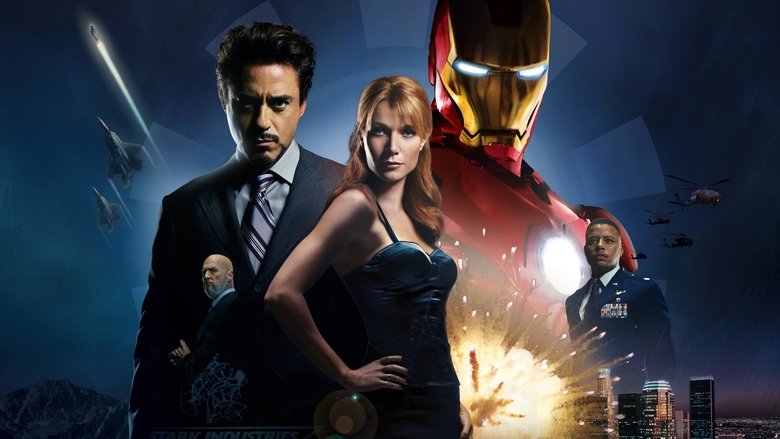
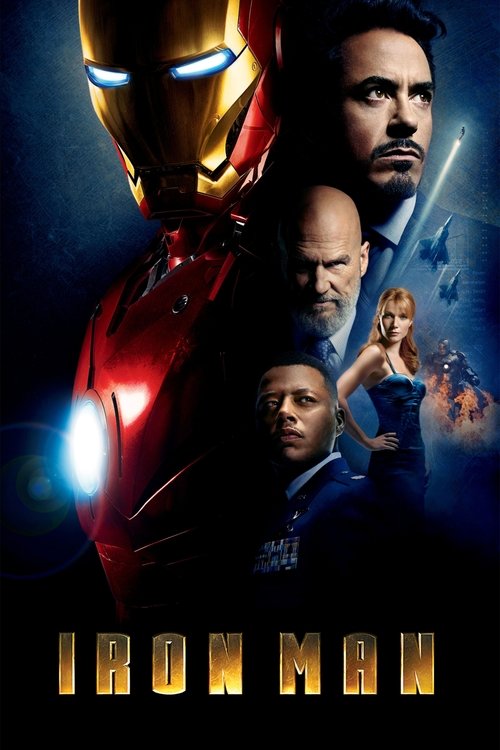
Cast: Robert Downey Jr., Terrence Howard, Jeff Bridges, Gwyneth Paltrow, Leslie Bibb
Action Adventure Science Fiction
Accountability and the Military-Industrial Complex Identity and Ego Technology as Destruction and Salvation Redemption and Second Chances
Budget: $140,000,000
Box Office: $585,174,222

Overview

Billionaire industrialist and genius inventor Tony Stark lives a carefree life of luxury, profiting immensely from his role as the chief weapons manufacturer for the U.S. military. His worldview is violently shattered when his convoy is ambushed in Afghanistan, and he is captured by a terrorist group known as the Ten Rings. Gravely wounded by one of his own company's missiles, Stark is kept alive by a fellow captive, Yinsen, who implants an electromagnet in Stark's chest.

Forced to build a devastating missile for his captors, Stark instead secretly constructs a miniature arc reactor to power his heart and a rudimentary suit of armor to orchestrate a daring escape. Upon returning to the United States, a profoundly changed Stark announces that his company will no longer manufacture weapons, a decision that creates severe friction with his father's old partner, Obadiah Stane.

As Stark privately develops a highly advanced version of his armor to destroy the weapons that have fallen into the wrong hands, he begins to unravel a deep corporate conspiracy. The film masterfully balances explosive action with character-driven humor, focusing on Stark's journey from a self-absorbed war profiteer to a reluctant protector who must confront the deadly legacy he helped create.
Core Meaning

At its core, Iron Man is a story about accountability, redemption, and the awakening of a moral conscience. Director Jon Favreau uses the superhero origin framework to explore the destructive nature of the military-industrial complex and the personal responsibility of the creator for their creations.

Tony Stark begins as a manifestation of unchecked capitalism and American military supremacy, willfully blind to the human cost of his genius. The film suggests that true heroism requires not just physical power, but the humility to recognize one's complicity in global suffering and the courage to actively dismantle the destructive systems one once profited from. The narrative emphasizes that an individual's legacy is not defined by the mistakes of their past, but by the actions they take to forge a better future.

Thematic DNA

Accountability and the Military-Industrial Complex 35%
Identity and Ego 30%
Technology as Destruction and Salvation 20%
Redemption and Second Chances 15%

Accountability and the Military-Industrial Complex

The film serves as a critique of war profiteering. Tony's transformation is catalyzed by seeing the devastation his weapons cause in the hands of terrorists. He realizes that 'peace means having a bigger stick' is a flawed philosophy, leading him to shut down his weapons division and take personal responsibility for correcting his company's geopolitical damage.

Identity and Ego

Stark struggles to reconcile his public persona as a billionaire playboy with his newly discovered moral imperative. Unlike traditional superheroes who hide behind an alter-ego, Tony's ego is too massive for a secret identity, culminating in his unprecedented, narcissistic yet heroic public declaration.

Technology as Destruction and Salvation

The narrative explores the dual nature of technology. The very same engineering brilliance that created the Jericho missile—a weapon of mass destruction—is repurposed to build the Arc Reactor and the Iron Man suit, which preserve Tony's life and allow him to protect others.

Redemption and Second Chances

Driven by Yinsen's dying words to 'not waste his life,' Tony's journey is a quest for atonement. The physical shrapnel near his heart mirrors his moral corruption, and his survival is framed as an opportunity to rewrite his legacy from a 'merchant of death' to a global savior.

Character Analysis

Tony Stark

Robert Downey Jr.

Archetype: Flawed Hero
Key Trait: Genius-level intellect and charismatic arrogance

Motivation

Initially motivated by survival and a desire to escape captivity, his motivation shifts to atonement and a desperate need to honor Yinsen's sacrifice by ensuring his legacy is not one of destruction.

Character Arc

Tony evolves from a brilliant, self-absorbed, and morally detached 'merchant of death' into a conscientious protector who takes direct responsibility for his company's role in global terrorism.

Obadiah Stane

Jeff Bridges

Archetype: Shadow / Corrupted Mentor
Key Trait: Deceptive and ruthlessly pragmatic

Motivation

Driven entirely by corporate greed and a belief that the company should prioritize profitable weapons manufacturing over Tony's newfound ethical concerns.

Character Arc

Stane begins as a paternal figure and stabilizing force for Tony, but is gradually revealed to be a ruthless, profit-driven opportunist who ordered the hit on Tony to seize complete control of Stark Industries.

Pepper Potts

Gwyneth Paltrow

Archetype: Moral Compass
Key Trait: Loyal, highly organized, and ethically grounded

Motivation

She is motivated by a deep loyalty and underlying affection for Tony, constantly trying to protect him from his own self-destructive tendencies.

Character Arc

Starting as Tony's highly efficient but professionally detached personal assistant, she becomes his most trusted confidante and partner, stepping out of the office to actively help him dismantle Stane's conspiracy.

Ho Yinsen

Shaun Toub

Archetype: Mentor / Catalyst
Key Trait: Wise, forgiving, and selfless

Motivation

His ultimate motivation is to join his family in death, but not before ensuring that Tony uses his second chance at life for good.

Character Arc

As a captive who has lost his family to the very weapons Tony created, Yinsen selflessly uses his medical skills to save Tony, guiding him toward a moral awakening before sacrificing himself to buy Tony time to escape.

Symbols & Motifs

The Arc Reactor

Meaning:

The Arc Reactor is the literal and metaphorical heart of Tony Stark. It symbolizes his newfound moral compass, his containment of the damage he has caused, and his shift from creating destructive energy to sustainable, protective energy.

Context:

Placed directly in the center of his chest, it keeps the deadly shrapnel from his own bomb from killing him. Later, Pepper Potts saves his original reactor, framing it with the inscription 'Proof That Tony Stark Has a Heart,' underscoring its thematic resonance.

The Mark I Cave Suit

Meaning:

The clunky, rudimentary Mark I armor symbolizes a phoenix-like rebirth from the ashes. It represents Stark stripping away his immense privilege and relying purely on his intellect and the raw materials of his past mistakes.

Context:

Constructed in a dark cave in Afghanistan using the scrapped remains of Stark Industries missiles, the suit is the literal manifestation of Tony turning his weapons of war into an instrument of personal salvation.

The Peace Sign

Meaning:

The peace sign acts as an ironic motif highlighting the cognitive dissonance of a weapons manufacturer who claims his bombs ensure global peace.

Context:

In the opening scene, an excited soldier flashes a peace sign while taking a photo with Tony just moments before the convoy is ambushed and destroyed by Stark's own weaponry, shattering the illusion of 'peace through superior firepower.'

Memorable Quotes

The truth is... I am Iron Man.

— Tony Stark

Context:

Spoken during the final scene at a press conference, where Tony discards his prepared S.H.I.E.L.D. alibi cards and directly addresses the media.

Meaning:

This line fundamentally subverts the traditional superhero 'secret identity' trope. It cements Tony's massive ego while also representing him taking full, public ownership of his new persona and the responsibilities that come with it.

I shouldn't be alive... unless it was for a reason. I'm not crazy, Pepper. I just finally know what I have to do.

— Tony Stark

Context:

Tony says this to Pepper in his workshop while trying to convince her to help him retrieve shipping manifests, showing her the depth of his transformation.

Meaning:

This quote encapsulates Tony's thematic awakening. It highlights his transition from nihilistic playboy to a man burdened with a profound sense of purpose and duty.

Don't waste it. Don't waste your life.

— Ho Yinsen

Context:

Yinsen's dying words to Tony after sacrificing himself to delay the Ten Rings terrorists during the Mark I escape sequence.

Meaning:

These are the thematic watchwords of the entire film and Tony's entire character arc throughout the Marvel Cinematic Universe. It acts as the ultimate catalyst for his heroism.

Tony, we're iron mongers. We make weapons.

— Obadiah Stane

Context:

Stane says this to Tony while trying to talk him out of his sudden decision to shut down the Stark Industries weapons manufacturing division.

Meaning:

This line establishes the ideological conflict between Tony and Obadiah, foreshadowing Stane's supervillain moniker and highlighting the deeply entrenched corporate mindset Tony must fight against.

Philosophical Questions

Does a weapon guarantee peace, or inherently provoke conflict?

The film continuously wrestles with Tony's initial philosophy that 'peace means having a bigger stick.' While Tony shuts down his company's weapons manufacturing after seeing the devastation they cause, he essentially builds the most advanced weapon on the planet—the Iron Man suit—to enforce peace, questioning whether true peace can ever be achieved through superior firepower.

Can an individual morally privatize global security?

When Tony Stark builds his suit, he operates entirely outside of international law and government oversight. The film asks whether it is ethical for a single, unelected billionaire to possess the power of a nuclear deterrent and make unilateral decisions regarding global justice and execution.

What constitutes true redemption?

Tony Stark is directly responsible for a legacy of death and destruction around the world. The film explores whether an individual can truly wash the blood from their hands by changing course later in life, and whether acts of heroism can retroactively balance the scales of a devastating past.

Alternative Interpretations

While widely viewed as a straightforward redemption narrative where a selfish capitalist becomes a selfless hero, Iron Man has been subjected to several contrasting interpretations. One major alternative reading is the Orientalist and Hegemonic Critique. Some cultural scholars argue that rather than critiquing American imperialism, the film actually reinforces it. In this view, Tony Stark does not abandon his violent, imperialistic tendencies; he merely refines them, acting as an unchecked American vigilante operating unilaterally in the Middle East, while portraying the Afghan locals either as helpless victims or monodimensional terrorist caricatures.

Another interpretation views the film through the lens of Egoism versus Utilitarianism. Philosophically, it can be debated whether Tony's transformation is genuinely altruistic or merely an extension of his narcissism. Critics argue that Stark's decision to privatize global security and boldly declare 'I am Iron Man' reveals that his core motivation isn't strictly utilitarian (doing the most good for the most people), but rather an ego-driven desire to be the sole arbiter of justice, effectively substituting corporate accountability with unchecked personal authority.

Cultural Impact

Iron Man (2008) is widely considered one of the most culturally significant blockbuster films of the 21st century, primarily because it served as the foundational bedrock for the massively successful Marvel Cinematic Universe (MCU). Its release marked a seismic shift in the superhero genre. Coming out the same year as the dark, gritty The Dark Knight, Iron Man proved that comic book movies could be critically and commercially successful by leaning into charismatic humor, vibrant action, and character-driven storytelling without sacrificing emotional weight.

Robert Downey Jr.'s portrayal of Tony Stark completely resurrected his career, cementing him as one of Hollywood's biggest stars, and irrevocably fused the actor's public persona with the character. The film also popularized the use of the post-credits scene, famously introducing Samuel L. Jackson as Nick Fury to tease the 'Avengers Initiative,' a marketing and narrative strategy that permanently altered how blockbuster franchises approach world-building.

Furthermore, the film has been analyzed heavily for its historical context. Released during the ongoing War on Terror, Iron Man captured the zeitgeist of American anxieties regarding military intervention, the privatization of warfare, and the ethics of the military-industrial complex.

Audience Reception

Iron Man was a resounding triumph with both audiences and critics, earning an impressive A+ CinemaScore and widespread acclaim (signified by a 79 on Metacritic). Audiences universally praised Robert Downey Jr.'s charismatic, witty, and surprisingly nuanced performance, noting that he perfectly balanced the character's inherent arrogance with deep vulnerability. The film was celebrated for its brisk pacing, sharp improvisational dialogue, and relatively grounded, realistic approach to its technology and visual effects.

Viewers frequently highlighted the film's tone as a major positive; it managed to tackle serious themes like terrorism and corporate corruption while remaining highly entertaining and distinctly fun. While there were minor criticisms aimed at the final act—specifically that the climactic battle devolved into a standard 'two CGI robots punching each other' trope—the overwhelming consensus was that director Jon Favreau had crafted an exceptionally smart, culturally relevant, and highly rewatchable origin story that set a new gold standard for the superhero genre.

Interesting Facts

  • The script was largely an outline; actors like Robert Downey Jr. and Jeff Bridges heavily improvised their dialogue on set daily, with Bridges noting they often rehearsed in his trailer to figure out the scenes.
  • The iconic final line, 'I am Iron Man,' was not in the original script and was famously improvised by Robert Downey Jr. Producer Kevin Feige loved it so much he kept it, forever changing the MCU's approach to secret identities.
  • Director Jon Favreau had to fight Marvel executives to cast Robert Downey Jr., whose past struggles with substance abuse made him a massive liability, arguing that Downey's personal journey perfectly mirrored Tony Stark's.
  • To prepare for the role and ground the technology in reality, Robert Downey Jr. and Jon Favreau were given a tour of SpaceX by Elon Musk, who served as a major inspiration for this modern iteration of Tony Stark.
  • Paul Bettany, who voiced J.A.R.V.I.S., recorded all of his lines in just two hours and later joked that he felt guilty getting paid for a movie he barely worked on and hadn't even seen at the time.

Easter Eggs

The Ten Rings Terrorist Group

The terrorist organization that kidnaps Tony is called the Ten Rings, a direct reference to the Mandarin, Iron Man's classic comic book arch-nemesis. This group and its true leader were fully explored much later in the 2021 film Shang-Chi and the Legend of the Ten Rings.

Captain America's Shield Prototype

A partially constructed replica of Captain America's iconic shield can be seen sitting on a workbench in Tony Stark's lab when Pepper discovers him struggling to take off his damaged armor, serving as an early connective tissue for the broader Avengers universe.

The 1966 Cartoon Theme Song

The theme song from the 1966 animated Invincible Iron Man television series makes multiple auditory cameos. It is played by the band in the casino scene, in Stark's bedroom, and is also heard as James Rhodes's ringtone.

Roxxon Energy Corporation Logo

During the climactic highway battle between Iron Man and the Iron Monger, the logo for Roxxon can be seen on a building. In Marvel Comics, Roxxon is a notorious, corrupt petrochemical company that often serves as a shadow antagonist.

William Ginter Riva Cameo

The Stark Industries scientist who gets yelled at by Obadiah Stane for being unable to miniaturize the arc reactor is played by Peter Billingsley (from A Christmas Story). This character returns 11 years later to enact revenge in Spider-Man: Far From Home.

Leaked Paparazzi Photo

The grainy photograph of Iron Man shown on the newspaper at the end of the film asking 'Who is the Iron Man?' was actually a real, leaked paparazzi photo taken by a photographer who managed to sneak a shot during the film's actual production.

⚠️ Spoiler Analysis

Click to reveal detailed analysis with spoilers

Frequently Asked Questions

Explore More About This Movie

Dive deeper into specific aspects of the movie with our detailed analysis pages

Comments (0)

Leave a comment

No comments yet. Be the first to share your thoughts!